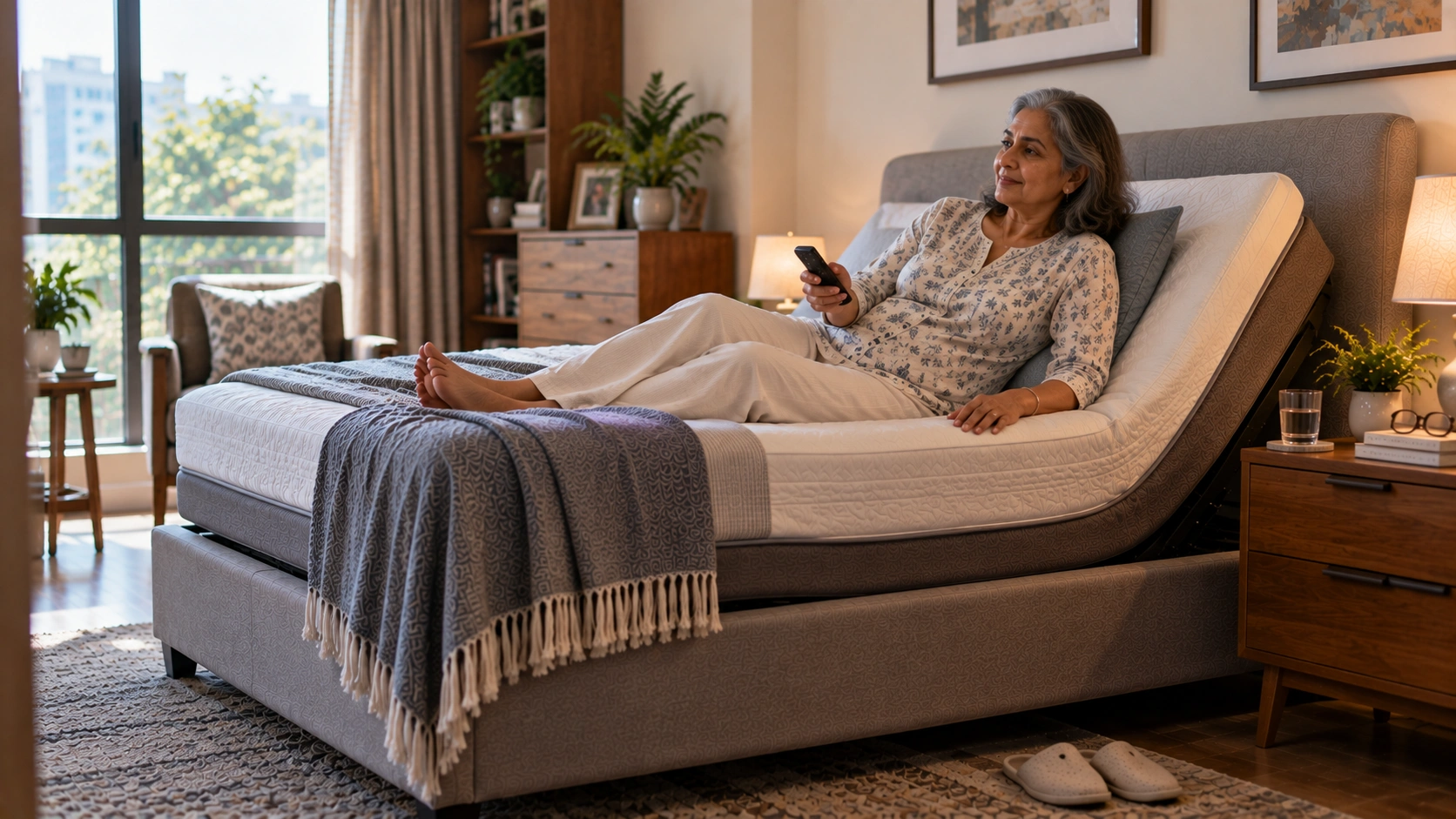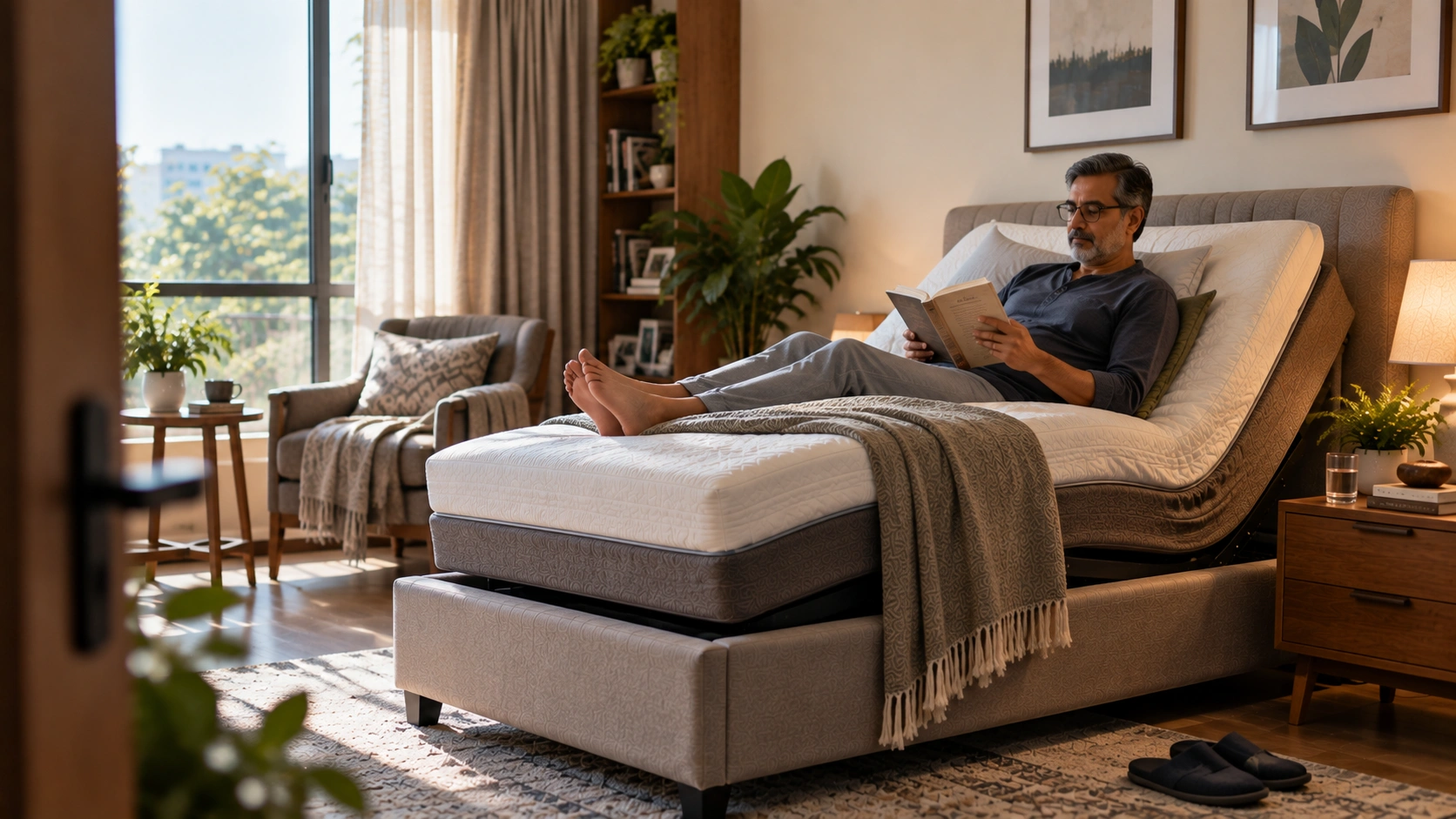

Long hours of sitting compress the lower spine and tighten the hip flexors, both of which contribute directly to lower back pain and this strain doesn’t automatically reverse itself overnight on a flat mattress. An adjustable bed for back pain, used in a Zero Gravity or knee-elevated position, actively decompresses the spine while you sleep, helping offset the cumulative effect of a sedentary workday in a way flat sleeping simply doesn’t.
If you spend eight or more hours a day at a desk, you already know the familiar tightness that sets in by evening a dull ache across the lower back, sometimes radiating into the hips, that seems to get worse as the week goes on rather than resolving with a weekend off. This is one of the most common causes of chronic back pain we hear about, and it’s also one where an adjustable bed for back pain offers a particularly good return, because it directly counteracts the specific mechanism causing the pain.
Why Sitting Causes Back Pain in the First Place
Prolonged sitting compresses the discs in your lower spine more than standing or lying down does, and it also shortens the hip flexor muscles at the front of your hips over time. Shortened hip flexors pull on the pelvis, tilting it forward and increasing the curve in your lower back a pattern called anterior pelvic tilt which places additional strain on the lower back muscles trying to compensate. None of this reverses on its own overnight if you’re simply lying flat, since flat sleeping doesn’t actively decompress the spine the way certain elevated positions do.
How Desk-Related Pain Differs From Other Back Pain
| Symptom Pattern | Likely Cause | Adjustable Bed Angle to Try |
| Ache builds through the day, worse by evening | Sustained sitting compression | Zero Gravity with gentle knee elevation |
| Tightness across the front of the hips | Shortened hip flexors from prolonged sitting | Knee-elevated position to relax hip flexor tension |
| Pain when standing up after sitting | Stiffness from static posture, not necessarily injury | Gradual, gentle elevation rather than a steep single angle |
| Pain radiating down one leg | Possible sciatic involvement, common with prolonged sitting | Zero Gravity see our dedicated sciatica positioning guide |
The Nightly Reset: Why Elevation Helps Specifically for Desk-Related Pain
A Zero Gravity or gentle knee-elevated position does two useful things for someone who sits all day: it takes the compressive load off the lower spine that built up during work hours, and the associated hip positioning helps ease tension in hip flexors shortened by hours in a chair. Think of it as an active nightly reset rather than passive rest the goal isn’t just comfort, it’s actively counteracting the specific postural pattern your workday created.
Daytime Habits That Make the Nightly Reset More Effective
- Stand or stretch briefly every 45–60 minutes during the workday even short breaks meaningfully reduce cumulative compression compared to sitting continuously.
- Check your chair and desk height so your hips sit slightly above your knees, which reduces the forward pelvic tilt that contributes to hip flexor tightness.
- Stretch your hip flexors directly, since sleep positioning helps but doesn’t fully substitute for actively lengthening muscles that tighten during the day.
- Use your adjustable bed for short breaks, not just sleep a brief period in the Zero Gravity position during a lunch break or after work can offer relief before bedtime even begins.
Setting Up Your Adjustable Bed for Desk-Related Back Pain
- Start in the knee-elevated position, keeping the head section flat or only mildly raised, to specifically target hip flexor tension.
- Gradually introduce the Zero Gravity preset over the first week, combining head and leg elevation once the knee-only position feels familiar.
- Pay attention to whether relief is more noticeable in the lower back or the hips, and adjust the balance between head and leg elevation accordingly.
- Reassess weekly desk-related pain patterns often shift with changes in workload, travel, or how much movement you’re getting during the day.
For the underlying setup principles behind these positions, see our full guide on how to set up your adjustable bed for maximum lower back pain relief.
When Desk-Related Pain Needs More Than a Bed
An adjustable bed offers real, measurable relief for sitting-related back pain, but it works best alongside changes to the sitting pattern itself an ergonomic chair, a standing desk option, or simply more frequent movement breaks. If pain persists despite consistent nightly elevation and daytime adjustments, it’s worth checking in with a physiotherapist, since desk-related pain can sometimes mask or overlap with other underlying issues that benefit from targeted treatment.
Weekend Recovery: Why Two Days Off Often Isn’t Enough
Many desk workers notice their back pain eases slightly over the weekend, only to return within a day or two of being back at a desk a pattern that often leads people to assume the pain isn’t serious enough to address properly. In reality, two days is rarely enough time to fully reverse hip flexor tightness and disc compression that built up over an entire work week, which is exactly why relying on weekends alone as “recovery time” tends to fall short. Consistent nightly decompression through an adjustable bed addresses this gap directly, working on the underlying tightness every single night rather than waiting for occasional days off to catch up.
Combining Nightly Elevation with a Standing Desk
For desk workers who’ve already switched to a standing desk or a sit-stand setup, an adjustable bed complements that daytime change particularly well. Standing reduces some of the disc compression associated with sitting, but it introduces its own form of static loading if you stand still for long stretches without movement and a Zero Gravity position at night still offers meaningful decompression regardless of whether your daytime posture is seated or standing. Think of the daytime setup and the nightly bed position as two separate, complementary interventions rather than one replacing the need for the other.
Desk-related back pain builds gradually over months and years of sustained sitting, and it deserves a solution that works just as consistently every single night, not just occasionally. An adjustable bed for back pain, set up around the knee-elevated and Zero Gravity positions, directly targets the compression and hip flexor tightness that hours at a desk create, giving your spine the active reset that flat sleeping alone simply can’t provide.
Explore our Adjustable Bed for Back Pain range, or browse the full Zero G Beds collection to find the right setup for a sedentary workday.
Related Reading: