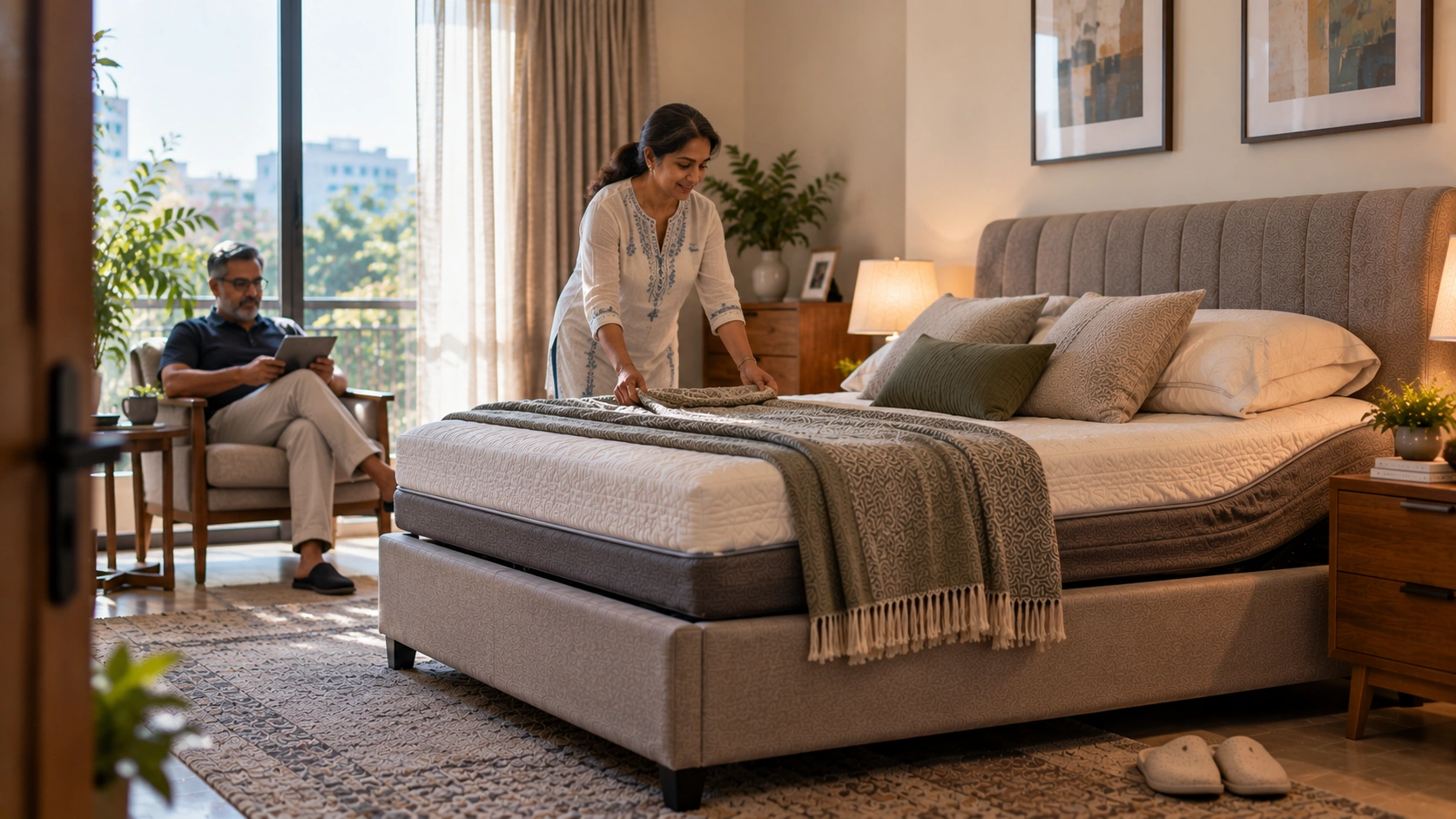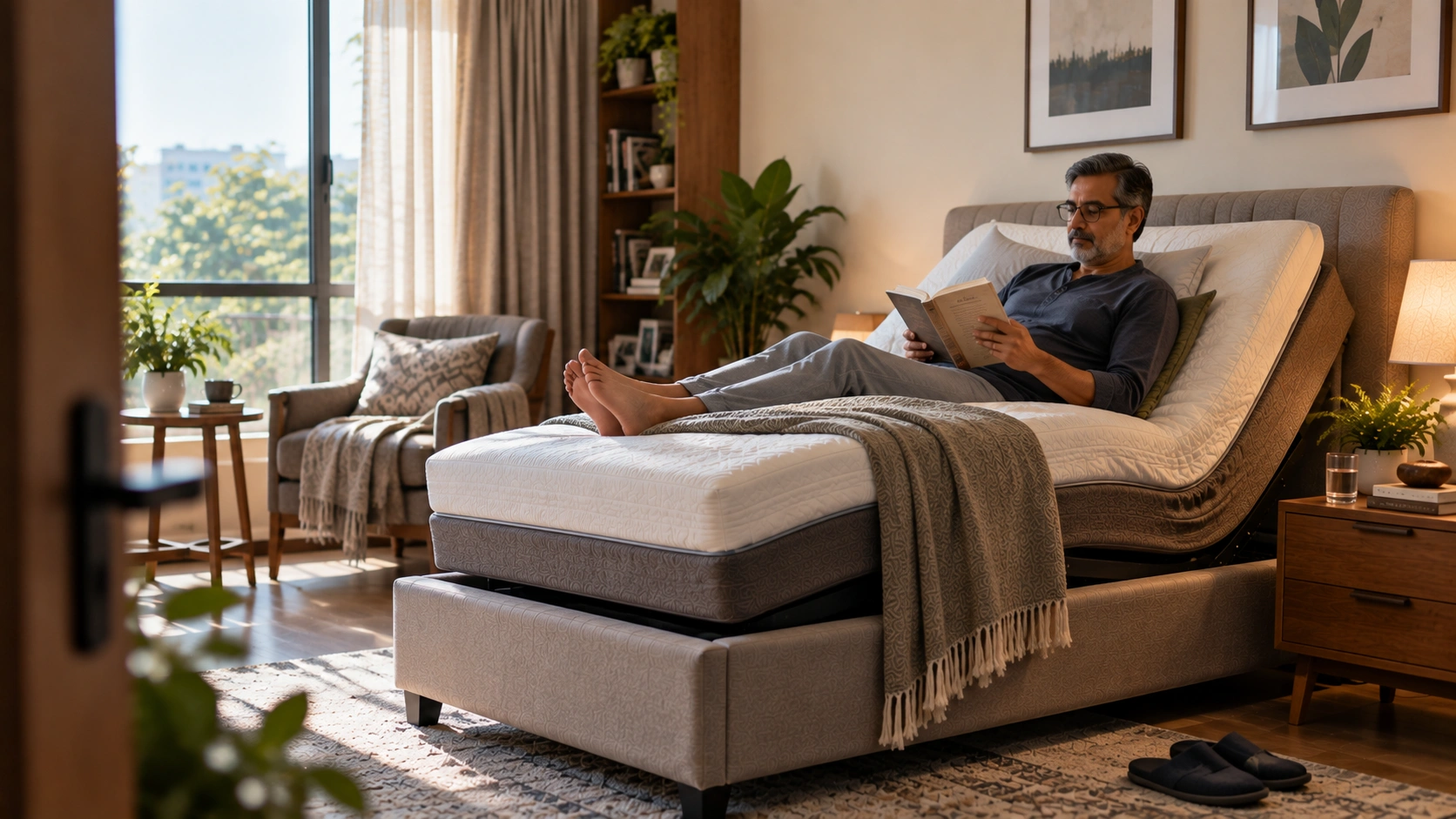

If your budget only allows one purchase right now, an orthopedic mattress is usually the more affordable first step and works on any bed frame you already own. But if back pain is significantly disrupting sleep, an adjustable bed for back pain delivers a bigger overall improvement, because it changes your sleeping *position*, not just the surface underneath you and the two work best of all when combined.
When back pain starts affecting sleep, most people land on one of two solutions first: buy an orthopedic mattress, or invest in an adjustable bed for back pain. Both are marketed as spine-friendly, both promise relief, and both come with a real cost so which one should actually come first? The honest answer depends on what’s causing your pain and how much you’re able to spend right now. Here’s a clear-eyed comparison to help you decide.
What Each One Actually Does for Your Spine
An orthopedic mattress is designed with firmer support zones, often through denser foam or reinforced coil placement, to keep your spine in a straighter line while you lie flat. It’s a passive solution it supports your existing sleeping position better, but it doesn’t change that position. An adjustable bed for back pain works differently: it actively changes your posture by elevating your knees, head, or both, taking pressure off the lower spine in a way that no flat surface, however well-engineered, can fully replicate.
Side-by-Side Comparison
| Factor | Orthopedic Mattress | Adjustable Bed for Back Pain |
| Typical price range (India) | ₹15,000 ₹45,000 | ₹35,000 ₹1,50,000+ |
| Works with existing bed frame | Yes, usually | Often needs a compatible frame or base |
| Changes sleeping position | No support only | Yes active elevation (e.g. Zero Gravity) |
| Best for | Mild to moderate posture-related pain | Moderate to severe pain, sciatica, swelling, reflux |
| Typical lifespan | 7–10 years | 10–15 years (frame); mattress separate |
| Setup effort | Minimal | Moderate (frame/base installation) |
| Can be combined with the other option | Yes | Yes |
When an Orthopedic Mattress Should Come First
If your back pain is mild, mostly linked to posture during the day rather than your sleeping position, or you’re on a tighter budget, starting with an orthopedic mattress is a reasonable and lower-risk first step. It requires no frame changes, fits into almost any bedroom setup, and can meaningfully improve support compared to an old, sagging mattress which is often a bigger contributor to back pain than people realize.
When an Adjustable Bed Should Come First
If your pain gets noticeably worse specifically when lying flat, if you’re managing sciatica, a herniated disc, arthritis, or swelling alongside your back pain, or if you’ve already tried a firmer or higher-quality mattress without lasting relief, an adjustable bed is likely to deliver a more meaningful improvement. This is because it addresses the *mechanism* behind the pain sustained pressure on an unsupported lower spine rather than just cushioning the same flat position more effectively.
We break down exactly which positions matter most for lower back pain in how to set up your adjustable bed for maximum lower back pain relief, which is worth reading once you’ve decided this is the right direction.
Why the Two Aren’t Actually Competing Products
Framing this as an either-or choice is a bit misleading, because the two solve different parts of the same problem. A supportive mattress on top of an adjustable frame typically outperforms either option used alone the frame changes your position, and the right mattress makes sure that new position feels genuinely comfortable rather than just structurally correct. If your budget allows it, pairing a memory foam or natural latex mattress with an adjustable frame is the combination most physiotherapists would recommend for serious, ongoing back pain.
A Simple Decision Framework
| Your Situation | Recommended First Step |
| Mild pain, tight budget, old sagging mattress | Orthopedic mattress first |
| Pain worsens specifically when lying flat | Adjustable bed first |
| Sciatica, disc issues, or swelling alongside pain | Adjustable bed first |
| Already tried a good mattress, no lasting relief | Adjustable bed next |
| Budget allows both | Adjustable bed + compatible mattress together |
What to Avoid Doing
- Don’t pair a brand-new orthopedic mattress with an old, worn-out adjustable base an aging motor or frame can undercut even the best mattress.
- Don’t assume any mattress works on an adjustable frame rigid orthopedic mattresses built for flat support sometimes resist the frame’s bend points; check compatibility before buying either separately.
- Don’t chase the firmest possible mattress by default very firm surfaces can create new pressure points at the hips and shoulders, especially for side sleepers.
Real-World Scenario: Choosing Between the Two
Consider someone in their forties whose lower back tightens up by mid-evening after a full workday, but who sleeps reasonably well once actually in bed. Their current mattress is over eight years old and visibly sagging in the middle a classic sign that support, not position, is the primary issue. For this person, replacing the mattress with a supportive orthopedic option is likely to deliver noticeable relief on its own, since the core problem is inadequate support rather than the need for a different sleeping angle.
Now consider someone whose lower back pain is fine during the evening but becomes sharp and specifically worse the moment they lie flat to sleep, sometimes radiating slightly down one leg. Here, a new mattress alone however supportive won’t change the flat position that’s triggering the pain in the first place. This is a much stronger signal that an adjustable bed, which changes the angle rather than just the surface, is the more appropriate first investment.
Cost-Effectiveness Over a 10-Year Horizon
It’s worth thinking about cost-effectiveness over a realistic ownership period rather than just the upfront price tag. An orthopedic mattress typically needs replacing every seven to ten years regardless of what it’s paired with, while a well-built adjustable bed frame can often last ten to fifteen years with proper care meaning the frame itself is frequently the more durable half of the investment, even though it usually costs more upfront. Over a decade, many households end up purchasing at least one orthopedic mattress anyway, whether or not they also invest in an adjustable frame, which is worth factoring into the total cost comparison rather than treating the two as a strict either-or choice.
There’s no universal right answer to adjustable bed versus orthopedic mattress it depends on what’s driving your pain and what you can invest right now. If you’re still unsure, start by paying attention to when your pain is worst: if it’s specifically when lying flat, that’s a strong signal an adjustable bed will help more than a mattress upgrade alone.
Explore our Adjustable Bed for Back Pain range, or browse compatible Natural Latex Mattress options built to work with adjustable frames.
Related Reading: