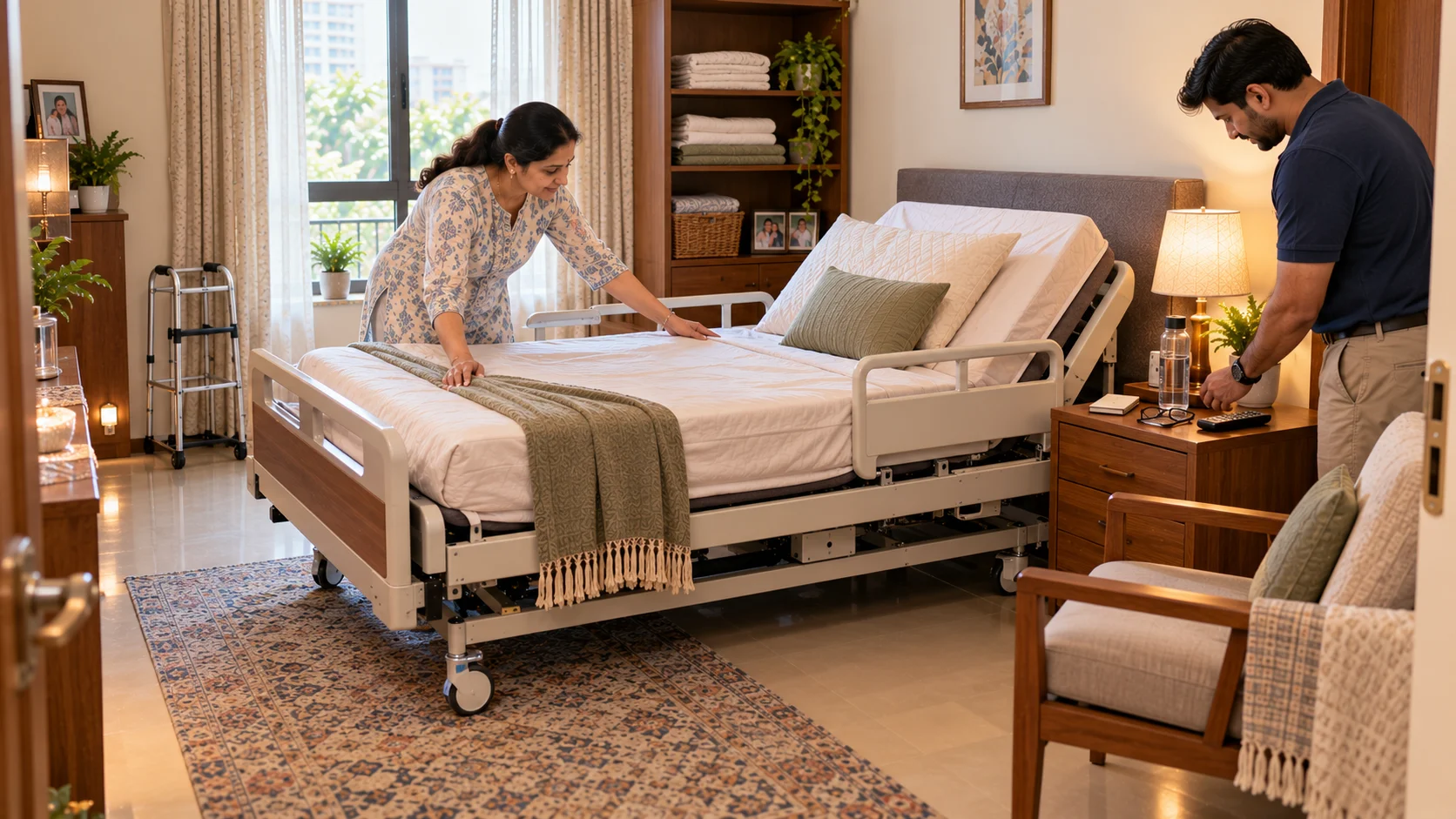
A home-care bed needs to do more than provide adjustable positioning. It also becomes part of the bedroom’s everyday environment. For families planning long-term care at home, a bed that feels integrated with the room can be important for comfort, privacy and a familiar atmosphere.
For families choosing an electric hospital bed for home use, appearance is one part of the decision, not the only one. The right setup must accommodate the user’s needs, provide the required movements and fit the space available. But design, finish and placement are legitimate parts of the decision, especially when a bed will remain in a bedroom for a long time.
Zero-G Beds describes its home-care adjustable beds as an option that combines functions associated with hospital beds with a more residential appearance. The published product information mentions marine plywood construction and two laminate colour or design options for the relevant range. Confirm the choices available for the exact model before making a selection.
This guide explains how to balance bed function with furniture, finishes and the practical realities of a lived-in bedroom.
Start With the Room’s Existing Style and Constraints
Look at the bedroom as a whole rather than selecting a bed from a product photograph alone. Note the main colours, wood finishes, flooring, headboard, bedside cabinets and any built-in units. Also identify fixed elements that cannot easily be moved, such as wardrobes, wall-mounted shelves and narrow doorways.
Then decide which parts of the current room you want to retain. Some households may want the bed to blend with existing furniture; others may prioritise a clear, uncluttered layout or an easy-to-clean surface. The best design choice depends on the room and its users.
A few practical questions can guide the discussion:
- Does the bed need to coordinate with a wooden or laminate finish?
- Is a headboard or footboard part of the desired appearance?
- Will bedside furniture remain in place?
- Does the room need to accommodate a caregiver as well as the user?
- Are there items that must remain within reach, such as a remote, lamp, phone or glasses?
These are not just decorative details. A bedside cabinet can restrict movement; a lamp cable can become a hazard if it crosses a moving section; and an oversized headboard may interfere with the planned arrangement.
Keep Function Ahead of the Finish
The finish should be considered only after the required functions are clear. Confirm which parts of the bed can move, how the controls operate and whether the selected configuration supports the user’s intended activities.
For example, someone who wants to raise the head for reading may prioritise a suitable backrest range and easy control access. A home-care user may have specific positioning requirements that should be discussed with a healthcare professional. In either case, a visually appealing bed that does not provide the required function is not the right choice.
The product range and features can differ across models, so do not assume that all finishes, colours, controls or movement functions are available in every size. Ask the team to confirm the exact combination being offered.
For families considering an electric hospital bed for home use, compare the exact functions, finish and room requirements of the configuration being offered rather than relying on the category name alone. Review the Zero-G Beds home-care adjustable bed range and the electric hospital bed range to assess the intended use and available specifications.
Think About Materials and Everyday Cleaning
Material and finish affect how the bed looks in the room, but they should also be considered in the context of daily use. The Zero-G Beds home-care range describes marine plywood construction with laminate finishes for the relevant product. Ask about the finish options and the cleaning instructions for the selected model.
Do not assume a surface is suitable for every cleaning product or disinfectant. Follow the manufacturer’s care guidance, particularly when the bed is used in a care setting where regular cleaning may be required. The same applies to remote controls, cables, mattress surfaces and any accessories supplied with the bed.
When comparing finishes, look at the actual available samples or product images for the configuration you are considering. Colours can appear different under showroom lighting or on a screen. Confirm what is included in the quotation, and whether the shown finish applies to the chosen bed size.
Plan Furniture Around the Moving Frame
A bed that adjusts is different from a fixed piece of furniture. As the head or leg sections move, the mattress changes angle and the space around it may become more important. Nearby bedside tables, wall shelves, windows and lamps should be considered in the intended positions, not only when the bed is flat.
Measure the distance to surrounding furniture and ask which clearances the selected configuration requires. Check that bedside tables do not block access to controls or prevent the user from entering and leaving the bed. Keep cables away from moving parts and avoid positioning objects where they could fall onto the mattress during adjustment.
If the room is compact, consider whether a table or chair can be moved temporarily when care tasks require more space. A visually tidy layout is useful only if it remains practical during everyday use.
Choose Accessories That Support the Routine
Consider what the user needs close to the bed. That might include a bedside table, reading light, phone charger, water bottle or overbed table. Avoid adding items simply because they are common in a bedroom; every extra object should have a useful purpose and a suitable place.
Remote controls should be easy to reach and stored where they will not fall behind the bed. Charging cables should not cross the path of moving parts or walking routes. If a caregiver assists regularly, make sure furniture placement leaves enough space for the tasks they perform.
For a patient or person with mobility limitations, seek professional advice where equipment placement affects transfer or care procedures. Do not use ordinary furniture as a transfer support unless it is designed for that purpose.
Retain Existing Furniture Only After Checking Compatibility
Some households want to retain an existing bed frame, headboard or furniture arrangement. Zero-G Beds offers an assessment and conversion process for certain existing beds, but suitability depends on the existing frame’s design and dimensions. Decorative appearance alone cannot establish compatibility.
If you want to keep part of the current setup, take photographs and measurements and ask what can remain. A headboard may be suitable while a storage base is not; alternatively, the proposed bed may need a different placement to provide clearance. The conversion decision and mattress compatibility should be checked separately.
Do not modify the frame or move heavy furniture on your own to prepare for an installation. First confirm what the proposed system requires and what work is included.
A Practical Design Checklist Before You Decide
| Area | What to confirm |
|---|---|
| Finish | Which colours and materials are available for the exact model? |
| Function | Which bed sections move, and what controls are supplied? |
| Room clearance | Is there enough space around the bed in its intended positions? |
| Furniture | Can the headboard, bedside tables and other fixed items remain? |
| Access | Is the route around the bed practical for the user and caregiver? |
| Cleaning | What products and methods are permitted for the finish and controls? |
| Accessories | Where will the remote, reading light, charger and other essentials be kept? |
| Final specification | Are the chosen size, finish, functions and included components documented? |
Use this list to compare the real setup rather than judging a bed only by its finish or promotional photograph.
A home-care adjustable bed should fit the bedroom visually and functionally. Decide which movements and controls are needed first, then consider finishes, furniture and accessories around the space available. Confirm the exact model and finish, and check that surrounding furniture does not interfere with movement or access.
Explore the Zero-G Beds home-care adjustable bed range and compare the available configuration with your room and daily requirements.