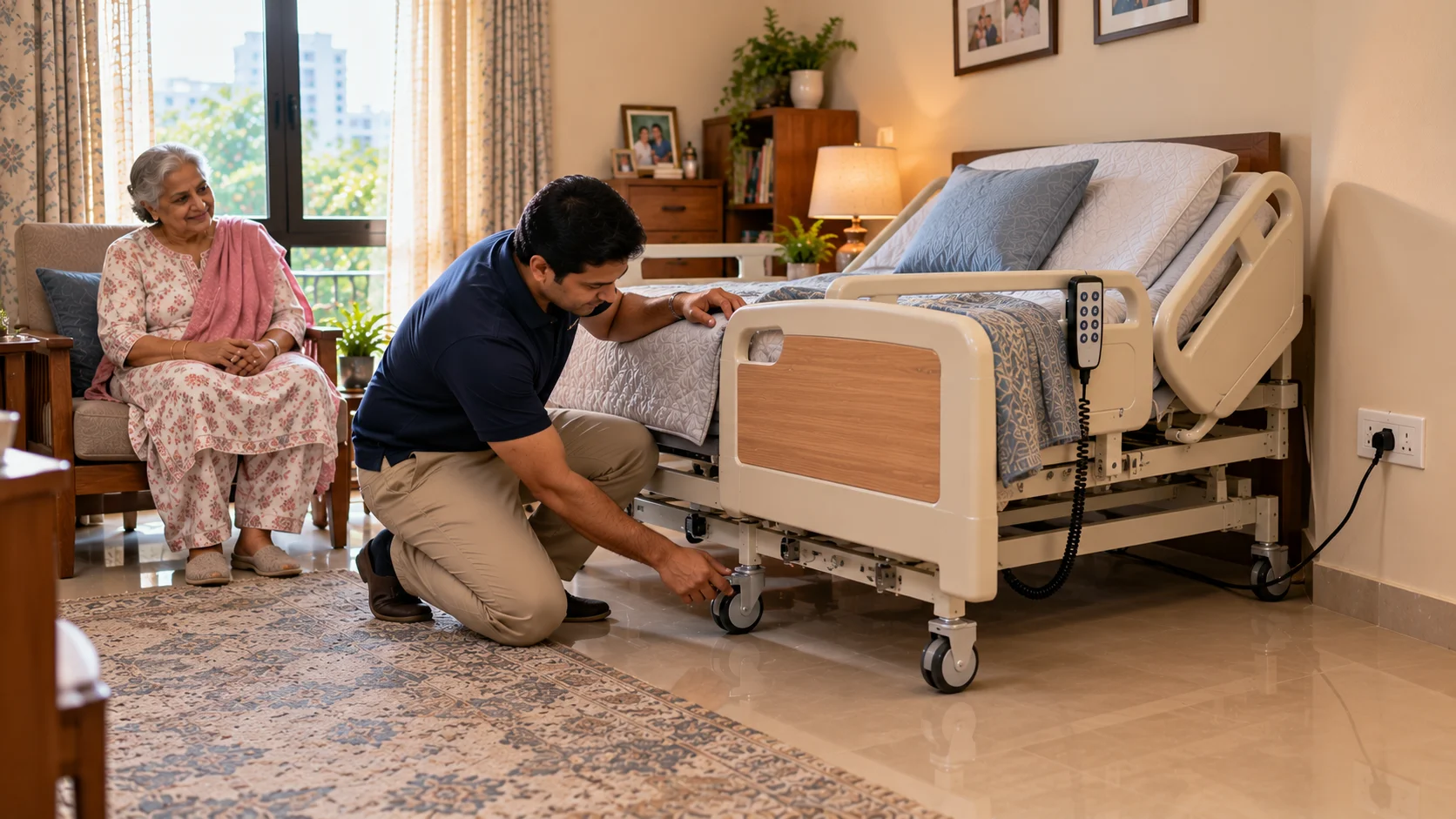
An electric bed for patients lets you change position by pressing a button, so the day can follow a simple routine: sit up for breakfast, recline to rest, raise the legs in the afternoon, and settle for sleep at night. Short, regular adjustments protect the patient’s comfort and the caregiver’s back.
How does an electric bed for patients work day to day?
An electric bed for patients has small motors under the head and leg sections. The patient or caregiver presses a button on a handheld remote, and the section moves. Release the button and it stops.
Compare that with a hydraulic bed for patients, which uses a manual or assisted mechanism. Zero G’s page describes it as suited to basic care needs, while electric beds suit families who want smoother, easier adjustment. The point is who does the effort: a person or a motor.
What does a typical day look like?
A routine helps because it turns a long day into short, predictable steps. Adjust the times to the patient’s doctor’s advice.
| Time of day | Bed position | Purpose |
| Morning | Head raised to a comfortable sitting angle | Wash, breakfast, medicines |
| Mid-morning | Reclined, legs slightly raised | Rest after activity |
| Lunch | Head raised again | Eating sitting up |
| Afternoon | Legs raised, head slightly up | Reading, TV, visitors |
| Evening | Head raised | Dinner, medicines |
| Night | Flatter, with doctor-approved head raise | Sleep |
Change positions through the day instead of staying in one angle for hours. Ask the doctor how often the patient should be repositioned.
How do you use an automatic patient bed safely?
An automatic patient bed is simple to use, but a few habits keep it safe.
- Check that nothing is under or beside the moving sections before pressing a button.
- Keep the remote where the patient can reach it, not buried in blankets.
- Move slowly and watch the patient’s face for discomfort.
- Keep cables off the floor and away from the wheels.
- Lock the wheels before any transfer.
- Lower the bed before leaving the patient alone.
Read our guide on patient safety with electric adjustable beds for more on rails, brakes and positioning.
What should you look for in a remote control bed for patient use?
A remote control bed for patient use lives or dies by its handset. Check these points:
- Large, clearly marked buttons that tired hands can press.
- A handset the patient can hold, with a cord or holder.
- Independent control of head and legs.
- Smooth, quiet movement.
- A simple way for the caregiver to take over.
Zero G’s page lists an easy-to-use remote control, quiet electric motors and independent head and leg adjustment. The electric hospital bed page also mentions wireless mobile control.
Is a patient bed adjustable enough for different conditions?
A patient bed adjustable at the head and legs covers most daily needs. Different conditions use the same controls in different ways.
| Need | How the bed helps |
| Eating and drinking | Raise the head so the patient sits more upright |
| Resting tired legs | Raise the leg section |
| Reading or TV | Moderate head raise for a relaxed angle |
| Position changes | Small angle changes through the day |
| Caregiver tasks | Bring the bed to a workable position |
For arthritis or joint pain, our post on adjustable beds for arthritis explains positions that many people find comfortable.
Does the same bed suit older adults?
Many Adjustable Beds For Seniors share the same features as patient beds: a remote, quiet motors and head and leg control. Older adults often find it hard to sit up from a flat mattress, so a bed that does it for them supports independence. For more on this, see best adjustable beds for seniors in India.
Which mistakes do caregivers make with electric beds?
Most problems come from habits, not the bed.
- Leaving the patient flat for hours when a gentle head raise was advised.
- Pressing buttons while a pillow, blanket or cable is caught in the frame.
- Forgetting to lock the wheels before a transfer.
- Raising the bed to a steep angle too quickly.
- Letting the remote fall out of reach, so the patient has to call for help.
Take five minutes each morning to check the rails, wheels and cables. It is a short habit that prevents most avoidable accidents, and it gives you a chance to notice early if a motor sounds different or a section moves unevenly.
What should the caregiver keep nearby?
- Water and a glass with a straw.
- A small torch or a night light.
- Tissues, wipes and spare linen.
- The doctor’s phone number and emergency contacts.
- A notebook to record position changes and observations.
Caution: this is general information, not medical advice. Ask the treating team about safe angles and how often to reposition the patient.
Looking at the options? Explore the Zero G beds for patients range.