A manual or hydraulic hospital bed usually costs less to buy, but the cheaper bed is not always the cheaper choice over ten years. Electric beds tend to earn their extra cost when the bed is used daily for a long time, the person needs frequent repositioning, or the caregiver is doing the lifting. Manual beds make more sense for short-term use or when adjustments are rare. Compare the two on total cost, not just the price tag.
Families often compare an electric bed and a manual hospital bed by looking at the price on the quotation and stopping there. That gives only part of the picture. A bed that stays in use for years brings repairs, backup power, caregiver time and sometimes a replacement, and those add up. Here is how to compare the two on a ten-year view.
The Cost Items That Matter
| Cost Item | Manual or Hydraulic Bed | Electric Bed | What to Ask |
| Purchase price | Usually lower | Usually higher | Get quotes for both with the same size and features |
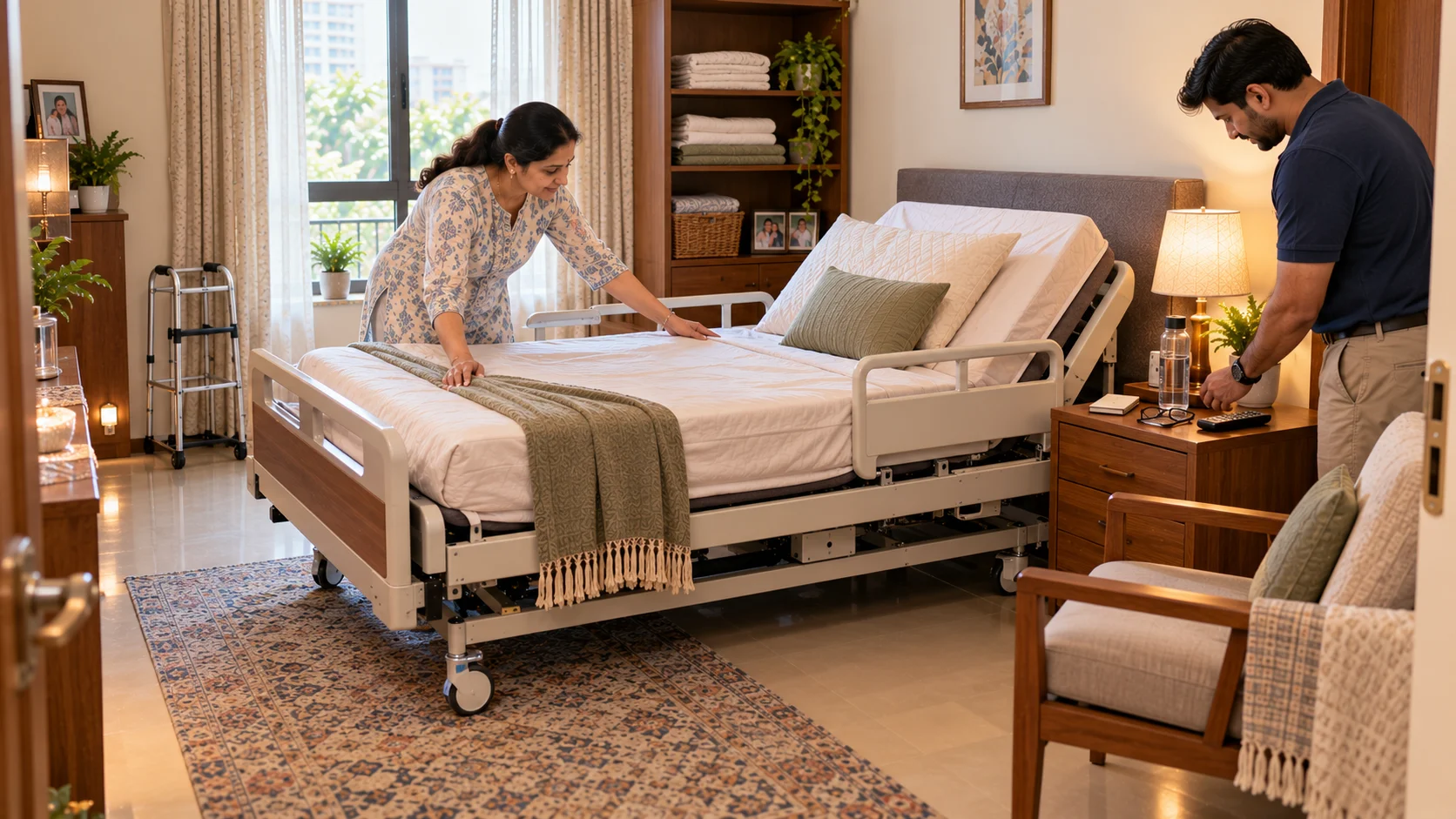
| Delivery and installation | Often simple | May need a technician and a power point | Is installation included? |
| Running cost | None | Very small, since motors run only while a button is held | Ask about standby power |
| Repairs and parts | Cranks, jacks and hydraulics can wear | Motors, control box and remote are the parts to watch | What is the warranty on each part? |
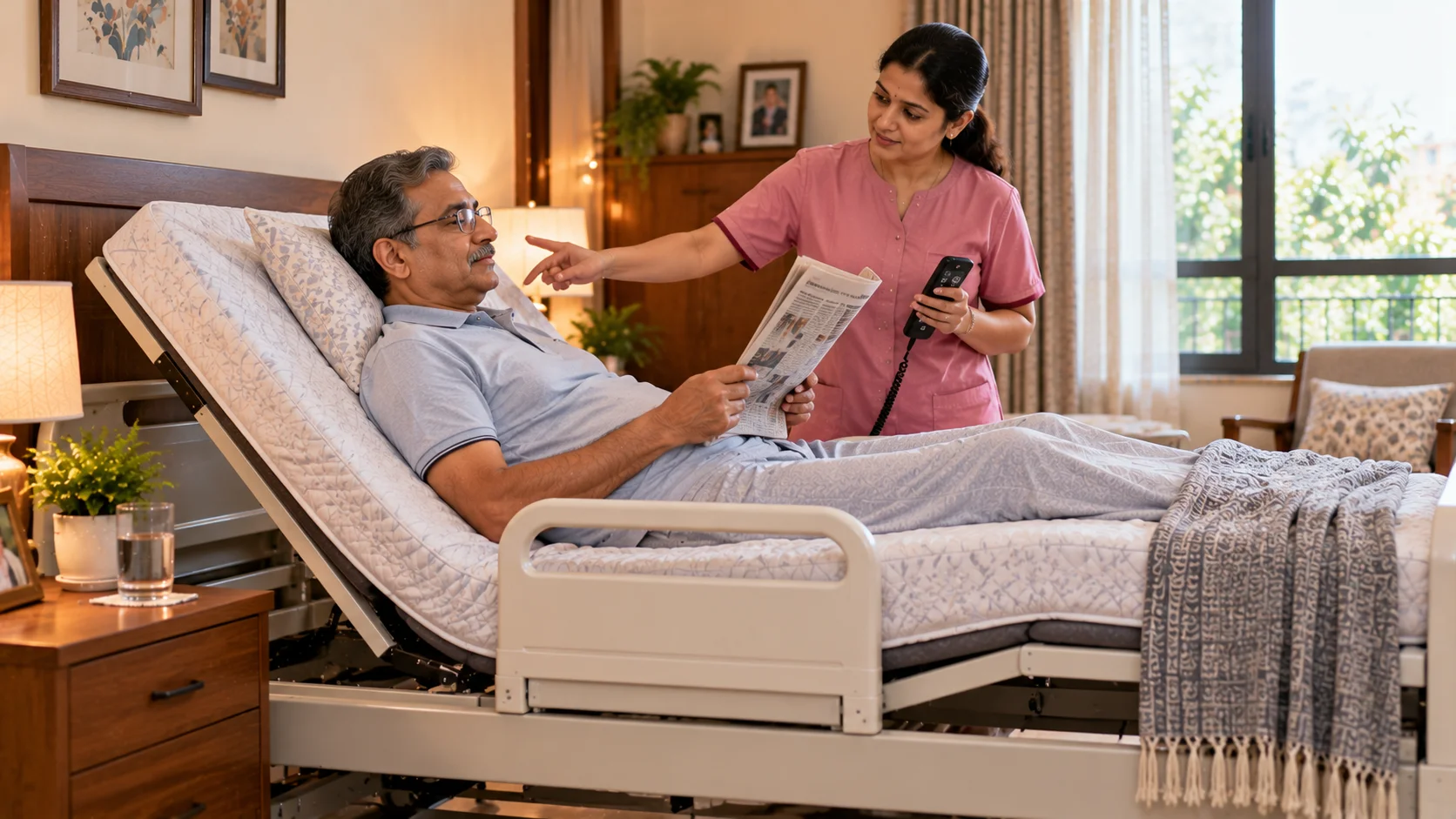
| Caregiver effort | Cranking and repositioning by hand | Remote-controlled movement | How often will the bed be adjusted each day? |
| Backup for power cuts | Not needed | Needs a plan | Is there a battery or manual release? |
The Simple Ten-Year Formula
Add the purchase price and installation cost, then the expected cost of servicing and spare parts over ten years, then the cost of any backup such as an inverter-compatible setup or battery. Add the value of caregiver time and effort if paid help is involved. Ask each supplier to put the warranty on the motors, control box and frame in writing, since that is where the long-term cost sits.
Where Electric Beds Often Pay Back
- Long-term use. The longer the bed is in daily service, the more the convenience is spread across the years.
- Frequent repositioning. Moving someone many times a day by crank is hard work, while a remote makes it effortless. Our guide on electric beds for caregivers covers the strain involved.
- Seniors who adjust themselves. A person who can use the remote needs less help and stays more independent.
- Bed-bound patients. Small, frequent position changes are easier with a powered bed.
Where a Manual Bed Is the Better Value
- Short-term use. If you need a bed for weeks rather than years, a manual bed or a rental can cost far less overall.
- Rare adjustments. If the position seldom changes, the extra features may go unused.
- Frequent power cuts with no backup. A manual bed will always work.
- A tight budget. A reliable manual bed is better than an electric one that cannot be afforded properly.
What About Renting?
Rental can work well for short recoveries, but monthly charges add up over a year or two. As a rough check, multiply the monthly rent by the months you expect to need the bed and compare the total with the purchase price of a suitable bed, including any resale or reuse value.
A Middle Route: Convert Your Existing Bed
If your family already owns a bed frame that suits the user, converting it to add adjustable movement can cost less than buying a complete new bed, and it keeps the room as it is. Compatibility depends on the frame, so share its details with the supplier. Our guide on converting a standard bed into an adjustable bed for home care explains the process, and our recliner beds page shows the options.
Don’t Overlook Warranty and Service
A cheaper bed with weak service can cost more than a pricier one with good support. Compare the warranty on motors and the control box separately, and ask how quickly a technician can reach you. Our article on electric bed motors lists what to check, and the guide on understanding your adjustable bed warranty explains the terms.
Fill In Your Own Ten-Year Comparison
Rather than relying on rules of thumb, ask each supplier for figures and fill in the table below. It takes ten minutes and often changes the decision.
| Line | Manual or Hydraulic Bed | Electric Bed |
| Purchase price | Rs ____ | Rs ____ |
| Delivery and installation | Rs ____ | Rs ____ |
| Servicing and parts over 10 years | Rs ____ | Rs ____ |
| Backup for power cuts | Not needed | Rs ____ |
| Paid help or caregiver hours saved | Rs ____ | Rs ____ |
| Total over 10 years | Rs ____ | Rs ____ |
Questions to Ask Before You Decide
- How long will the bed be needed, weeks, months or years?
- How often will the position change each day?
- Who will do the adjusting, the patient or a caregiver?
- Is power reliable at home, and is there a backup?
- What are the warranty terms for motors and the control box?
Use the answers to rank the two options. For short-term use, rental or a manual bed often wins, while long-term, frequent-use situations tend to favour electric beds.
Hidden Costs People Forget
- Backup power: an inverter-compatible setup or battery option for an electric bed.
- A compatible mattress: adjustable and electric bases work best with a mattress that bends with them.
- Surge protection and wiring: a safe, earthed socket and, where advised, a protector.
- Delivery access: stairs, narrow lifts or tight corners can add installation time.
- Removing the old bed: disposal or storage of the bed being replaced.
The right choice depends on how long the bed will be used, how often it will be adjusted and who is doing the work. Compare total cost rather than price, put every warranty in writing and match the bed to the real routine at home.
Explore our Electric Hospital Bed collection or the Bed for Patients range.
Related Reading