
This guide is general information about comfort and sleep positioning during pregnancy. It is not medical advice. Pregnancy involves individual risk factors that only your doctor or midwife can properly assess — always follow their specific guidance, and contact them promptly about any of the warning signs mentioned below.
Somewhere around the second trimester, a lot of expecting mothers discover that the bed they’ve slept in for years suddenly doesn’t work anymore. Lying flat brings on heartburn. Getting comfortable on one side for eight hours starts to feel impossible. Ankles and feet swell by evening. And the advice to “sleep on your side” is easy to say and much harder to actually do, night after night, for months.
This guide walks through choosing the right sleeping bed for pregnancy and what’s actually going on with pregnancy sleep discomfort, what current medical guidance says about safe sleep positions, and how the right bed setup can genuinely help — while being clear about where a bed’s role ends and your doctor’s guidance begins.
Have questions about setting up for a more comfortable pregnancy? Call or WhatsApp: +91 9820138189 Tell us what’s making sleep difficult with your pregnant women bed and we’ll suggest options that support the position your doctor recommends.
Why You Need a Different Sleeping Bed for Pregnancy
A few things happen at once as pregnancy progresses:
- Your centre of gravity shifts, and the growing uterus puts new pressure on your back, hips, and pelvis.
- Hormonal changes relax the valve between the stomach and oesophagus, making heartburn and reflux more likely, especially lying flat.
- Blood volume increases and circulation changes, which commonly leads to fluid retention and swelling in the legs, ankles, and feet, particularly by the end of the day.
- The growing uterus can press on major blood vessels when lying flat on the back, which is why side sleeping becomes the recommended position later in pregnancy.
- Simple physical size and discomfort make it harder to get into — and stay in — one comfortable position for a full night.
None of this means something is wrong. It’s a normal, if genuinely uncomfortable, part of how the body changes through pregnancy. But it does mean the sleep setup that worked before probably needs to change too.
Safe Sleep Position Guidance During Pregnancy
This is worth getting right, so here’s the accurate picture:
- Early pregnancy (first trimester): most sleep positions are generally considered fine, and it’s reasonable to sleep however is most comfortable.
- From around 28 weeks (third trimester): current guidance recommends going to sleep on your side rather than on your back. Research reviewed by bodies including the Royal College of Obstetricians and Gynaecologists has linked back-sleeping after 28 weeks with a higher risk of complications, including stillbirth, which is why this recommendation exists. (Sleep position in pregnancy, Tommy’s; RCOG-reviewed evidence on sleep position, PMC)
- Left side is often recommended specifically, since it may further support blood flow to the uterus and placenta, though sleeping on the right side is also considered acceptable — the most important thing is avoiding your back, not achieving a perfect left-side position all night. (ACOG-cited guidance on side sleeping, The Bump)
- Waking up on your back isn’t a cause for alarm. If you fall asleep on your side and shift onto your back during the night, simply roll back over — the guidance is about your going-to-sleep position and general habit, not a strict rule that must be maintained every single moment.
Because this involves your specific pregnancy and any risk factors you may have, always confirm this guidance directly with your doctor or midwife rather than relying on this article alone.
Pregnancy Warning Signs That Need Prompt Medical Attention
While ordinary pregnancy discomfort is common, certain symptoms need a call to your doctor promptly, not a wait-and-see approach:
- Sudden or severe swelling in your face, hands, or one leg specifically
- Swelling in one leg that is also red, warm, tender, or painful
- A severe or persistent headache that doesn’t improve
- Vision changes — blurriness, spots, flashing lights, or light sensitivity
- Pain in the upper abdomen, particularly under the ribs
- Sudden shortness of breath, or trouble breathing when lying flat
These can be signs of conditions like preeclampsia or a blood clot, both of which need prompt evaluation. (Warning signs during pregnancy, ACOG; Swelling during late pregnancy, Merck Manual) Ordinary, gradual swelling in both feet and ankles by evening is a normal part of pregnancy for many women — the distinction is sudden, severe, one-sided, or accompanied by other symptoms.
How a Sleeping Bed for Pregnancy Helps with Common Discomfort
Back and hip pain
A supportive, appropriately firm sleeping surface — combined with side sleeping and a pillow between the knees — helps keep the hips and spine in better alignment, which can ease some of the mechanical strain of a growing belly. An adjustable bed base that lets you find a comfortable head and knee elevation, rather than stacking pillows that shift overnight, can make holding a side-sleeping position through the night noticeably easier.
Leg swelling and circulation
Gently elevating the legs when resting during the day (not necessarily overnight sleep position, which should stay on your side per current guidance) is commonly used to help with the fluid pooling that causes swelling in the feet and ankles. An adjustable bed with independent leg elevation makes this genuinely easy to do for short periods during the day or before bed.
Heartburn and reflux
Raising the head and upper body is a well-established, drug-free way to reduce night-time reflux, since it helps keep stomach acid from travelling backward while lying down. (bed-head elevation & nocturnal GERD, PubMed) A number of general pregnancy resources specifically recommend elevating the head of the bed by a few inches as part of managing heartburn in later pregnancy.
Getting comfortable for side-sleeping
This is often the biggest practical challenge — not knowing you should sleep on your side, but actually managing it comfortably for eight hours. A bed that lets you find a slightly elevated, supported position (rather than perfectly flat) often makes side-sleeping considerably easier to sustain, alongside a pregnancy pillow or a regular pillow between the knees.
General insomnia and restlessness
Late pregnancy insomnia is common and has many contributing factors — physical discomfort, frequent bathroom trips, and anxiety among them. A genuinely comfortable, supported sleeping position won’t resolve all of these, but removing the physical discomfort piece is a meaningful part of the puzzle for many women.
What to Look for in a Pregnant Women Bed
- Independent head and leg elevation
This is the single most useful feature — letting you raise the head slightly for reflux relief and elevate the legs separately for swelling, without needing two different setups.
- A mattress that supports side-sleeping comfort
Look for a mattress with enough cushioning at the hips and shoulders (since these bear more weight in a side-sleeping position) while still offering firm underlying support. Natural latex and memory foam are commonly suited to this.
- Gentle, quiet motorised adjustment
If you’re using an adjustable base, a smooth, quiet motor matters — a jolting or noisy adjustment isn’t what you want when you’re already having trouble settling into sleep.
- Enough space to get comfortable with pillows
Whether you use a full pregnancy pillow or a few strategically placed regular ones, make sure the bed size comfortably accommodates this — a cramped setup undermines the comfort gains from the bed itself.
- Easy, low-effort adjustment
By the third trimester, cranking a manual mechanism is its own physical effort you likely don’t want. A simple remote-controlled adjustment removes this entirely.
Want help thinking through the right sleeping bed for pregnancy setup for your stage of pregnancy? Call/WhatsApp: +91 9820138189 — we’re glad to talk through what might help, alongside your doctor’s specific guidance.
Practical Sleep Tips for Your Pregnant Women Bed Setup
- Use a pillow between your knees when side-sleeping to help keep your hips aligned.
- If heartburn is an issue, avoid eating close to bedtime and keep the head of the bed elevated.
- For swelling, rest with your legs elevated for short periods during the day, and avoid standing for long stretches when possible.
- If you wake up on your back, simply roll back onto your side — no need for concern about a single occurrence.
- Stay in touch with your doctor about any new or worsening symptoms rather than trying to manage everything through comfort measures alone.
Pregnant Women Bed: Quick Picks by Situation
- Reflux/heartburn-focused: adjustable bed with reliable head elevation, used consistently through the night.
- Swelling-focused: independent leg elevation, used for rest periods rather than overnight sleep position.
- Struggling with side-sleeping comfort: a mattress with side-sleeper-friendly cushioning, plus a slightly elevated, supported base position.
- General late-pregnancy discomfort: a combination of gentle head/leg elevation and a supportive mattress, alongside your usual pregnancy pillow.
Tell us what’s making sleep hardest right now. Call/WhatsApp: +91 9820138189 — we’ll suggest options, and always recommend checking anything specific with your doctor.
What Affects the Price of a Pregnant Women Bed?
- Adjustment type — manual is the cheapest option, fully electric with smooth remote control costs more but is generally worth it for ease of use in later pregnancy.
- Mattress material — natural latex and memory foam options that support side-sleeping cushioning cost more than basic foam.
- Independent head/leg control — beds with separate head and leg adjustment cost more than single-motion designs.
- Size — accommodating a pregnancy pillow comfortably may mean sizing up, which affects cost.
Flexible EMI options are available. Contact +91 9820138189 for current pricing and guidance.
Get a personalised recommendation. Call/WhatsApp: +91 9820138189 — tell us your stage of pregnancy and main discomfort, and we’ll suggest options and pricing.
What a Pregnant Women Bed Can (and Can’t) Do
A good bed setup can genuinely ease a lot of ordinary pregnancy discomfort — back pain, reflux, swelling, and the practical difficulty of sustaining a side-sleeping position all night. What it can’t do is replace your doctor’s guidance on sleep position, assess your individual pregnancy risk factors, or substitute for medical attention if you notice any of the warning signs above. Treat this as one part of a comfortable, supported pregnancy — alongside, never instead of, your prenatal care.
Pregnant Women Bed Checklist
- Confirmed current sleep position guidance with your doctor or midwife
- Aware of warning signs that need prompt medical attention
- Bed or mattress supports comfortable side-sleeping
- Independent head elevation available for reflux relief
- Independent leg elevation available for daytime swelling relief
- Motor (if electric) is smooth and quiet
- Enough space for pillows or a pregnancy pillow
- Mattress firmness suits side-sleeping (cushioned at hips/shoulders, supportive underneath)
Why Families Choose Zero G Beds
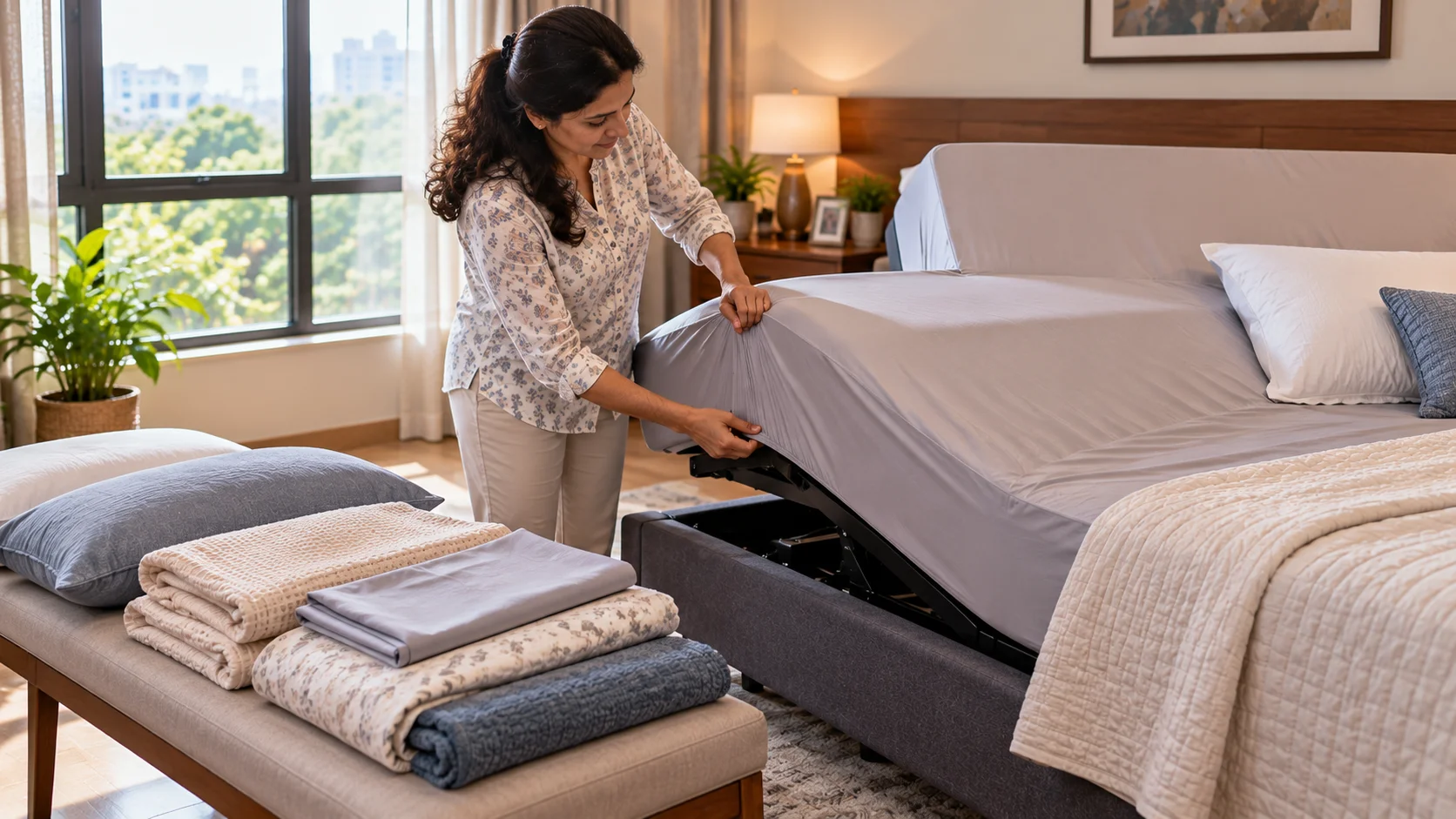
- Adjustable beds with independent, gentle head and leg elevation.
- Mattress options suited to side-sleeping comfort through pregnancy.
- Quiet, smooth motorised adjustment for easy use at any stage.
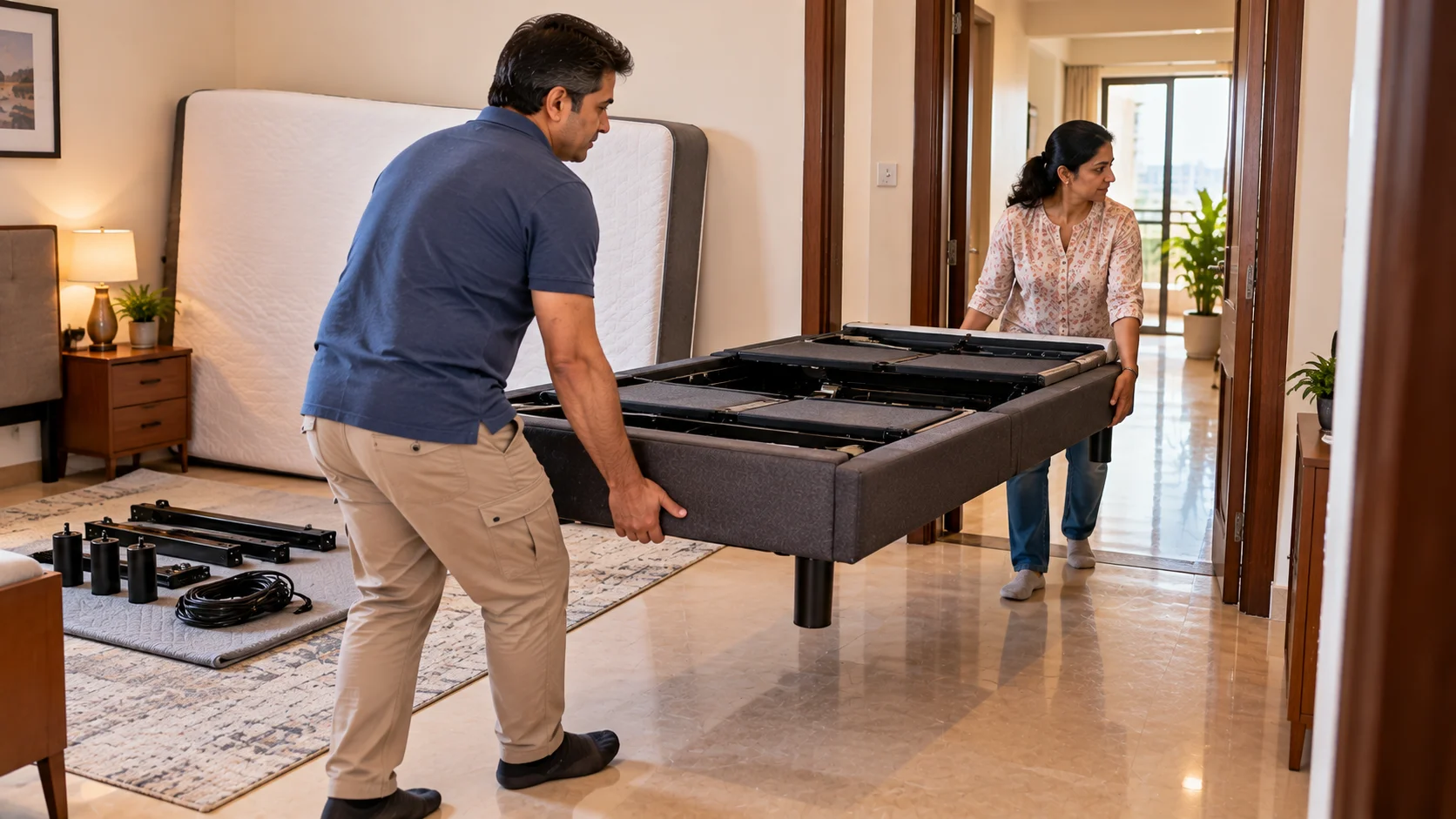
- At Zero G Beds, we can convert your existing bed into an adjustable bed based on your comfort and support requirements, so you don’t need to buy a completely new bed.
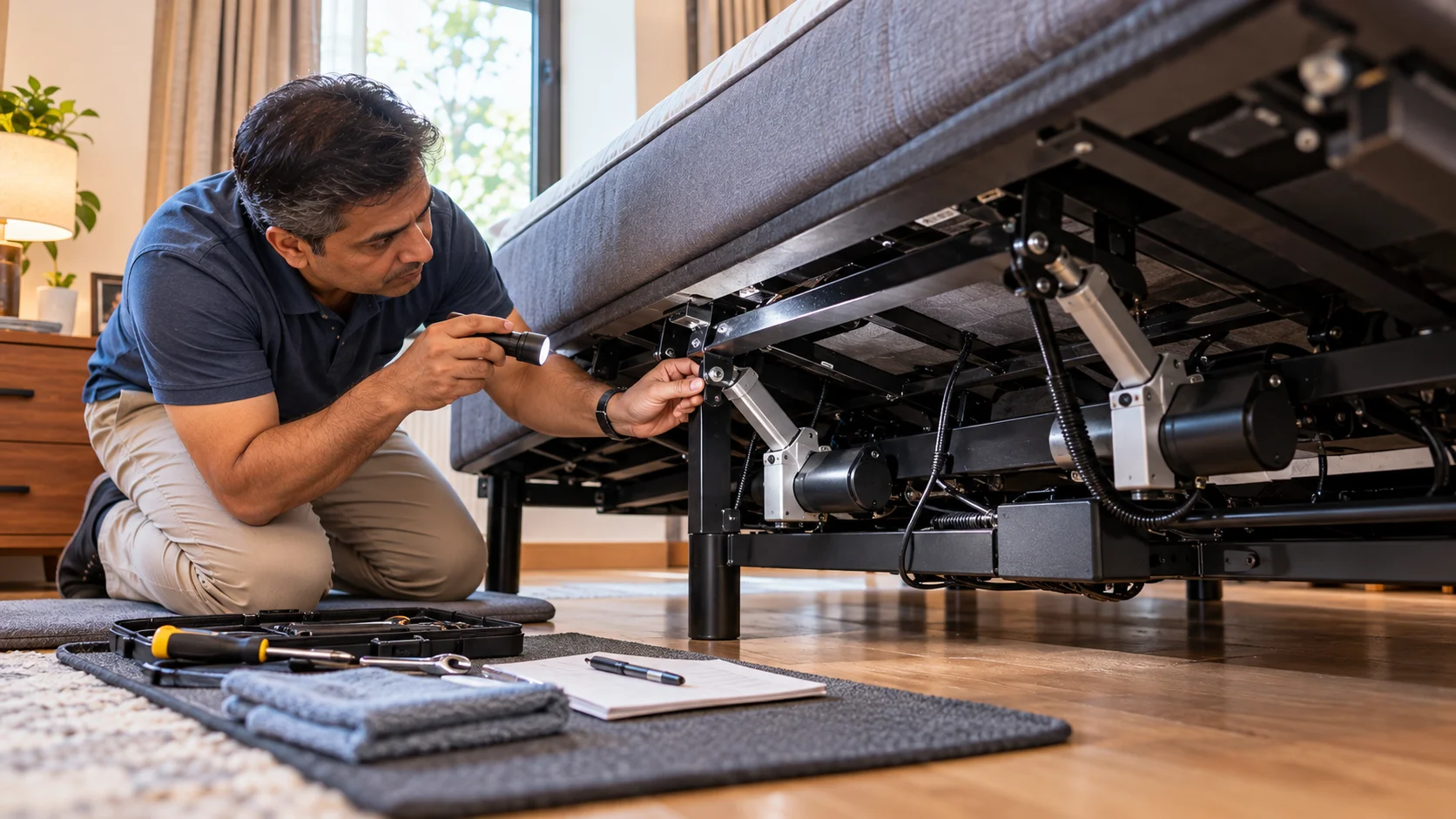
- Professional delivery within 1 week, along with installation and a complete product demonstration by trained technicians.
- 15-year warranty for long-lasting performance and peace of mind.
- Easy assistance via Call/WhatsApp: +91 9820138189 for guidance and support.
- CE-certified adjustable bed systems that meet internationally recognized European safety and quality standards.
- Trusted by families across India since 2003.
Want to talk through options for a more comfortable pregnant women bed? Talk to us: +91 9820138189 or email info@zerogbeds.com
Bottom Line: Choosing the Right Sleeping Bed for Pregnancy
Pregnancy sleep discomfort is common, genuinely difficult, and worth taking seriously — not just as something to push through. A supportive sleeping bed for pregnancy and mattress, gentle head and leg elevation, and a setup that makes side-sleeping easier to sustain can meaningfully improve how pregnancy feels night to night. None of it replaces your doctor’s guidance, and any of the warning signs above deserve a call to your care team rather than a wait-and-see approach — but alongside good prenatal care, the right bed setup is a genuinely worthwhile comfort investment.
Tell us what’s making sleep difficult and we’ll suggest options that support you. Call/WhatsApp: +91 9820138189
References
- Tommy’s — Sleep Position in Pregnancy Q&A. https://www.tommys.org/pregnancy-information/im-pregnant/sleep-side/sleep-position-pregnancy-qa
2. Vision-based detection and quantification of maternal sleeping position (background on RCOG-reviewed evidence for avoiding supine sleep after 28 weeks). PMC. https://www.ncbi.nlm.nih.gov/pmc/articles/PMC10547173/
3. The Bump — When to Stop Sleeping on Your Back During Pregnancy (ACOG-cited guidance). https://www.thebump.com/a/safe-sleeping-positions-while-pregnant
4. ACOG — Warning Signs During and After Pregnancy. https://www.acog.org/giving/programs/quality-and-safety/resources
5. Merck Manual (Consumer Version) — Swelling During Late Pregnancy. https://www.merckmanuals.com/home/women-s-health-issues/symptoms-during-pregnancy/swelling-during-late-pregnancy
6. Khan BA et al. Effect of bed-head elevation during sleep in nocturnal gastroesophageal reflux. PubMed. https://pubmed.ncbi.nlm.nih.gov/22098332/
7. Indian Council of Medical Research (ICMR) — Stillbirth Pooled India Cohort (ICMR-SPIC): estimating prevalence, risk factors, and prediction models for stillbirths in India. https://www.medrxiv.org/content/10.1101/2025.01.16.25320656.full.pdf