This guide is general information to help families make informed decisions. It isn’t medical advice — please check anything specific to the patient with their doctor, physiotherapist or nurse, and confirm the rated specifications of any bed before you buy.
There’s a particular kind of tired that comes from caregiving — not just the long hours, but the constant lifting, bending, and repositioning of someone who depends on you every day. An electric bed for patients doesn’t replace caregiving, but it does remove much of the physical effort involved. At the press of a button, caregivers can help patients sit up, elevate their legs, or change position more comfortably, while many patients regain a greater sense of independence through simple remote-controlled adjustments.
This guide looks at what an automatic bed for patients actually does differently from a manual one, who benefits most, and how to think about the “press of a button” comfort it’s built around — without overselling what a motor can and can’t do.
Talk to a care advisor — free, no obligation. Call or WhatsApp: +91 9820138189 Tell us the patient’s condition and we’ll recommend the right bed and mattress.
What Is an Electric Bed for Patients? Electric vs. Automatic Explained
The terms get used loosely, so it’s worth being precise:
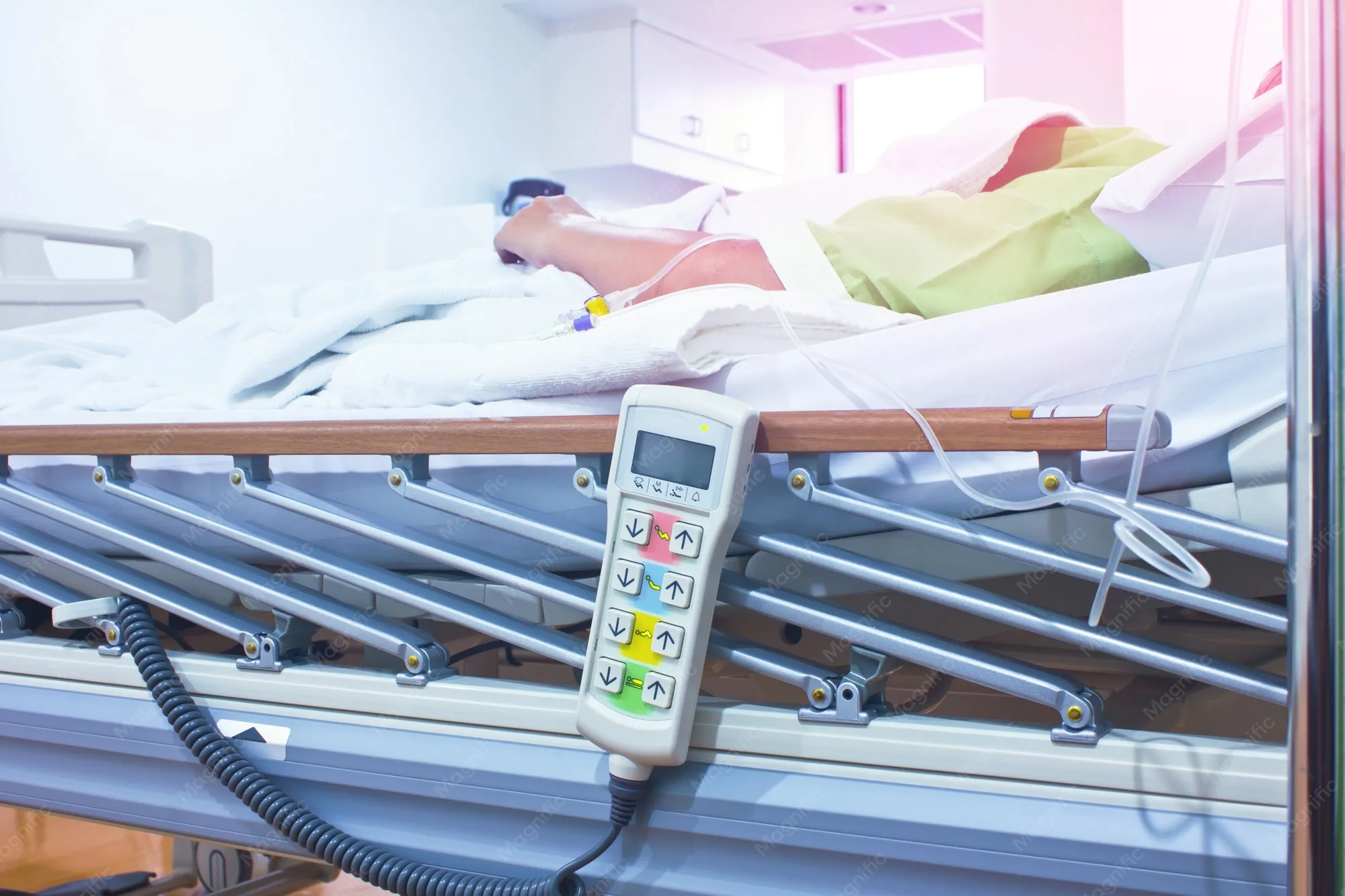
- Fully electric beds motorise the head, legs, and often the overall height — every major adjustment happens by remote, with no manual cranking involved.
- Automatic beds are often used interchangeably with “electric,” though some sellers use it to mean beds with added smart functions — app control, voice control, or memory positions that recall a preset setting at the touch of one button.
Benefits of an Electric Bed for Patients and Caregivers
On paper, “motorised positioning” sounds like a convenience feature. In practice, for families caring for someone daily with an automatic bed for patients, it changes three things that compound over weeks and months:
- Caregiver back strain drops significantly
Manually repositioning a patient — shifting them up the bed, adjusting pillows, helping them sit — is repeated, awkward-angle lifting, often several times a day. Caregiver back injury from repeated manual handling is one of the most common, and most preventable, issues in home care. An electric bed replaces a lot of that physical handling with a button press.
- Patients can reposition themselves more often
When a patient can adjust their own head or leg elevation with a simple remote, they tend to do it more frequently — because they’re not waiting for someone to be free to help. More frequent, patient-initiated position changes support better circulation and reduce the amount of time spent in any single position, which is a meaningful piece of pressure-injury prevention, alongside the caregiver’s regular repositioning routine.
- Small comfort adjustments actually get made
With a manual crank, a small comfort tweak — raising the head two inches, easing the knee support — often just doesn’t happen, because it feels like too much effort for too small a change. With a remote, it does. Over a full day, that adds up to a genuinely more comfortable patient.
Does an Electric Bed Prevent Bedsores?
It’s worth being precise here, because this claim gets oversold often: an electric bed does not prevent bedsores by itself. Pressure injuries are prevented mainly through regular repositioning and skin care, following an individualised schedule set by the patient’s care team — particularly for anyone assessed as high-risk.What an electric bed genuinely does is make that repositioning far easier to carry out consistently, both by the caregiver and by the patient themselves. Easier and more frequent repositioning is a real, supportive contribution to prevention — but it works alongside a proper care routine, not instead of one.
Who Benefits Most from an Electric or Automatic Bed for Patients
- Family caregivers managing daily care alone, where reducing physical strain isn’t optional — it’s what makes ongoing home care sustainable.
- Patients with some hand or arm strength, who can operate a simple remote and regain a degree of independence over their own comfort.
- Long-term or progressive conditions (Parkinson’s, advanced arthritis, post-stroke recovery), where positioning needs change often and unpredictably through the day.
- Patients at risk of pressure injuries, where easier, more frequent repositioning supports the care team’s prevention plan.
- Households with more than one caregiver, where a consistent, simple control method matters so everyone can operate the bed the same way.
Still weighing it up? Book a free home demo — Call/WhatsApp: +91 9820138189 See the motorised positioning in action before you decide.
Manual vs. Electric Bed for Patients: Caregiver Effort Compared
| Feature | Manual Bed | Electric / Automatic Bed |
| Repositioning method | Hand crank or physical lifting | Remote / app / voice, at the press of a button |
| Caregiver physical strain | High, repeated daily | Low |
| Frequency of small comfort adjustments | Often skipped — feels like too much effort | Made freely, as needed |
| Patient independence | None | Can self-adjust, if hand strength allows |
| Night-time adjustments | Disruptive, needs a caregiver awake | Quiet motor, easy for either person to operate |
| Best suited for | Very short-term, budget-limited care | Ongoing daily care, any duration beyond a few weeks |
What to Look for in an Electric Bed for Patients
Not every “electric” bed offers the same functional value. A few things are worth checking specifically:
- Motor noise level — a quiet motor matters far more than it sounds, especially for night-time repositioning without waking anyone.
- Range of motion — check the actual degree range for head and leg elevation (commonly up to around 70–90° for the backrest, and 30–45° for the legs), not just that it’s “adjustable.”
- Control simplicity — a large-button remote is often more useful in practice than an app, particularly for patients with limited dexterity or older caregivers less comfortable with phone controls.
- Auto-contour, if available — synchronises head and knee movement so the patient doesn’t slide down the bed as the backrest rises.
- Hi-low height, if the caregiver is doing hands-on transfers — this reduces bending and lifting strain on top of the positioning benefits.
- Battery backup or manual override, in case of a power cut — worth asking about specifically, since it’s easy to overlook until it matters.
- A rated weight capacity that fits the patient’s needs. (Zero-G Beds’ standard adjustable/electric beds are rated up to 175 kg — always confirm this against the specific model.)
Do Electric Beds for Patients Have to Look Clinical?
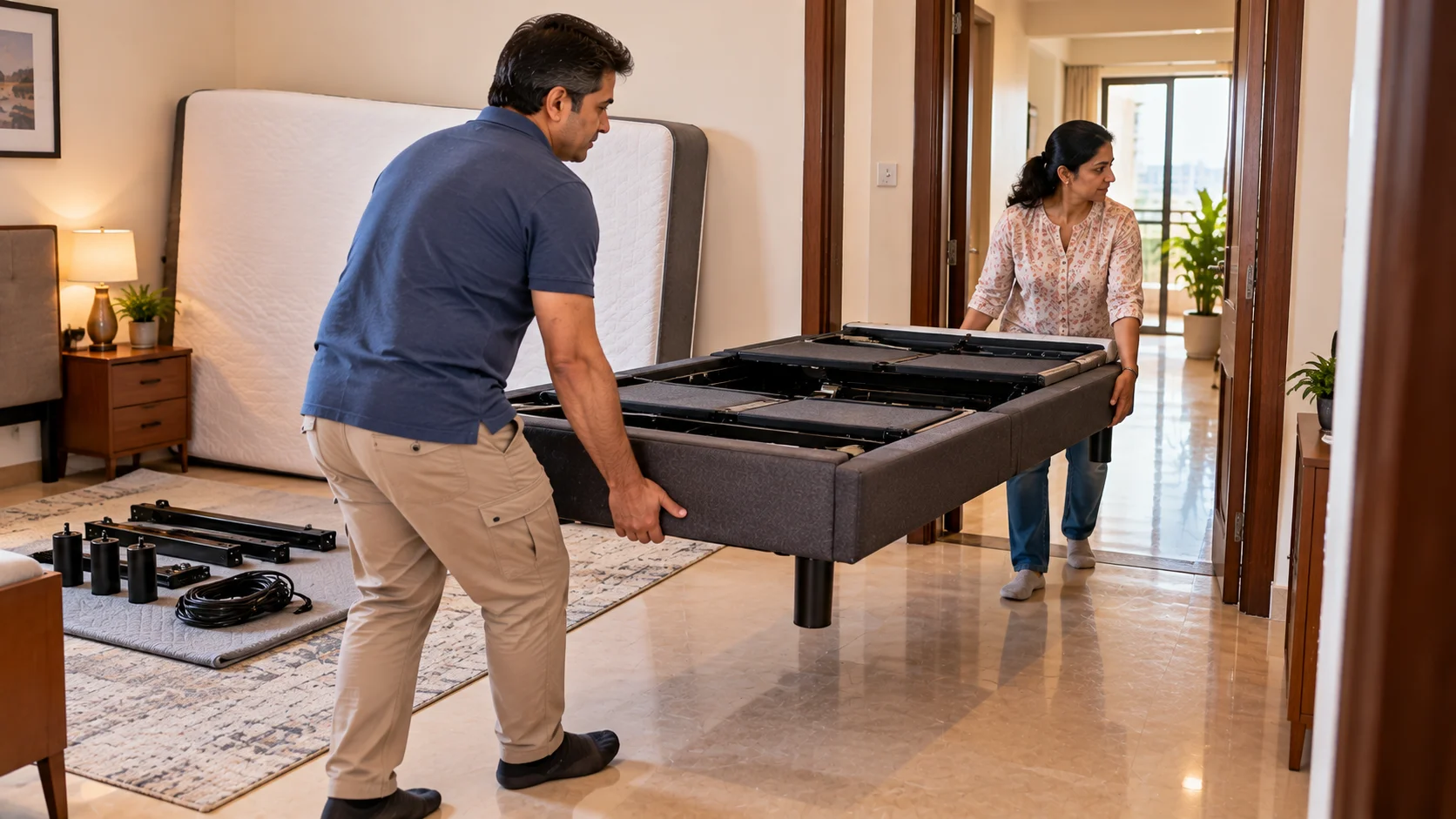
No. Motorised beds now come in a range of finishes — including retrofit systems that fit a motor into your own existing wooden bed frame, keeping the room looking like a bedroom rather than a ward, while still delivering the same electric positioning.
Tell us the condition, get a matched recommendation. Call/WhatsApp: +91 9820138189 We’ll suggest the exact bed and mattress and send you the details.
What Affects the Price of an Electric Bed for Patients
- Motor quality and quietness — better motors cost more but matter daily.
- Range of functions — hi-low height, auto-contour, and app/voice control add to the price.
- Frame and weight capacity — reinforced frames cost more.
- Battery backup, if included.
- Design and finish — retrofit and wood-finish options typically cost more than plain metal frames.
- Warranty and installation — coverage length and professional setup factor into the total.
Get a personalised quote! Call/WhatsApp: +91 9820138189 Share the patient’s condition and we’ll send exact pricing, mattress options and delivery timelines.
Common Mistakes to Avoid When Buying an Electric Bed for Patients
- Assuming “electric” alone prevents bedsores — it supports prevention, it doesn’t replace a repositioning routine.
- Choosing a bed with a noisy motor without testing it first, particularly for night-time use.
- Overlooking manual override or battery backup, and only realising it matters during a power cut.
- Picking app-only controls for a patient who’d genuinely be better served by a simple physical remote.
- Skipping written warranty coverage on the motor and electronics specifically — these are the parts most likely to need service over time.
- Assuming a generic weight capacity instead of confirming the specific model’s rating.
Electric Bed for Patients: Quick Buying Checklist
- Range of motion suits the patient’s condition (head and leg elevation)
- Motor noise level checked, ideally in person or via demo
- Controls match what the patient and caregiver can actually operate
- Manual override or battery backup confirmed
- Rated weight capacity confirmed for the specific model
- Mattress compatible with the motorised frame
- Warranty on motor and electronics in writing
- Delivery, setup, and after-sales support clarified
Why Choose Zero-G Beds for an Electric Bed for Patients
- 10,000+ families across India have chosen Zero-G Beds since 2003.
- Quiet, tested motors built for daily, long-term use.
- At Zero G Beds, we can convert your existing bed into a customized adjustable bed based on your comfort and support requirements—without replacing your current bed.
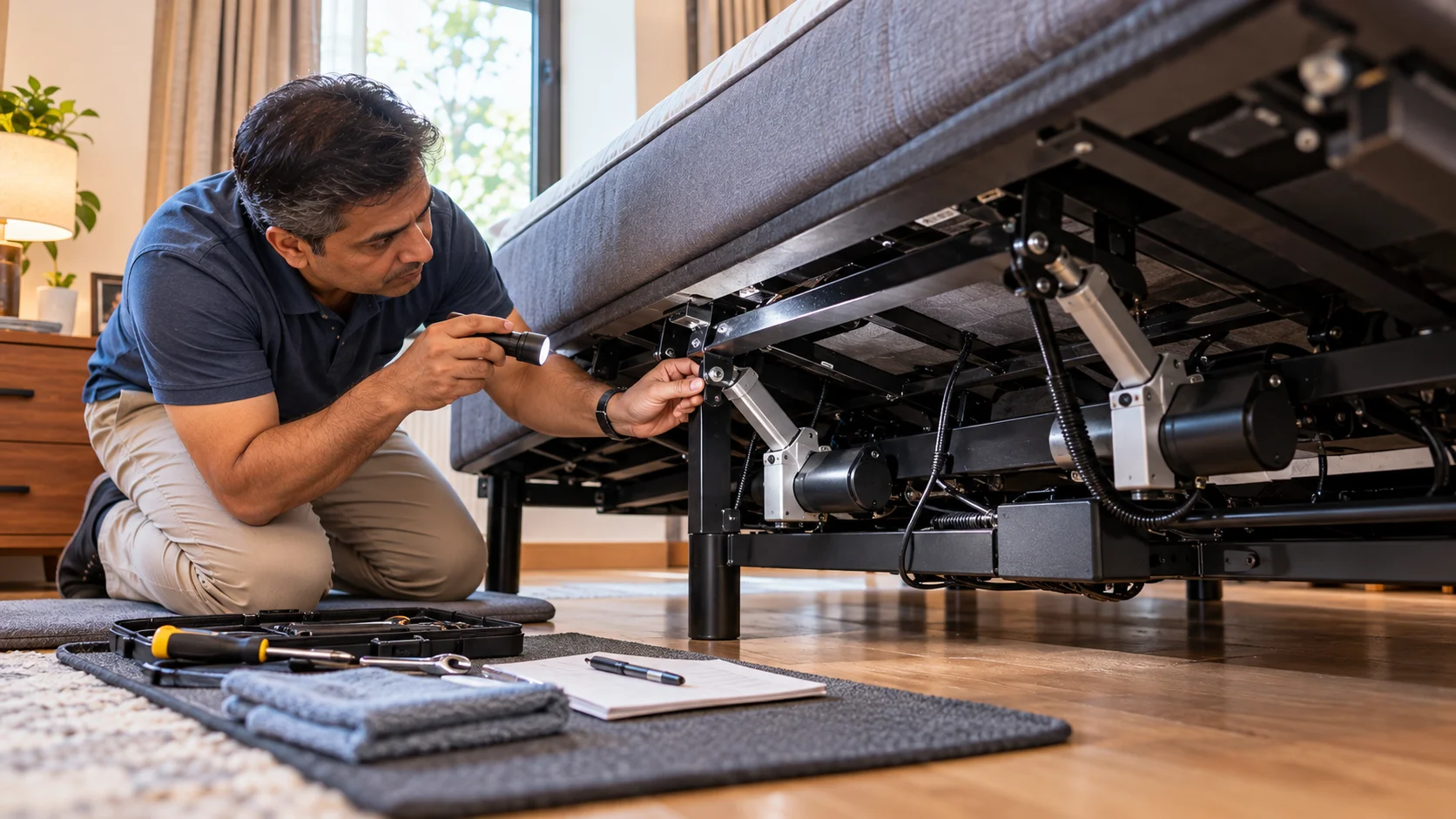
- Installation and a proper demo at your home by a trained team.
- Professional delivery within 1 week, along with installation and a complete product demonstration by trained technicians.
- Enjoy peace of mind with a 15-year written warranty covering.
- Real after-sales service — reachable directly at +91 9820138189 or info@zerogbeds.com.
- CE-certified adjustable bed systems that meet internationally recognized European safety and quality standards.
Ready to upgrade your sleep setup? [TALK TO US: +91 9820138189 or Email Us: info@zerogbeds.com
Bottom Line: Choosing the Right Electric Bed for Patients
Choosing an electric bed for patients is less about convenience and more about making daily care safer, easier, and more comfortable. The right model can reduce caregiver strain, support patient independence, and simplify routine positioning throughout the day. Combined with the right mattress, regular medical care, and your healthcare team’s advice, it becomes a valuable part of long-term home care rather than simply another piece of furniture.
For any care situation expected to run beyond a few weeks, this is usually the upgrade families are glad they made early rather than after months of manual strain.
Tell us about your loved one’s needs and we’ll recommend the right bed today. Call/WhatsApp: +91 9820138189 or email info@zerogbeds.com
References
- NICE Quality Standard QS89 — Pressure ulcers: advice on repositioning. https://www.nice.org.uk/guidance/qs89/chapter/quality-statement-5-advice-on-repositioning
- IEC 60601-2-52:2009 — Medical electrical equipment, Part 2-52: basic safety and essential performance of medical beds. https://www.iso.org/standard/36067.html
- IEC 60601 vs. ISO 13485: Medical Device Risk Management. https://eureka.patsnap.com/article/iec-60601-vs-iso-13485-medical-device-risk-management