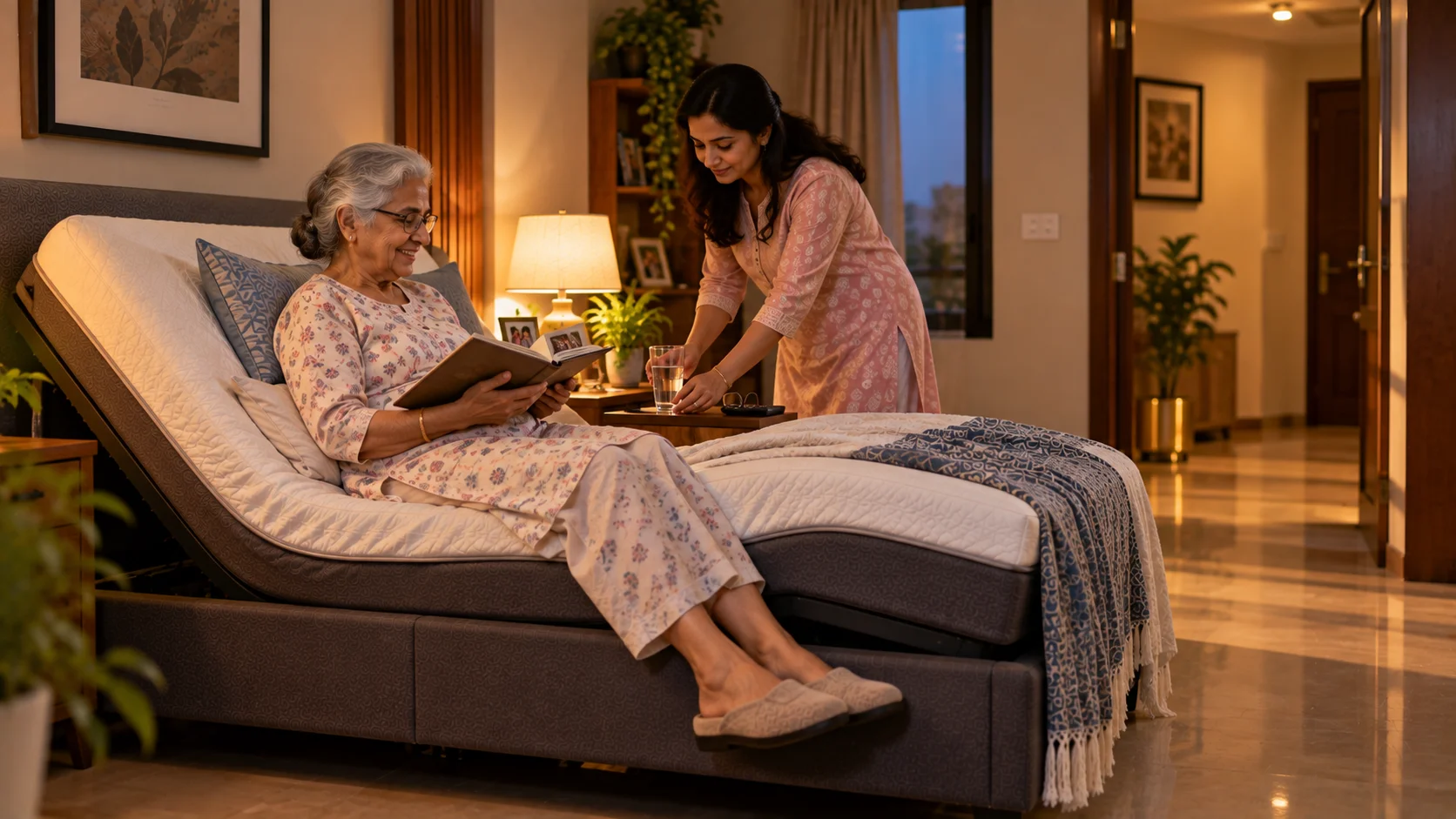
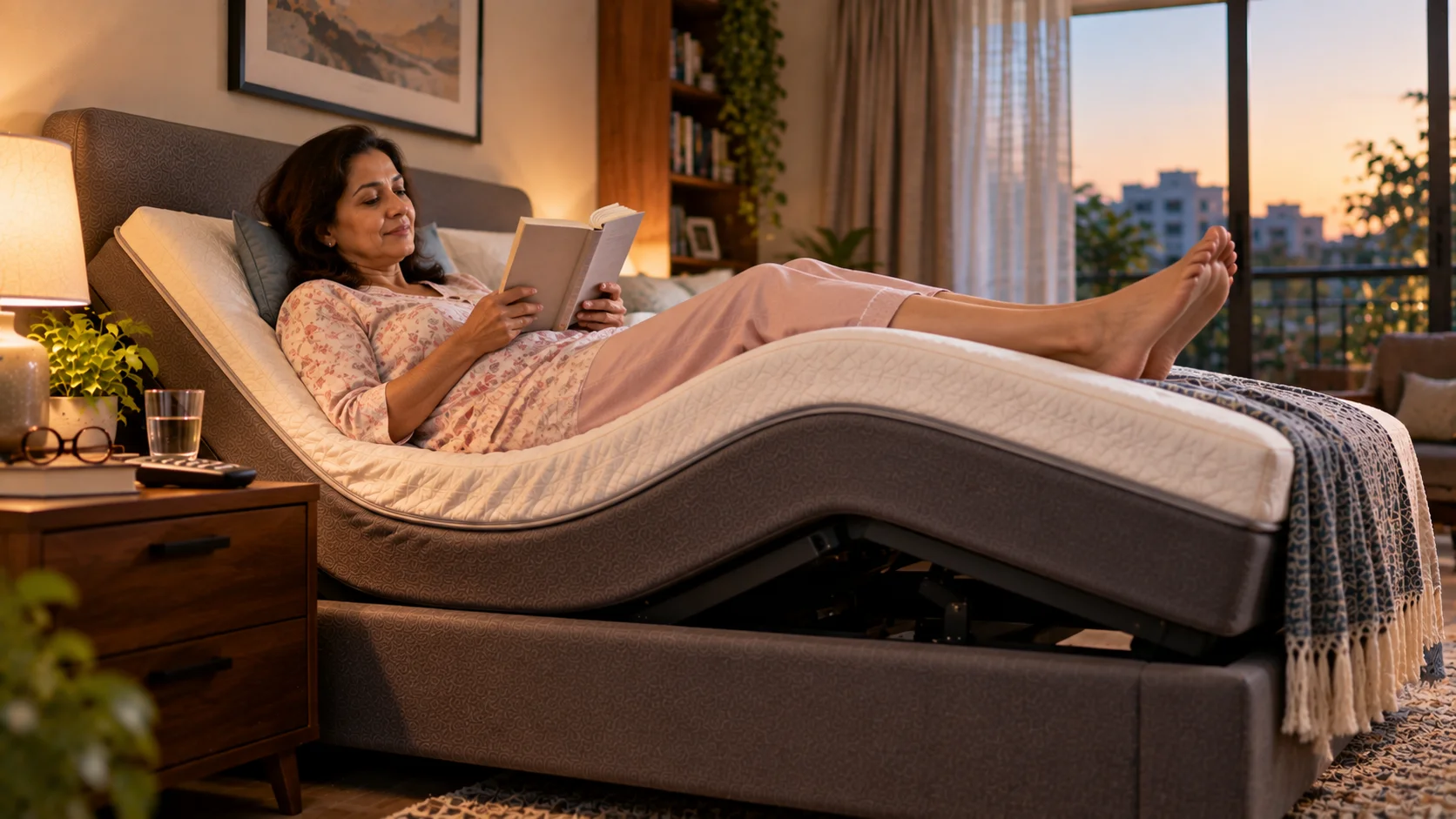
Raising the legs to or slightly above heart level lets gravity help blood drain out of the leg veins, which often eases the heaviness, aching and end-of-day swelling that come with varicose veins. An adjustable bed can hold that position comfortably through the night. It relieves symptoms but does not remove or repair damaged veins, and new or painful changes need a doctor’s review.
Varicose veins develop when the small valves inside leg veins weaken and blood pools instead of flowing efficiently back to the heart. The result is visible, twisted veins and, for many people, a dull ache, heavy legs and swollen ankles that build through the day. Since gravity is the main enemy here, it is natural to ask how an adjustable bed for varicose veins can turn gravity into an ally.
Why Elevation Works for Vein Symptoms
When you stand or sit for long periods, blood has to work against gravity to return from the legs. In healthy veins, valves and calf muscles manage this. In varicose veins, the valves leak and blood collects, raising pressure in the vein and causing that heavy, tight feeling. Lifting the legs reverses the direction gravity is acting in, reducing pooling and pressure so the veins can empty more easily.
What Elevation Can and Cannot Do
| Effect | Does Elevation Help? | Notes |
| Leg heaviness and aching | Often yes | Relief is usually noticeable within minutes to hours of elevating |
| Ankle and foot swelling | Often yes | Swelling is typically smaller in the morning after elevated sleep |
| Night cramps linked to circulation | Sometimes | Varies by cause; hydration and stretching also matter |
| Visible twisted veins | No | Elevation does not remove or shrink established varicose veins |
| Skin changes, ulcers, sudden pain | No | These need medical assessment and possibly treatment |
IMPORTANT NOTE
Sudden swelling of one leg, calf pain, warmth or redness can signal a blood clot and needs urgent medical attention. Varicose veins with skin changes, bleeding or ulcers should be assessed by a vascular specialist. This article covers comfort measures only.
The Right Elevation for Varicose Veins
- Raise the leg section until the feet sit at or slightly above heart level, usually a gentle upward slope rather than a steep tilt.
- Keep a slight bend at the knees, so the position is comfortable to hold for hours.
- Add a mild head recline for overall comfort, since the goal is a relaxed Zero Gravity-style posture rather than lying flat with feet propped.
- Use it daily, not only during flare-ups, since regular use keeps swelling from building up night after night.
The mechanism is the same one explained in our real-site article on how adjustable beds improve blood circulation during sleep, applied here to the leg veins specifically.
Daytime Habits That Multiply the Benefit
- Compression stockings, when recommended by your doctor, which support the veins while you are upright.
- Regular walking and calf exercises, since calf muscle contractions are the body’s natural vein pump.
- Elevating your legs for 15 to 20 minutes during the day if you sit for long hours, using the leg-rest setting where practical.
- Avoiding prolonged standing or crossing legs for long stretches, both of which can worsen pooling.
- Maintaining a healthy weight, which reduces pressure on leg veins.
Which Bed Setup Suits Varicose Veins Best?
Because the goal is leg elevation, a frame with an independent leg section is the essential feature. Back-only reclining does little for vein drainage. If circulation is your main concern, our comparison of leg rest, back rest and zero gravity setups shows when a leg-focused frame is enough and when a full Zero Gravity setup is a better long-term fit.
Pregnancy, Occupation and Family History
Varicose veins are more common in people who stand for long hours, in pregnancy, and where there is a family history. Teachers, nurses, shopkeepers and factory workers often notice their legs feel worse by evening. For these groups, a consistent night-time elevation habit, together with sensible daytime movement, can noticeably reduce how heavy the legs feel the next day.
When to See a Specialist
Vein treatments such as sclerotherapy, laser or endovenous procedures can address the veins themselves and are often done as day procedures. If your legs are painful, the skin around the ankles is darkening or hardening, or you have had a bleed or sore, ask for a vascular assessment. Elevation remains a helpful supportive measure before and after such treatment.
For people living with varicose veins, an adjustable bed turns the hours in bed into a daily recovery window for tired legs. It will not erase the veins, but consistent, comfortable elevation can make the difference between waking with heavy, puffy legs and waking with legs that feel lighter.
Explore our Adjustable Bed for Varicose Veins page or Leg Rest Beds range.
Related Reading