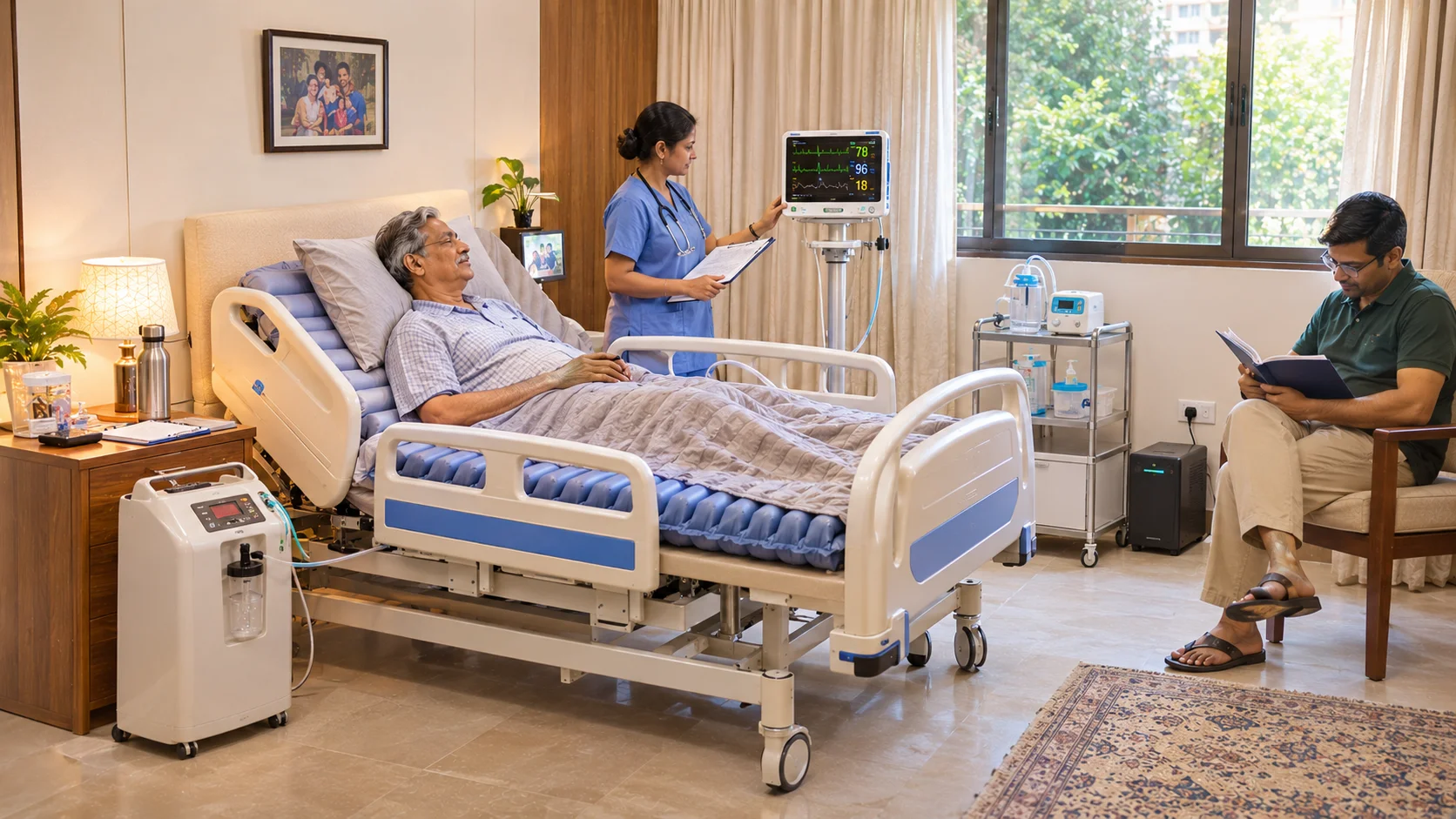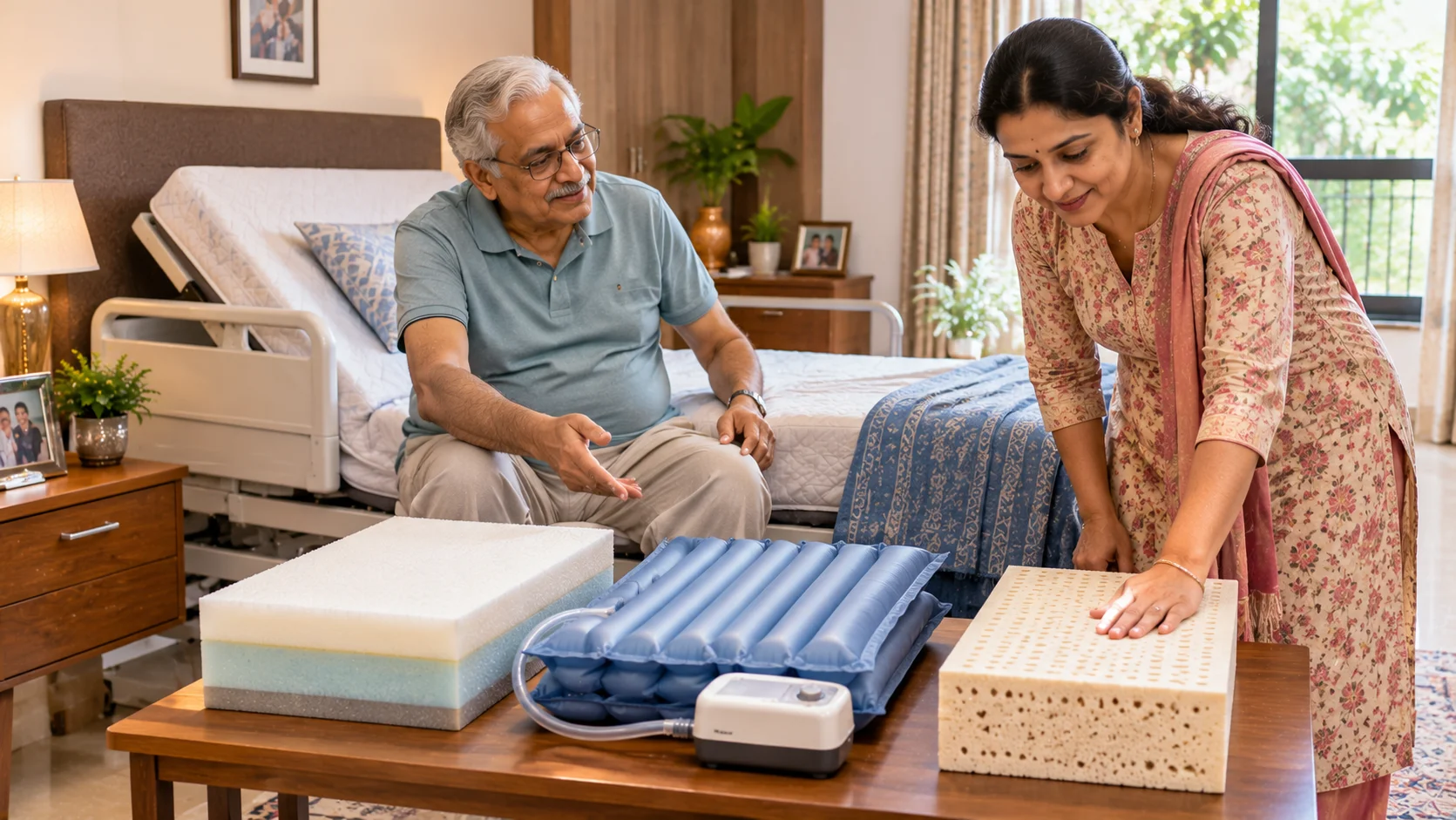
For a hospital bed at home, the main choices are a foam mattress, an air mattress with a pump and a contouring latex mattress. Foam is the everyday choice and comes in sizes such as 72 by 36 inches. Latex offers contouring support but is heavy. Whatever you choose, it must fit the bed, bend with the sections and be paired with regular repositioning.
A hospital bed is only as comfortable and safe as the mattress on it. For a patient who spends most of the day in bed, the mattress affects sleep, skin health and how easily the caregiver can move them. Yet most families pick a hospital bed mattress in a hurry. This guide compares the main types available in India and how to choose.
Foam, Air and Latex Compared
| Type | How It Works | Indicative Price (Rs) | Advantages | Drawbacks |
| Foam hospital mattress | Layers of PU or bonded foam, often 4 to 10 inches thick | Quoted by size and density | Affordable, no power needed, easy to find | Can compress over time and hold heat |
| Anti-sore foam mattress | Contoured or layered foam designed to spread pressure | Quoted by supplier | Better pressure spread than plain foam | Does not replace repositioning |
| Air mattress with pump | Air cells inflate and deflate to shift pressure points | About 1,600 to 6,000 for common models, more for larger or premium ones | Helps reduce pressure on bedridden patients | Needs power for the pump and can be noisy |
| Natural latex mattress | Contouring latex layers, often with zones | Quoted by size | Supportive, durable and breathable | Heavy, and unsuitable for people with latex allergy |
Prices are indicative figures from supplier and marketplace listings seen in October 2026, and larger sizes, higher thickness and premium pumps cost more. Always get a written quote.
Standard Hospital Mattress Sizes
Foam hospital mattresses are commonly sold in sizes such as 72 by 36, 75 by 37 and 76 by 38 inches, and in thicknesses of about 4 to 7 inches, with thicker anti-sore types available. Measure the bed platform and give the supplier the exact size, so the mattress does not slide or leave gaps. Our guide on hospital bed size and dimensions lists typical measurements.
Foam Mattresses
Foam is the standard choice for short-term and moderate-risk use. Density and thickness matter, because a thin, low-density foam mattress flattens quickly. A waterproof cover makes cleaning easier, and a removable cover helps with hygiene.
Air Mattresses
Air mattresses sit on top of or replace the foam mattress and use a pump to shift pressure between air cells. They are often used for patients at risk of pressure sores. They depend on power, so plan for power cuts, and they need a regular check that cells are inflating properly. Our page on adjustable beds for bed sores and our guide on electric beds and power cuts cover related points.
Latex Mattresses
A natural latex mattress, such as Zero-G’s 7 zone natural latex mattress, contours to the body and supports the spine. It is heavier than foam, which affects the bed’s total load, and anyone with a latex allergy should check with their doctor before choosing one. It suits patients who need comfort and support rather than a medical pressure-relief system.
How to Choose in Five Steps
- Ask the doctor or nurse about the patient’s skin and pressure-sore risk.
- Measure the bed platform and note the mattress size, thickness and any fold lines.
- Check that the mattress bends with the adjustable sections, since very stiff mattresses fight the hinges.
- Choose a waterproof, easy-to-clean cover.
- Plan for power if you choose an air mattress, including a backup.
IMPORTANT NOTE
A mattress alone does not prevent pressure sores. Regular repositioning, clean dry skin, good nutrition and daily skin checks matter just as much. Report any skin redness that does not fade, or any open area, to a doctor or nurse promptly.
Questions to Ask the Supplier
- What is the density and thickness of the foam?
- Does the mattress suit the bed’s adjustable sections?
- Is the cover waterproof and washable?
- What is the warranty, and how is it affected by weight or moisture?
- For air mattresses, how loud is the pump and what happens in a power cut?
Care and Cleaning
- Wipe waterproof covers with a mild disinfectant, following the maker’s advice.
- Keep the mattress dry, since moisture can damage foam and encourage mould.
- Check air mattresses regularly for leaks and stuck cells.
- Wash removable covers as instructed.
- Inspect the mattress for dips, tears and odour each week.
How Long Does a Hospital Mattress Last?
It depends on foam density, the patient’s weight and how continuously the bed is used. Replace a mattress when it develops permanent dips, tears in the cover, persistent odour or when the patient develops skin problems that could be linked to pressure. Do not wait for it to fall apart.
Using an Overlay or Topper
An overlay placed on a foam mattress can add pressure relief at lower cost. Check that it does not make the surface too high for the side rails, does not slip and does not leave gaps. Ask the doctor or nurse whether an overlay is enough for the patient’s skin risk.
Check the Mattress and the Bed Together
A mattress and a bed work as a pair. The mattress must bend with the adjustable sections, fit the platform without gaps and keep the total load within the bed’s rated capacity. Heavy mattresses such as latex count toward that load, so tell the supplier which mattress you plan to use before you order.
Choose the mattress for the patient, not just the bed. Match the size, check that it bends with the sections, pick the right type for the patient’s skin risk and plan for power if you use air. A good mattress turns a hospital bed into a place where recovery is easier.
Explore our Bed for Patients range or the Natural Latex Mattress page.
Related Reading