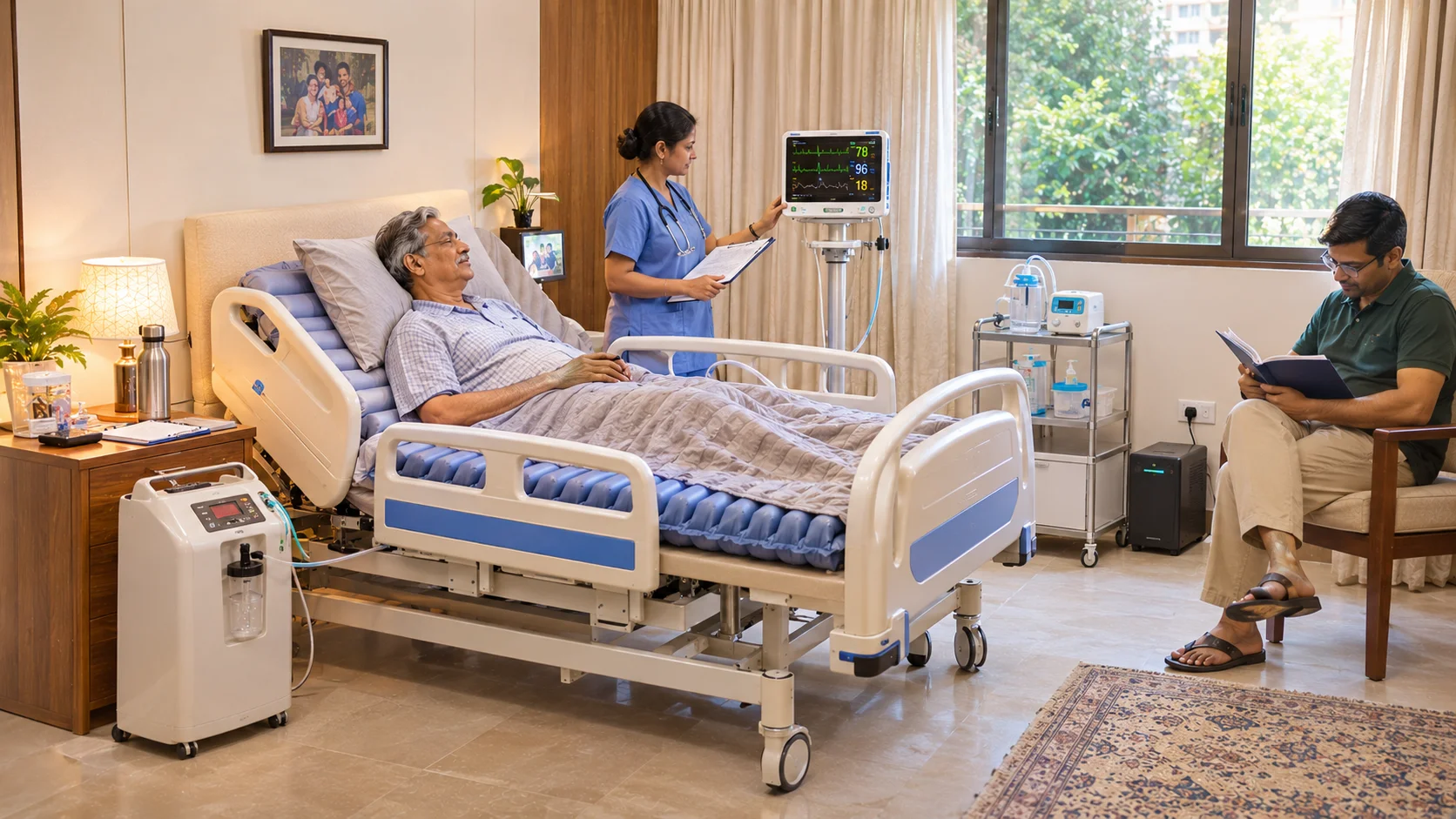
Choose a hospital bed when the patient is bedridden or needs hands-on care, because height adjustment, side rails and easy cleaning matter most. Choose an adjustable or recliner bed when the person is mostly independent and wants comfort, back support and a bed that looks like normal furniture. A middle route is to convert the bed you already own. Decide by care needs, room and budget, not by the name on the quotation.
Many families ask whether they should buy a hospital bed or an adjustable bed for a parent at home. Both raise the head and legs, so they sound similar, but they are designed for different jobs. One is built for care, the other for comfort, and picking the wrong one means either paying for features you will never use or missing features you need. Here is how to decide.
Side-by-Side Comparison
| Feature | Hospital Bed | Adjustable or Recliner Bed |
| Main purpose | Care and nursing tasks | Comfort, sleep and light assistance |
| Look and feel | Steel frame, clinical look | Looks like normal furniture |
| Typical width | About 90 to 98 cm | Single, double, king or split to match your mattress |
| Height adjustment | Common on electric models | Varies, so ask the supplier |
| Side rails and castors | Usually included or available | Usually not part of the design |
| Special positions | Tilt positions on ICU beds | Zero Gravity and comfort positions |
| Mattress | Narrow hospital mattress | Wide choice, including latex and foam |
| Cleaning | Easy to wipe down | Depends on fabric and finish |
| Price | From about Rs 6,000 to Rs 85,000 or more | Premium beds commonly start around Rs 60,000 |
Price ranges here are indicative figures from supplier and retail listings in October 2026. Zero-G’s electric adjustable beds start at Rs 59,999.
When a Hospital Bed Is the Better Choice
- The patient is bedridden and needs regular repositioning.
- A caregiver does hands-on care such as bathing, dressing and wound care in bed.
- Frequent transfers to a chair or commode need an adjustable height.
- Medical tilt positions have been advised by the doctor.
- The need is short-term, and renting a standard hospital bed makes sense.
When an Adjustable or Recliner Bed Is the Better Choice
- The person is independent but has back pain, reflux, breathlessness at night or swollen feet.
- Comfort and sleep quality are the main goals.
- You want to keep the room’s look, or a couple shares the bed.
- You already own a bed you like, and a conversion would keep it.
- It will be used daily for years, and a premium finish and a quiet motor matter.
The Middle Route: Electric Hospital Beds for Home and Conversions
The choice is not strictly one or the other. Some electric hospital beds are designed for home use with a softer look, and some adjustable beds offer enough function for light care. Another route is to convert your existing bed into an adjustable one, as explained in our guide on converting a standard bed into an adjustable bed for home care. Zero-G offers both electric hospital beds and recliner beds.
A Quick Decision Guide
| Situation | Better Choice |
| Bedridden patient needing frequent turning and care | Hospital bed with height adjustment |
| Elderly parent who walks but struggles to sit up or get up | Electric adjustable or recliner bed |
| Back pain or reflux, comfort focus | Adjustable or recliner bed |
| Couple with different sleep needs | Split adjustable bed, see our guide on adjustable beds for couples |
| Short recovery of a few weeks | Rent a hospital bed, see our guide on renting, buying or converting |
Questions to Ask Before You Decide
- Who needs the bed and what can they do alone?
- What care tasks will be done in bed?
- How long will the bed be needed?
- What does the room allow in size and layout?
- What is the total budget including mattress, delivery and installation?
- What do the doctor or physiotherapist recommend?
IMPORTANT NOTE
This guide gives general information and is not medical advice. A doctor or physiotherapist can tell you whether the patient needs a hospital-grade bed, and what features matter.
Comfort Features Adjustable Beds Add
- Zero Gravity and comfort presets that take pressure off the lower back.
- A wide choice of mattresses, including natural latex.
- Sizes for couples, including split configurations with independent sides.
- Quiet motors, a wireless remote and sometimes app control.
- A look that suits a bedroom rather than a ward.
Care Features Adjustable Beds May Lack
- Height adjustment for easy transfers and caregiver tasks, on some models.
- Side rails and castors for moving and safety.
- Tilt positions, which are used only on medical advice.
- Hospital-grade wipe-clean surfaces for heavy cleaning.
Can One Bed Do Both?
Partly. Some people start with an adjustable bed and add features later, while others choose an electric hospital bed with a more home-like finish. Tell the supplier exactly which care tasks will happen in bed, and ask them to show how their bed handles each one. That conversation will usually make the choice clear.
What Families Often Regret
- Buying a hospital bed for comfort alone, then living with the clinical look.
- Buying an adjustable bed for a bedridden patient without height adjustment, which strains the caregiver.
- Not measuring the room before ordering.
- Skipping the doctor’s advice on the features that matter.
A Note on Budget
A higher price does not always mean a better fit. Decide the features you genuinely need, set a range that includes the mattress, delivery and installation, and compare quotes for the same specification. A simpler bed that suits the patient is better than an advanced one that goes unused.
The right bed is the one that fits the care, the room and the budget. Choose a hospital bed for hands-on care, an adjustable bed for comfort and independence and a conversion if you want to keep your own bed. When in doubt, ask the doctor, and ask the supplier to explain exactly how each option would work in your home.
Explore our Recliner Beds range or the Electric Hospital Bed collection.
Related Reading