Manual patient beds use a hand crank, hydraulic beds use a pump or lever, semi-electric beds move the back and legs by motor but adjust height by hand, and fully electric beds move everything by motor. Beds are also described by the number of functions: one function raises the back, two add the knees, three add height and five add tilt positions. Choose by how long the bed is needed, how often positions change and who will operate it.
When families start looking for a patient bed for home, the first surprise is the vocabulary. Manual, hydraulic, semi-electric, fully electric, three-function, five-function: every supplier uses these words slightly differently. This guide explains the common types in plain language so you can compare them properly and pick the one that fits.
The Four Main Types at a Glance
| Type | How It Adjusts | Advantages | Drawbacks |
| Manual | Hand cranks at the foot end raise the back and knees | Lowest cost, no electricity needed | Someone must crank it, and the patient cannot adjust alone |
| Hydraulic | A pump handle or foot pedal moves sections or height | Smoother than a crank, no power needed | Still needs effort and may be slow |
| Semi-electric | Motors move the back and legs, height is set by hand | Easy sitting up and leg raise at a moderate price | Height changes still need manual effort |
| Fully electric | Motors move back, legs and height | Easiest for patient and caregiver | Costs more and needs a power plan |
Manual Beds
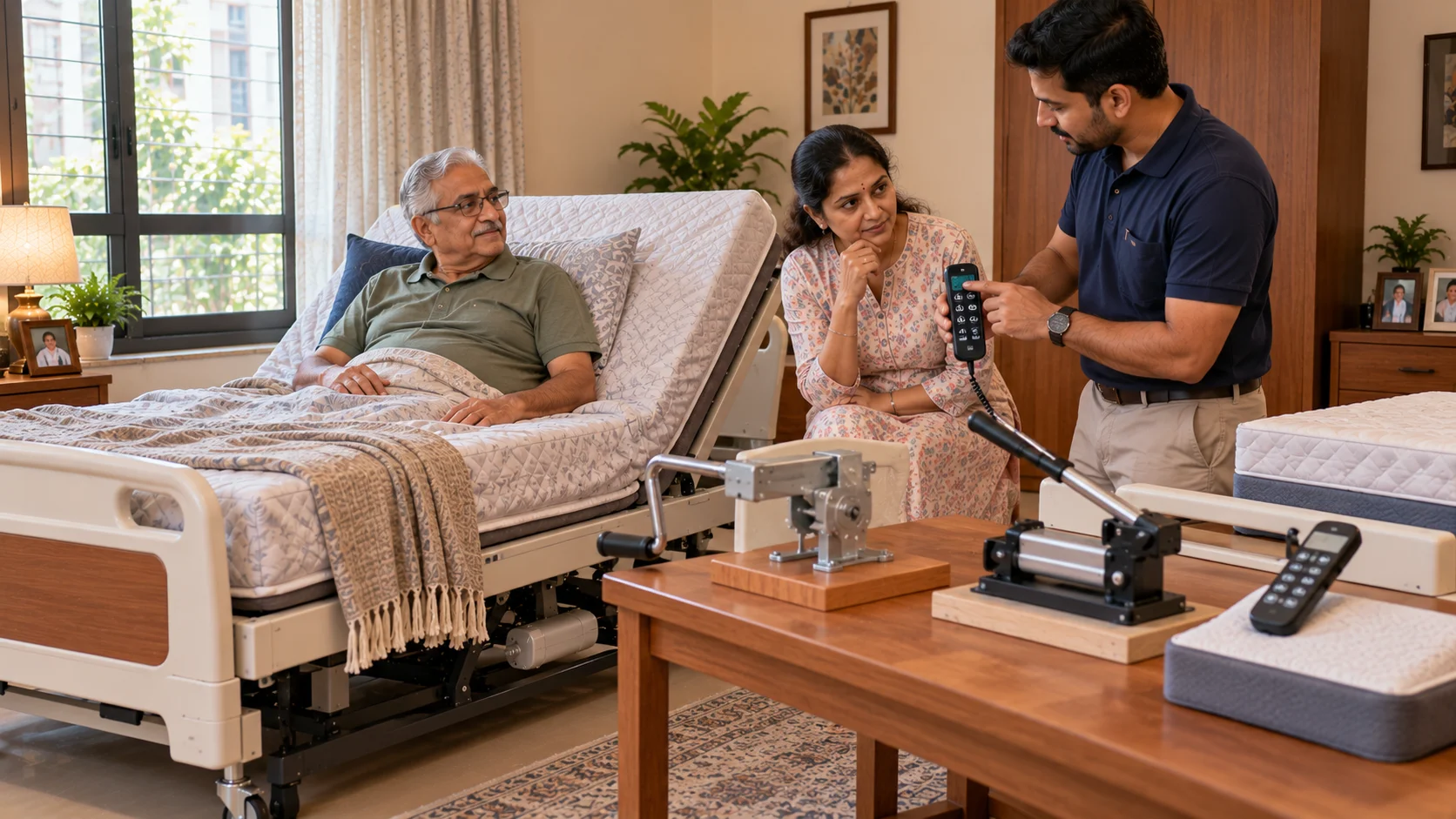
A manual bed is the simplest option. Cranks at the foot end raise the back rest and sometimes the knee rest. It suits short-term use, a tight budget or a home with unreliable power, as long as someone is always available to adjust it. The patient usually cannot change position alone.
Hydraulic Beds
Hydraulic beds use a pump handle or foot pedal to raise sections or the whole bed. They are smoother than a crank and need no electricity, but they still depend on someone to operate them. They sit between manual and electric beds on both effort and cost.
Semi-Electric Beds
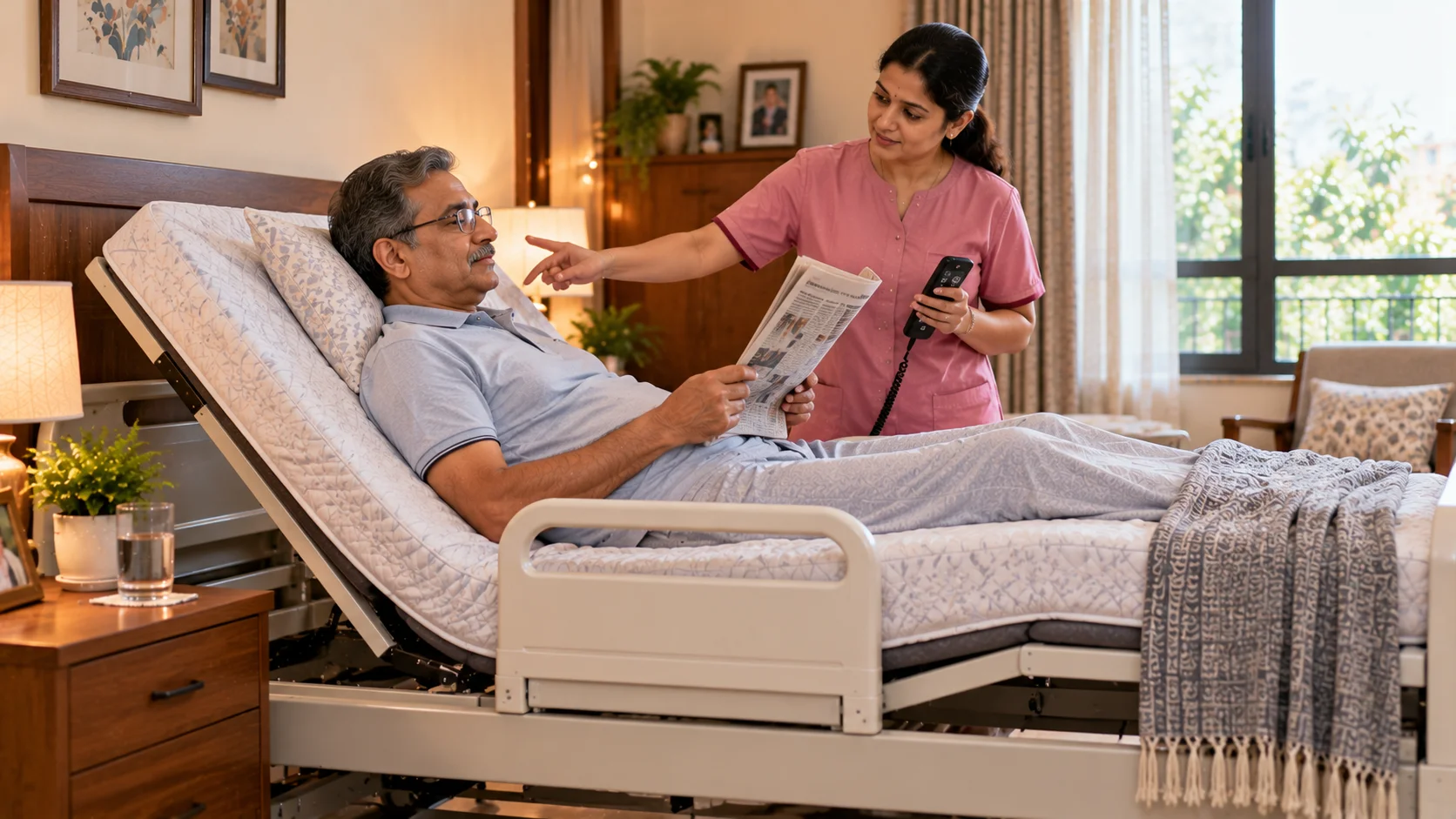
Here the head and leg sections move by motor with a handset, while the bed height is changed by hand or stays fixed. For many home patients this is a sensible middle path. The patient can sit up for meals or raise their legs without calling for help.
Fully Electric Beds
A fully electric bed also raises and lowers the whole bed by motor. A low height makes it easier to get in and out, while a high height saves the caregiver’s back during care tasks. This is the most convenient option, particularly for long-term use. Our guide on why electric hospital beds suit elderly patients covers the benefits in detail.
Understanding Function Counts
| Functions | What Moves | Typical Use |
| One function | Back rest only | Sitting up for meals and visitors |
| Two functions | Back rest and knee rest | Comfort and reduced sliding |
| Three functions | Back, knees and bed height | Home care with a caregiver |
| Five functions | Adds head-down and head-up tilt positions | Bedridden or ICU-style care |
More functions mean a higher price and more to maintain, so buy the functions the patient will genuinely use. Our companion guide on patient bed price in India shows how cost rises with each step.
Home-Style Adjustable Beds
Beyond hospital-style beds, there is a fourth family: adjustable beds designed to look like normal furniture. Zero-G beds, for example, have a back rest that moves from 0 to 90 degrees and a leg rest that moves from 0 to 45 degrees, and they can be fitted to your existing bed frame, as shown on our recliner beds page. They suit people who want hospital-grade function without a hospital look.
How to Choose Step by Step
- Estimate the duration. Weeks suggest renting or a manual bed, while years suggest an electric bed.
- Ask who will operate the bed. If the patient can use a handset, electric adds independence.
- List the care tasks. Frequent repositioning or transfers point towards height adjustment.
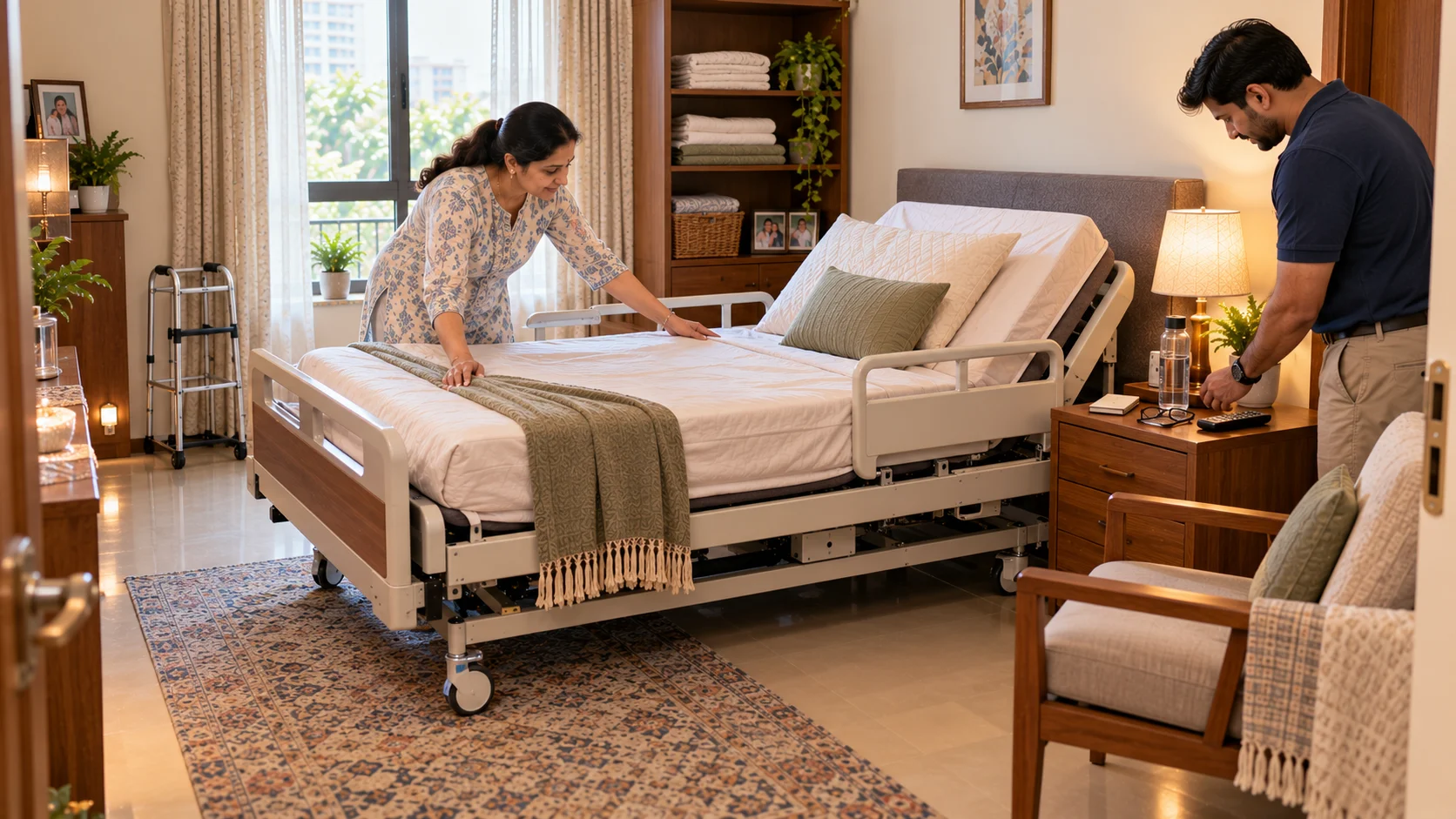
- Check the home. Think about power supply, space and access, as covered in our guide to recliner beds for small bedrooms.
- Ask a doctor or physiotherapist if there is a medical reason for particular angles.
- Compare quotes and warranties for two or three suitable beds.
IMPORTANT NOTE
This guide gives general information and is not medical advice. The right bed type for a patient depends on their condition, mobility and care needs, so ask their doctor or physiotherapist.
Bed Size and Mattress Compatibility
Hospital-style beds in supplier listings are commonly around 198 to 213 cm long and about 90 to 98 cm wide, which is narrower than many home double beds. Check that your mattress fits, and if you want a wider surface, ask about home-style adjustable beds that are built to your mattress size.
Weight Capacity, Noise and Warranty
- Weight capacity. Check the rated capacity in writing, and remember the mattress counts toward the load.
- Noise. Electric motors differ in how quiet they are, which matters in a bedroom at night. Our guide to electric bed motors explains what to listen for.
- Warranty. Ask what is covered on motors, controls and frame separately.
Side Rails and Accessories
Rails, over-bed tables and drip stands are accessories, not part of the bed type. Rails in particular need care, because gaps can cause entrapment. Our guide on patient safety with electric adjustable beds explains what to check before fitting them.
A Quick Matching Guide
| Situation | Suggested Type |
| Short recovery, caregiver always present | Manual or hydraulic |
| Patient who can sit up and wants some independence | Semi-electric |
| Long-term care or frequent transfers | Fully electric with height adjustment |
| Bedridden patient needing frequent repositioning | Three to five function electric bed |
| Elderly parent who wants a normal-looking bed | Home-style adjustable bed or a conversion |
The right patient bed is the simplest one that does what the patient and the caregiver need. Work out the duration, the functions and who will operate it, and the choice between manual, hydraulic, semi-electric and fully electric usually becomes clear.
Explore our Electric Hospital Bed collection or the Bed for Patients range.
Related Reading