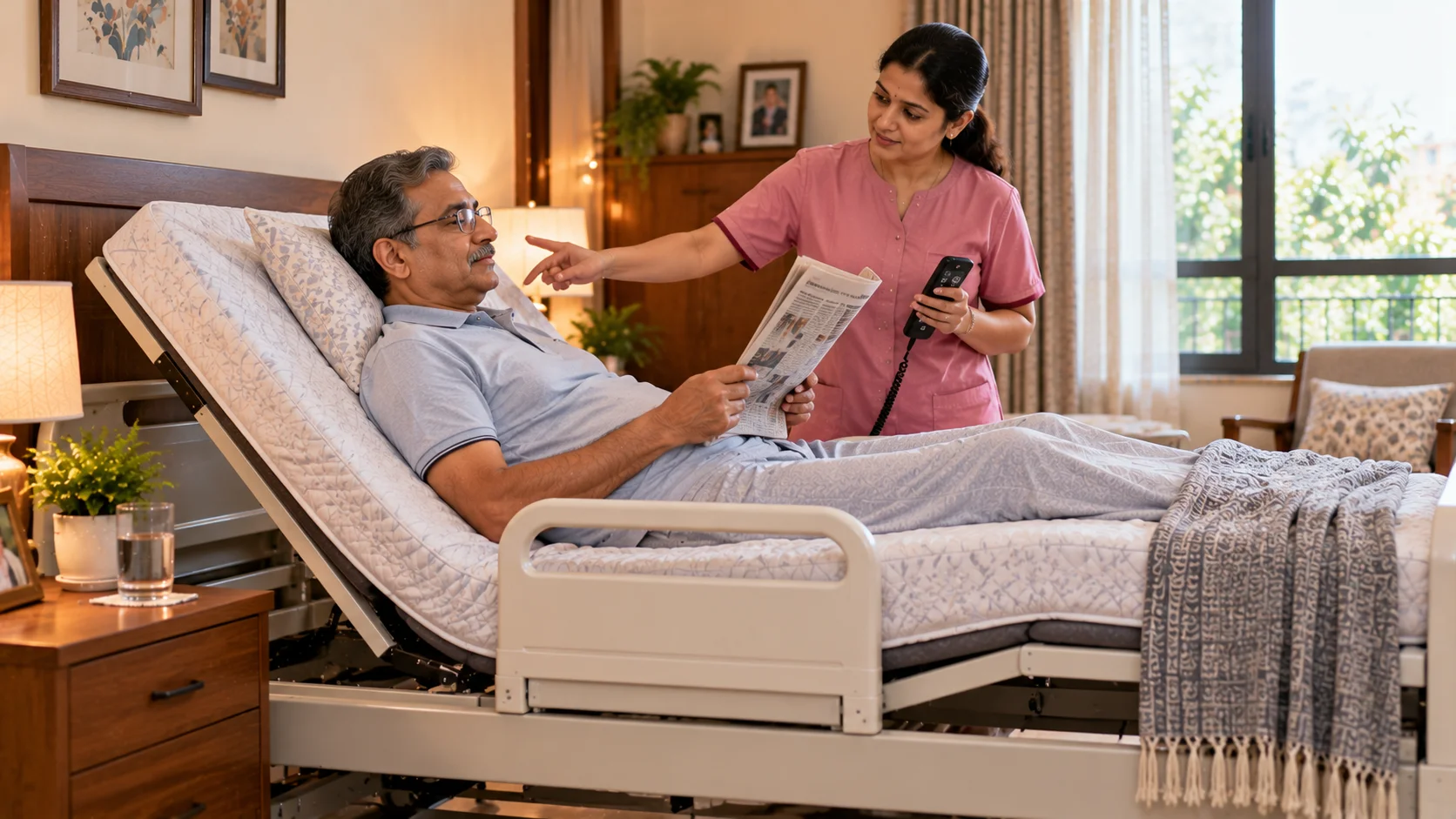
Side rails on an electric hospital bed may provide a handhold or define the edge of the sleeping surface, but they are not safe for every person. The right choice depends on mobility, behaviour, bed design and the rail’s purpose. Rails can create entrapment risks if someone becomes caught between the rail, mattress or frame.
Before using rails, speak with the healthcare team when appropriate and follow the manufacturer’s instructions. At Zero-G Beds, we recommend assessing the person and the full setup rather than choosing rails by appearance. Our broader electric adjustable bed safety guide covers additional checks.
What are hospital bed side rails used for?
Side rails fit along part of the bed edge. Depending on the design, they may offer a handhold or support a care routine, but designs are not interchangeable and not every bed supports every accessory.
A rail does not prevent every fall. It may encourage climbing or create entrapment risks, so the decision needs an individual assessment.
Assess the person before choosing a rail
Begin by describing the actual task the rail is meant to support. Is the person trying to change position, hold a stable handhold while moving, or avoid rolling out of bed? A rail may not be appropriate for every goal, and alternative approaches may be safer.
Consider:
- Mobility: Can the person reach, grip and use a rail reliably?
- Cognition and behaviour: Is there confusion, agitation, impulsive movement or a likelihood of trying to climb over the rail?
- Body size and movement: Could the person fit into an opening between the rail, mattress or frame?
- Medical instructions: Has a clinician or care professional recommended particular equipment or precautions?
- Care support: Will someone be present to assist, and are caregivers trained to operate the bed and accessories?
- Changing needs: Could the person’s abilities or level of alertness change during the day or night?
If unsure, ask a qualified professional to assess the arrangement. Never use a rail as a restraint or substitute for suitable supervision.
Check compatibility with the bed and mattress
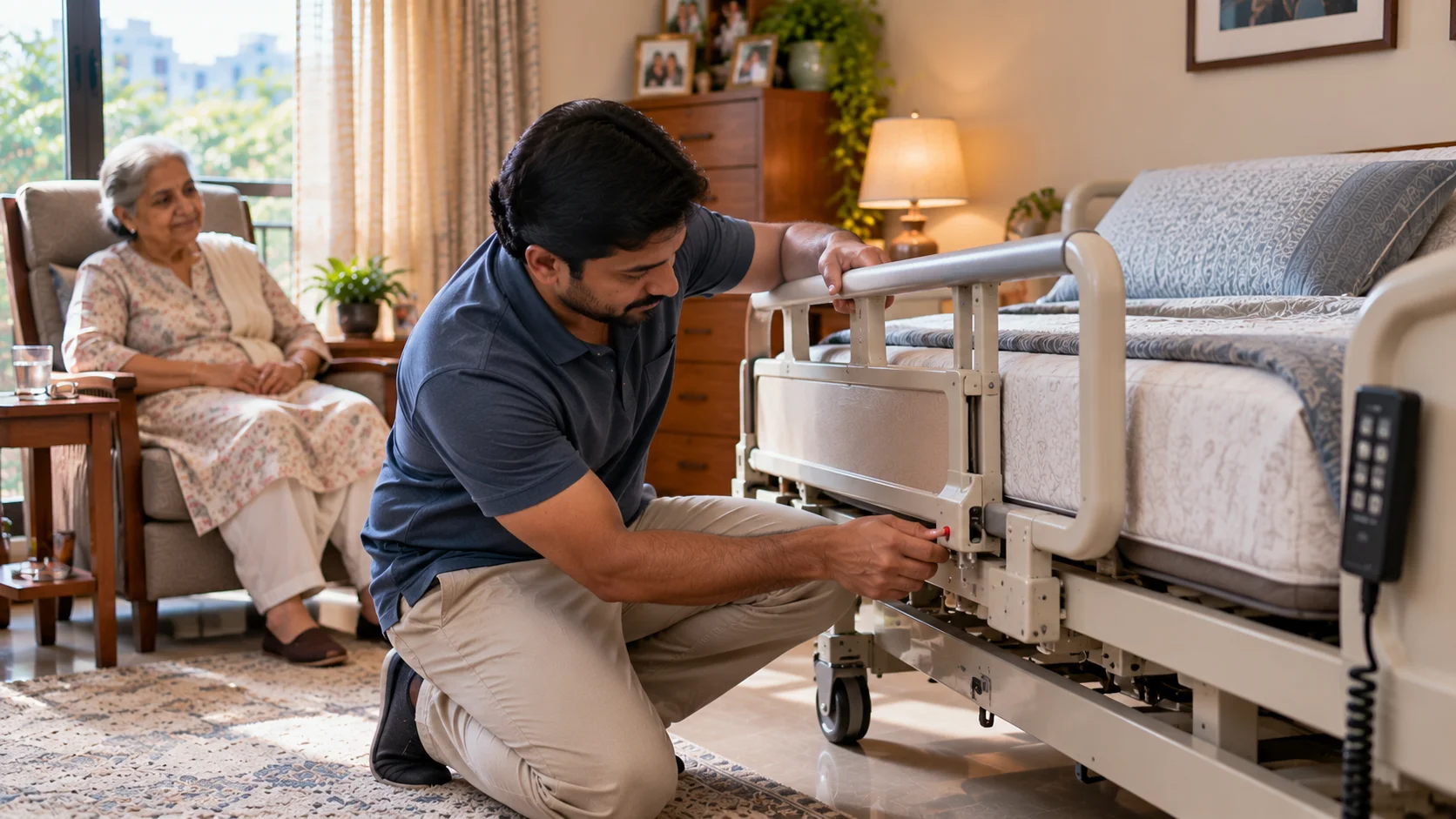
Use only a rail approved for the exact bed and installed as instructed. Check attachment points and limits; an apparently suitable rail may still leave gaps or interfere with movement.
Confirm the following before use:
- The rail is approved for the exact model and mattress arrangement.
- The rail locks or attaches as specified and has no visible damage.
- The mattress fits correctly and does not create unsafe openings beside or below the rail.
- The rail does not block access to controls or interfere with the frame’s movement.
- All adjustment and locking steps are understood by the caregiver.
- The user can get in and out of bed as planned, without climbing over an unsuitable barrier.
Do not drill new holes, modify fittings or improvise attachments. If the rail shifts, a latch fails or a gap appears, stop using the affected setup and contact the supplier for advice.
Compare rails with other safety approaches
| Need | Possible option to discuss | Important caution |
| A stable handhold for movement | A manufacturer-approved support handle or rail | The person must be able to use it safely; confirm fit and placement |
| Reducing the chance of rolling out | A professional risk assessment and appropriate bed arrangement | Rails do not eliminate falls and may introduce entrapment risk |
| Making it easier to get in and out | Review of bed position, access and transfer technique | Do not create a barrier that makes exiting harder |
| Supporting someone with confusion or agitation | Individual care plan, supervision and room setup | Rails should not be used as a restraint or simply to stop movement |
| Helping caregivers provide care | Training and manufacturer guidance | Accessories cannot replace safe handling practice |
Choose an option that addresses the identified risk without creating a greater one.
Make safe use part of the daily routine
If a rail has been assessed as suitable, include it in regular checks. Look for looseness, damage, sharp edges, failing latches and changes in the gap between the rail and mattress. Recheck after changing the mattress or bedding, as fit can change.
Keep hands, feet, clothing and bedding clear of moving sections. Do not move the frame while a person grips a rail in a way that could strain them. Keep cables clear and review the setup if the user’s abilities change.
What caregivers should ask the supplier
Before ordering an electric hospital bed or an accessory, ask:
- Which rails are approved for this exact bed and mattress?
- What gaps or measurements need checking after installation?
- How should the rail be locked, released and inspected?
- What signs mean it should be taken out of use?
- Who can help if a component becomes damaged?
Our electric hospital bed range is a place to start a model-specific discussion. For home-care needs, you can also review our beds for patients. Confirm the accessories and safety instructions for the exact model before use.
When to stop and seek help
Stop using a rail that is loose, damaged, leaves an unexpected gap or obstructs movement. If it contributes to an entrapment, injury or near miss, seek appropriate help and have the entire setup reassessed before use.
Review our electric hospital bed range and contact us about compatible rails.