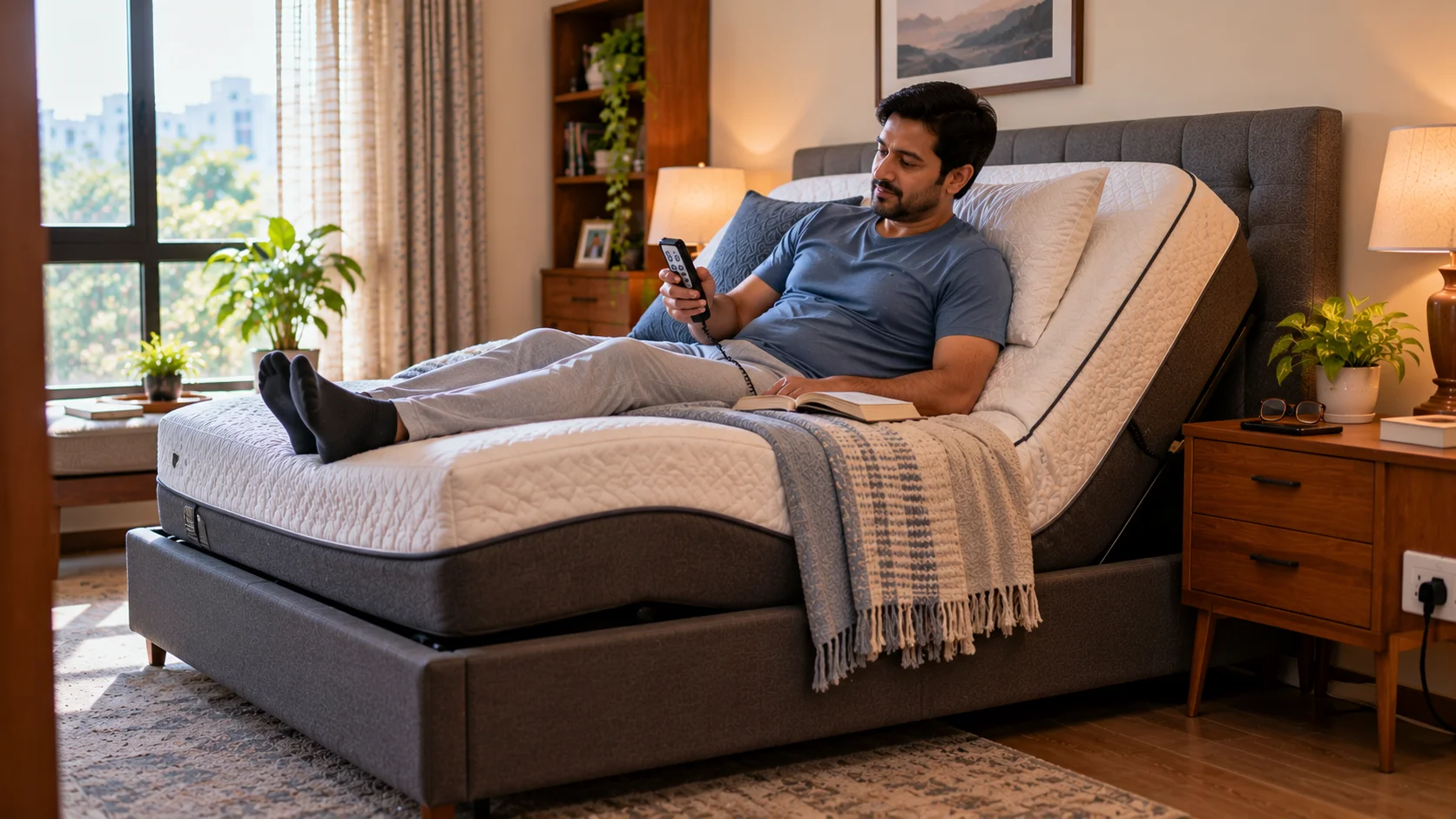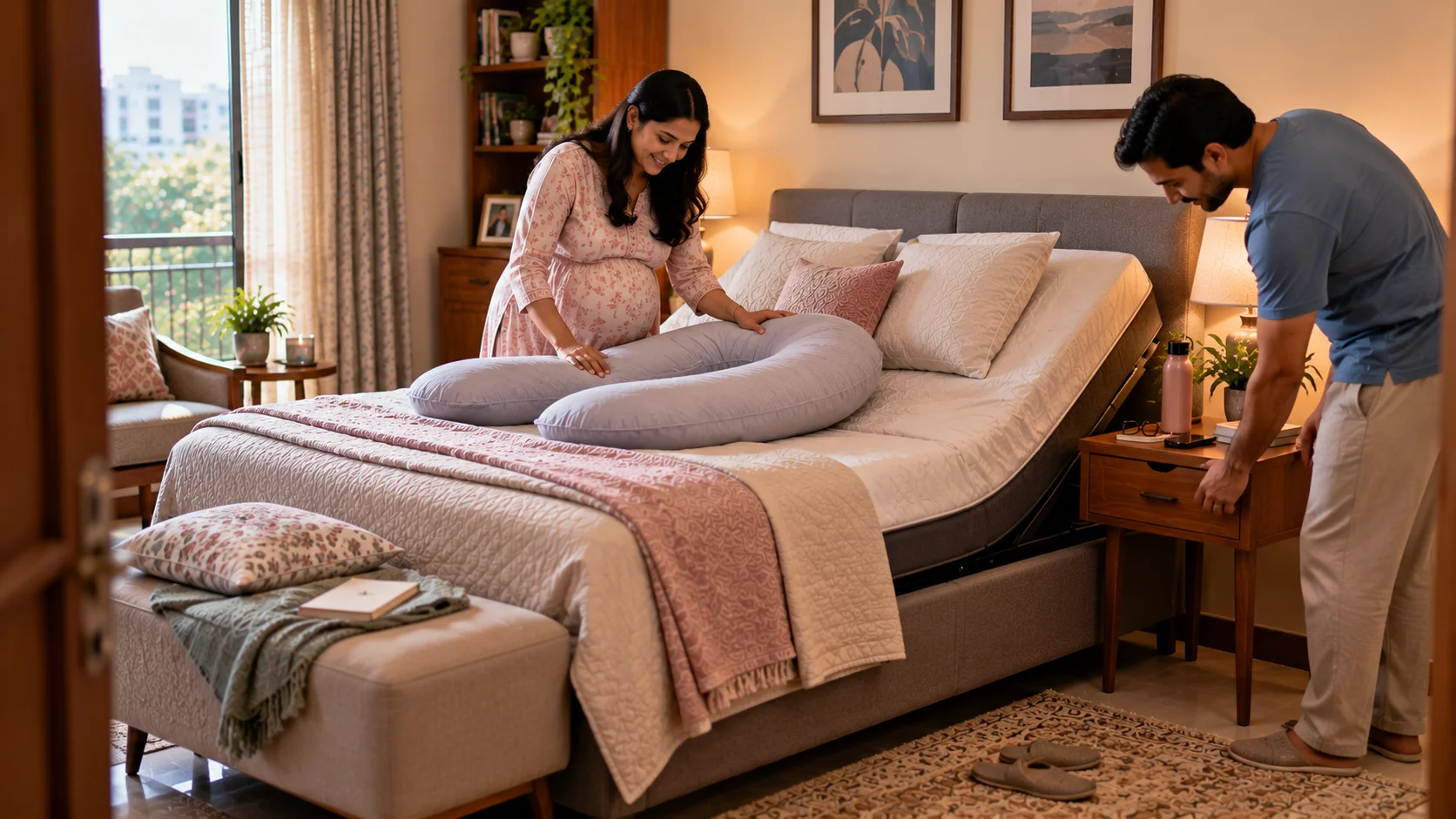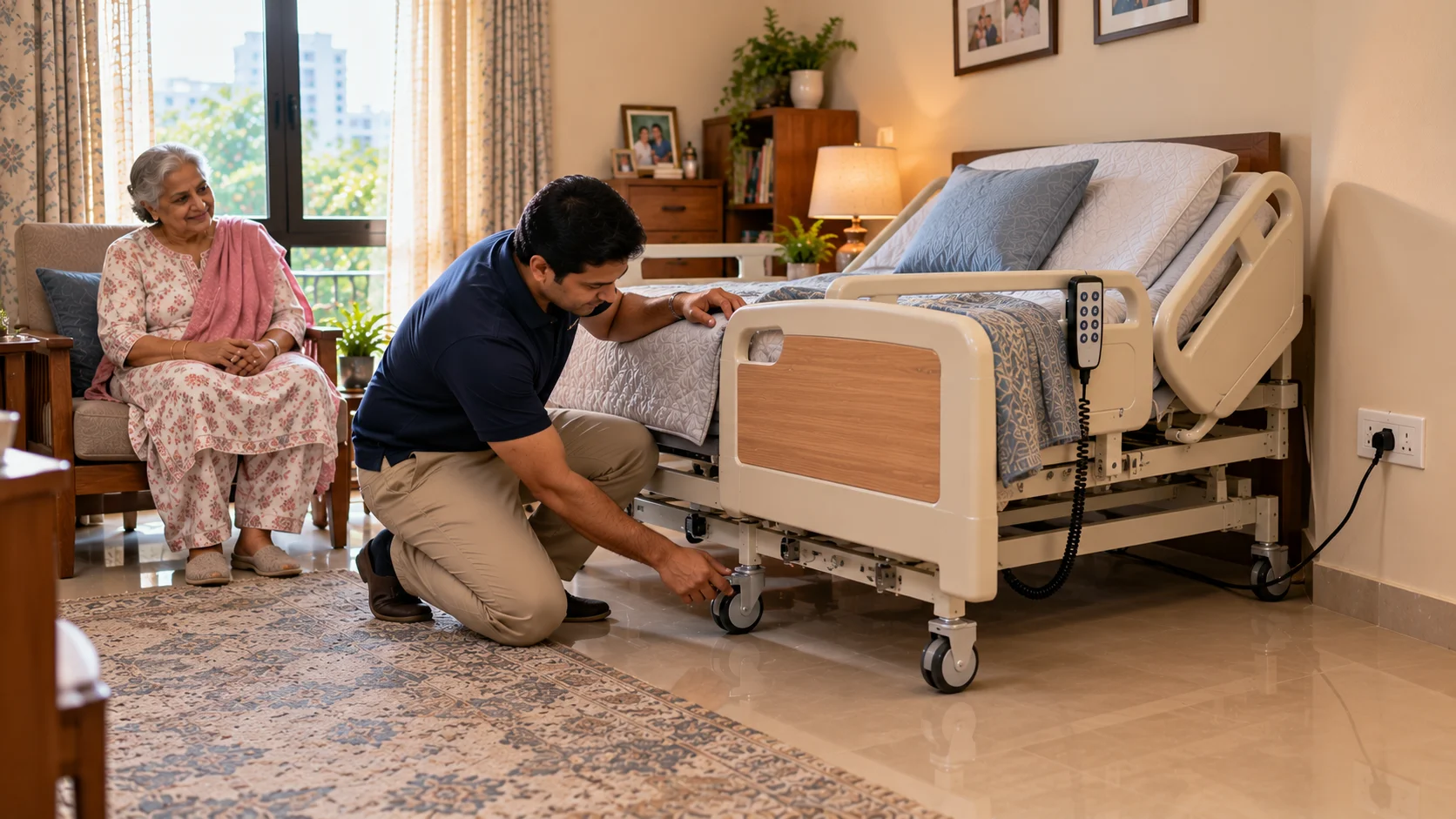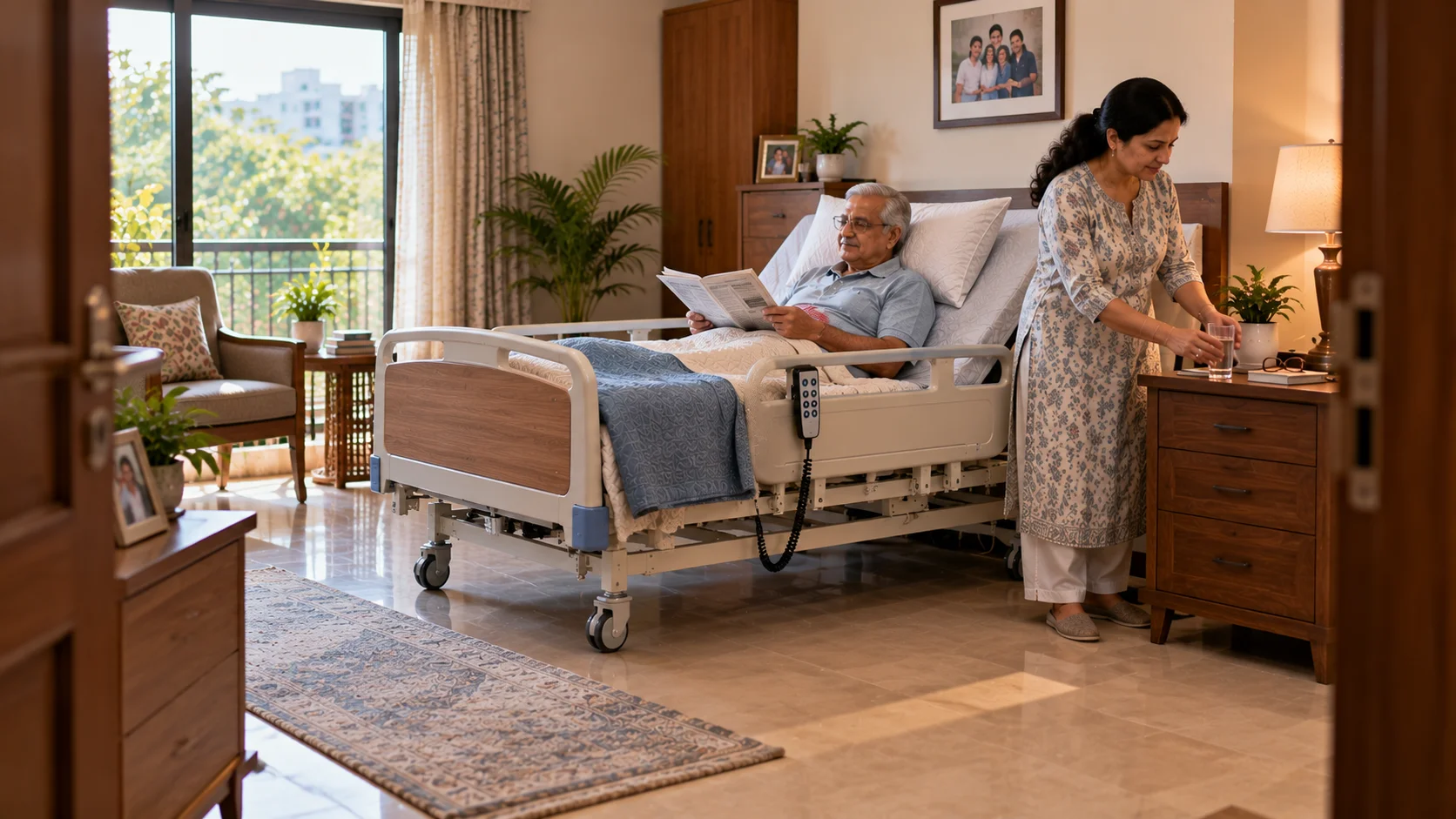
A bed for patients is only half the setup. The room around it decides whether care is safe and easy. Put the bed where a caregiver can reach both sides, keep the floor clear, place a power socket within cable reach, and arrange the room so the patient can see the door and a window.
Where should you place a patient bed for home use?
The location matters more than people expect. A patient bed for home use should not sit squeezed against a wall.
- Both sides open, or at least one. A caregiver needs room to stand, turn and lift.
- Near the door, but not in the draught. Staff and family reach the patient faster.
- Close to the bathroom if the patient can walk with help.
- Away from the window glare. Afternoon sun can overheat a bed in a Mumbai summer.
- Visible from the sitting area, so family can glance in without disturbing rest.
What does the room need around an adjustable bed for patients at home?
Think of the room in zones: sleeping, care and storage.
| Zone | What to place | Why |
| Head of bed | Call bell or phone, a small light | Patient can reach help at night |
| Bedside | Table for water, medicines, tissues | Fewer caregiver trips |
| Foot of bed | Clear floor, no rugs | Wheelchair or walker access |
| Nearby wall | Socket and cable path | Safe power without tripping |
| Corner | Linen, wipes, spare pads | Quick changes without leaving the room |
How do you match the bed to the patient?
Not every patient needs the same bed. An adjustable bed for patients should suit the patient’s main care task.
| Patient situation | What the bed should help with |
| Post-surgery recovery | Easy sitting up without strain |
| Elderly, mostly bed-bound | Meals sitting up, regular position changes |
| Stroke recovery | Safe repositioning with a caregiver |
| Chronic breathing or heart concerns | Raised head, as the doctor advises |
| Patient living with a spouse as caregiver | Remote control so the patient can self-adjust |
Zero G’s beds for patients page lists independent head and leg adjustment, quiet electric motors, a remote control and a 350 kg weight capacity. It describes use for home recovery, elderly care and long-term patient care.
What makes a medical patient bed different from a normal bed?
A medical patient bed is designed around care tasks. The head and leg sections move, the frame is stronger, and many models add side rails. Zero G’s page lists durable steel frame construction and an ergonomic design suited to home interiors.
That matters because a normal bed forces the caregiver to lift and pull. An adjustable one lets the bed do part of the work, which protects the caregiver’s back. For a longer look at features, see adjustable beds for patients at home.
How do you protect the caregiver?
Caregiver injury is common and rarely discussed. A bed that is the wrong height or too far from the wall makes every task harder.
- Keep the working surface at a comfortable height, so you are not bending for long.
- Raise the backrest before you help the patient sit, instead of lifting them.
- Keep supplies within arm’s reach.
- Use the remote to adjust positions instead of pulling the patient.
- Take breaks, and share tasks with another family member.
Our post on patient safety with electric adjustable beds covers rails and brakes in more detail.
What small things improve a patient’s day?
- A clock and a calendar the patient can see.
- A reading light with a switch within reach.
- A radio or TV positioned at eye level when the bed is raised.
- A window view or a plant, because long days in one room feel shorter with something to look at.
- A quiet bed motor, so night adjustments do not wake the patient.
These details need planning, not special equipment. Zero G’s page mentions a premium finish suitable for home use, which helps the bed blend in so the room still feels like a bedroom.
How should the room work at night?
Nights are when problems appear. Keep a small night light on, keep the remote within reach, and make sure the path to the door is clear. If the patient may wake confused, place the bed so the caregiver can hear them. Close the curtains before bedtime to keep the room cool, and check the bed position before leaving.
When should you talk to a professional?
Ask the doctor or physiotherapist about positions, skin care and transfer techniques before the bed arrives. A nurse can also show you the safest way to move the patient. Zero G offers a free demo and home consultation, which is a good time to ask the team to set the bed at the right height and angle.
Caution: this article is general guidance and not medical advice. Always follow the treating team’s instructions for the patient’s condition.
Ready to set up the room? See the Zero G patient bed or compare it with the electric hospital bed.