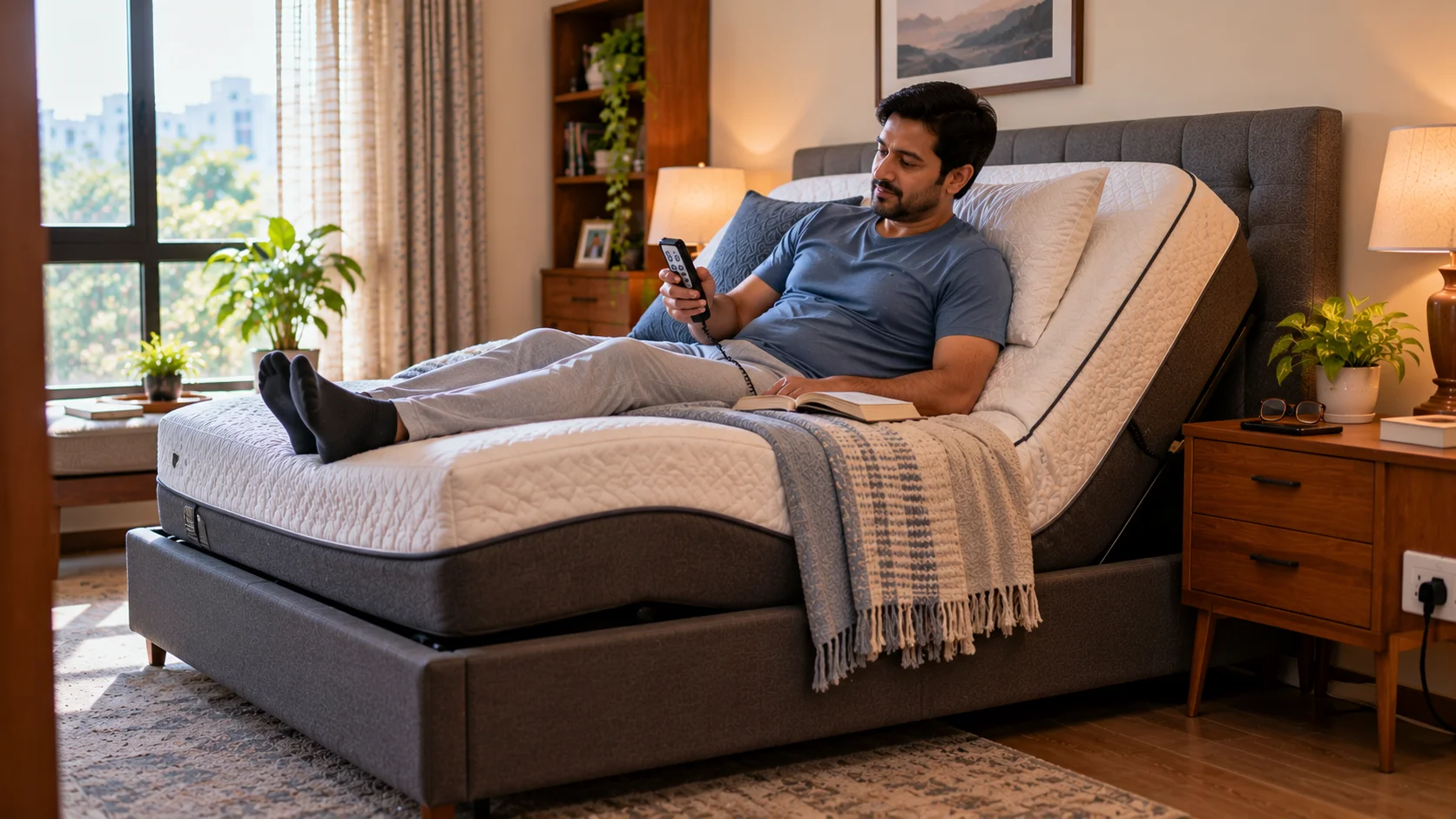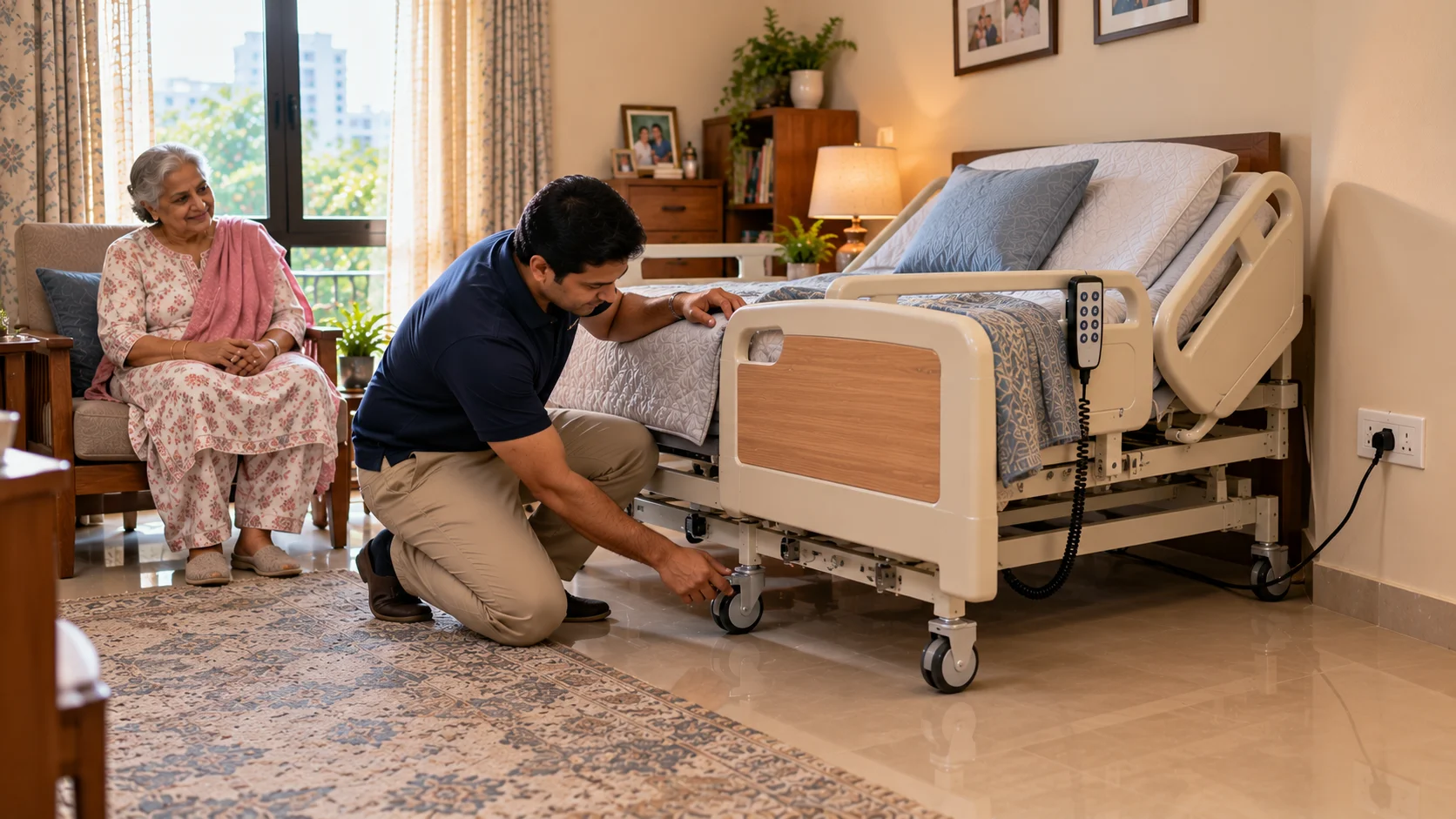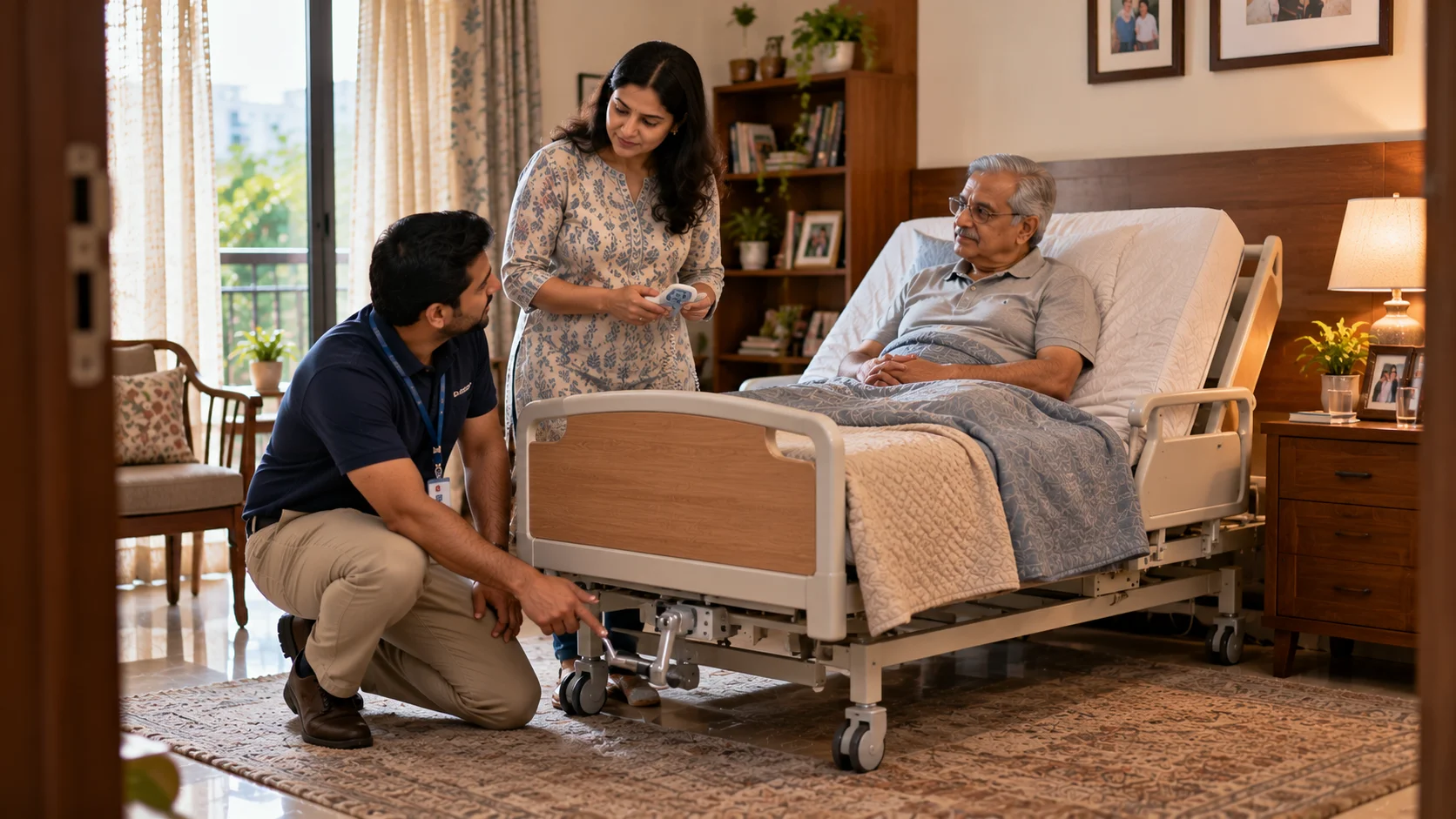
Hospital beds for patients come in three main types. Manual beds use hand cranks, semi-electric beds use a motor for the backrest but a crank for height, and fully electric beds use motors for every movement with a remote. For home care, fully electric is easiest on the caregiver. Manual suits short, low-need recovery.
What are the main types of hospital beds?
Hospital beds are not one product. The real difference is how each part moves and who does the work, the patient, the caregiver or a motor.
| Type | How it adjusts | Best for | Limitation |
| Manual (crank) | Hand cranks at the foot end | Short recovery, tight budget | Caregiver must crank each change; patient cannot self-adjust |
| Hydraulic | Foot or hand pump | Facilities that want quiet, jerk-free movement | Still needs effort from someone else |
| Semi-electric | Motor for head and legs, crank for height | Patients who need sitting up but little else | Height change stays manual |
| Fully electric | Motors for head, legs and usually height | Long-term care, elderly patients, solo caregivers | Needs a power socket and costs more |
| ICU or multi-function | Several motorised sections | Critical care in hospitals | More than most homes need |
Why do most families choose an Electric Hospital Bed for home?
The answer is the caregiver’s back. Raising a patient who weighs 70 kg by hand-cranking ten times a day adds up. With an Electric Hospital Bed, the patient or the family member presses a button instead.
There is a safety reason too. A patient who can adjust the bed alone calls for help less often, which also protects their dignity. Our post on patient safety with electric adjustable beds covers rails, brakes and positioning in detail.
How does a hospital bed with remote control work?
A Hospital Bed With Remote Control has small motors, called actuators, under the backrest and the leg section. Press and hold a button and the motor raises or lowers that part. Release and it stops.
Zero G’s electric hospital bed page lists these specs:
- Head elevation from 0 to 90 degrees
- Feet inclination from 0 to 45 degrees
- Wireless mobile control
- Weight capacity of 350 kg
- Size of 42 inches wide and 78 inches long
- Lockable castor wheels and side safety rails
The page also lists a 15-year warranty, with the note that terms vary by model.
Which hospital bed suits which patient?
Match the bed to the care need, not the price tag first.
| Situation | Suggested type | Why |
| Two to four weeks after a minor surgery | Manual or semi-electric | Short use, family is present |
| Elderly parent in bed most of the day | Fully electric | Frequent position changes, meals sitting up |
| Stroke or paralysis recovery | Fully electric with rails | Needs safe repositioning |
| Patient living alone with a part-time attendant | Fully electric with remote | Can adjust without help |
| Heavy patient | Fully electric, high weight capacity | Check the capacity rating first |
What features matter in an Automatic Hospital Bed?
An Automatic Hospital Bed is just a fully electric bed that moves on button press. Ignore the marketing and check these:
- Weight capacity, including the mattress and the patient.
- Side rails that lock firmly and drop for transfers.
- Wheels that lock, so the bed does not roll during a transfer.
- Motor noise, which matters in a bedroom at night.
- Mattress compatibility, since a thin or stiff mattress can crease when the bed bends.
How should you look after hospital beds at home?
Good maintenance keeps motors quiet and extends life. Zero G’s page notes that well-kept electric beds can last 7 to 15 years or longer, depending on use and care.
- Keep the cables clear of the wheels and off the floor where people walk.
- Wipe the frame with a damp cloth. Keep liquids away from the motors and the handset.
- Check that the castors lock and the rails latch every week.
- Do not exceed the rated weight, including the mattress and any extras.
- Call the service team at the first unusual noise or jerk, not after a breakdown.
What does a hospital bed for patients at home need around it?
A hospital bed for patients at home takes more room than a normal bed. Measure first.
- Door and passage width, so the bed can be moved in.
- Space on both sides, so a caregiver can reach the patient.
- A power socket within cable reach, away from where people walk.
- A flat floor, because castors roll on uneven tiles.
Some families prefer a bed that looks like furniture. Our comparison of an adjustable bed vs a hospital bed for home recovery helps you decide how clinical the room should feel. If you are budgeting, the hospital bed price guide for India breaks down what drives the cost.
Caution: this is general information. Ask the treating doctor or physiotherapist which positions are safe, especially after spine or heart surgery.
Ready to see a bed in person? Explore the electric hospital bed range or the beds for patients page.