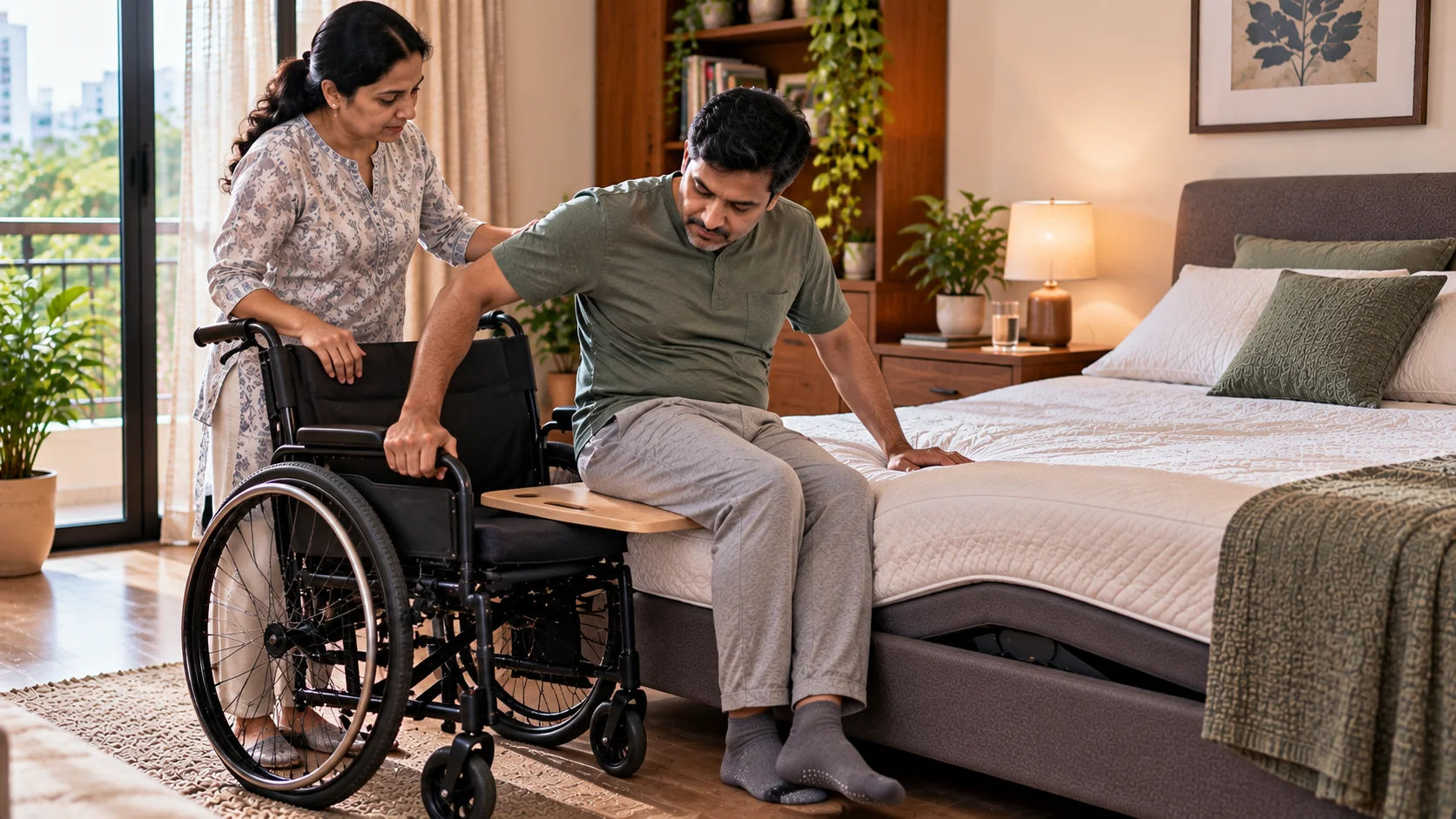
If standing up makes you dizzy, lightheaded or close to fainting, raising the head of the bed by roughly 10 to 20 degrees overnight is a common, doctor-endorsed measure. It helps the body hold on to fluid and blunts the morning blood pressure drop. An adjustable bed makes this easy, and its motor lets you rise in stages instead of sitting bolt upright.
Postural orthostatic tachycardia syndrome (POTS) and orthostatic hypotension both involve the body struggling to keep blood pressure steady when you stand. The result is dizziness, a racing heart, blurred vision and sometimes fainting, and mornings are often the worst. The bed matters more than most people expect, because how you lie down and how you get up both change what happens next. Here is how an adjustable bed can help with POTS and orthostatic hypotension, and where its limits are.
Why Mornings Are So Hard
Lying flat all night, the body sheds fluid through the kidneys and blood pools less in the legs, so by morning blood volume is a little lower. Then you stand up and gravity pulls blood into the legs and abdomen, and the nervous system struggles to compensate. In orthostatic hypotension blood pressure falls on standing; in POTS the heart rate shoots up instead. Either way, the first minutes after getting out of bed are when symptoms hit hardest.
Why Head-Up Sleeping Helps
Sleeping with the head higher than the feet is a standard suggestion for orthostatic hypotension and is often used in POTS as well. Slightly raising the head reduces night-time fluid loss and may lessen the morning drop. The method most studied is tilting the whole bed using blocks, but an adjustable frame that raises the upper body is a practical alternative many people find comfortable. Whether the whole-bed tilt or a raised torso works better for you is worth discussing with your doctor.
| Approach | What It Does | Practical Note |
| Head of bed raised 10 to 20 degrees | Reduces overnight fluid loss and morning drop | A gentle angle is usually enough and easier to sleep in |
| Rising in stages with the motor | Lets blood pressure adjust gradually | Pause at each step for one to two minutes |
| Legs raised for daytime rests | Helps some people with symptoms | Check with your doctor, especially with high blood pressure when lying down |
| Flat sleeping | More overnight fluid loss and a bigger morning drop | Often the least helpful for these conditions |
| Sitting up suddenly | Triggers dizziness and a racing heart | The thing to avoid |
A Staged Routine for Getting Up
- Drink a glass of water before you rise if your doctor has recommended it, since a quick drink can lift blood pressure for a short time.
- Raise the head section slowly with the remote and stay upright for one to two minutes.
- Move your feet and ankles in circles, or gently tense your calves and thighs, to push blood back toward the heart.
- Swing your legs over and sit on the edge of the bed for another minute.
- Stand holding something stable, and pause before walking.
Fainting, chest pain, palpitations with breathlessness, or injuries from falls need medical attention. Orthostatic hypotension and POTS have many possible causes and treatments, including fluids, salt, compression garments and medication, so any plan, including how high to raise the bed, should come from your doctor or specialist.
Other Things That Make Mornings Worse
- Heat, including hot showers or an overheated bedroom, which widens blood vessels.
- Large meals, alcohol and dehydration, all of which can lower blood pressure further.
- Long periods of lying still, which add to blood pooling when you stand.
- Standing still for a long time, which is harder than walking.
- Certain medicines, which are worth reviewing with your doctor.
Gradual position changes also appear in our real-site article on blood pressure fluctuation and adjustable hospital beds, which explains why slow, controlled movement matters.
Safety Around the Bed
Because the aim is to avoid fainting, plan for the worst. Lower the bed so your feet reach the floor easily, keep a firm chair or rail within reach, light the route to the bathroom and avoid rushing to the toilet from a deep sleep. If you do feel faint, sit or lie back down at once, and put your legs up if you can. A height-adjustable frame and a simple remote are more valuable here than any recline preset, as discussed in how adjustable beds help people with mobility issues.
Is Raising the Legs Also Useful?
Some people with POTS feel better lying with the legs raised during the day, and a leg rest section can provide that. But raising the legs overnight is not the same as raising the head, and in some forms of orthostatic hypotension lying flat or legs-up can push blood pressure too high when lying down. This is why the exact set-up should be individual. If you also have swelling, our guide on how adjustable beds improve circulation and reduce swelling explains the leg-elevation mechanism.
Tracking What Helps
Because symptoms vary so much day to day, a simple log can show what works. Note the bed angle you used, how you felt on standing, whether you drank water first and anything unusual such as heat or a heavy meal the evening before. After two or three weeks patterns usually emerge, and the log gives your doctor something concrete to work with. Small changes, such as a few degrees more elevation or an extra minute at each rising stage, are easy to test with a remote.
For POTS and orthostatic hypotension, the bed is part of the treatment plan, not a luxury. A gentle head-up angle overnight and a staged rise in the morning take much of the sting out of the first minutes of the day. Combine them with your doctor’s advice on fluids, salt and medication, and keep the area around the bed safe.
Explore our Bed for Patients range or Back Rest Beds collection.
Related Reading: