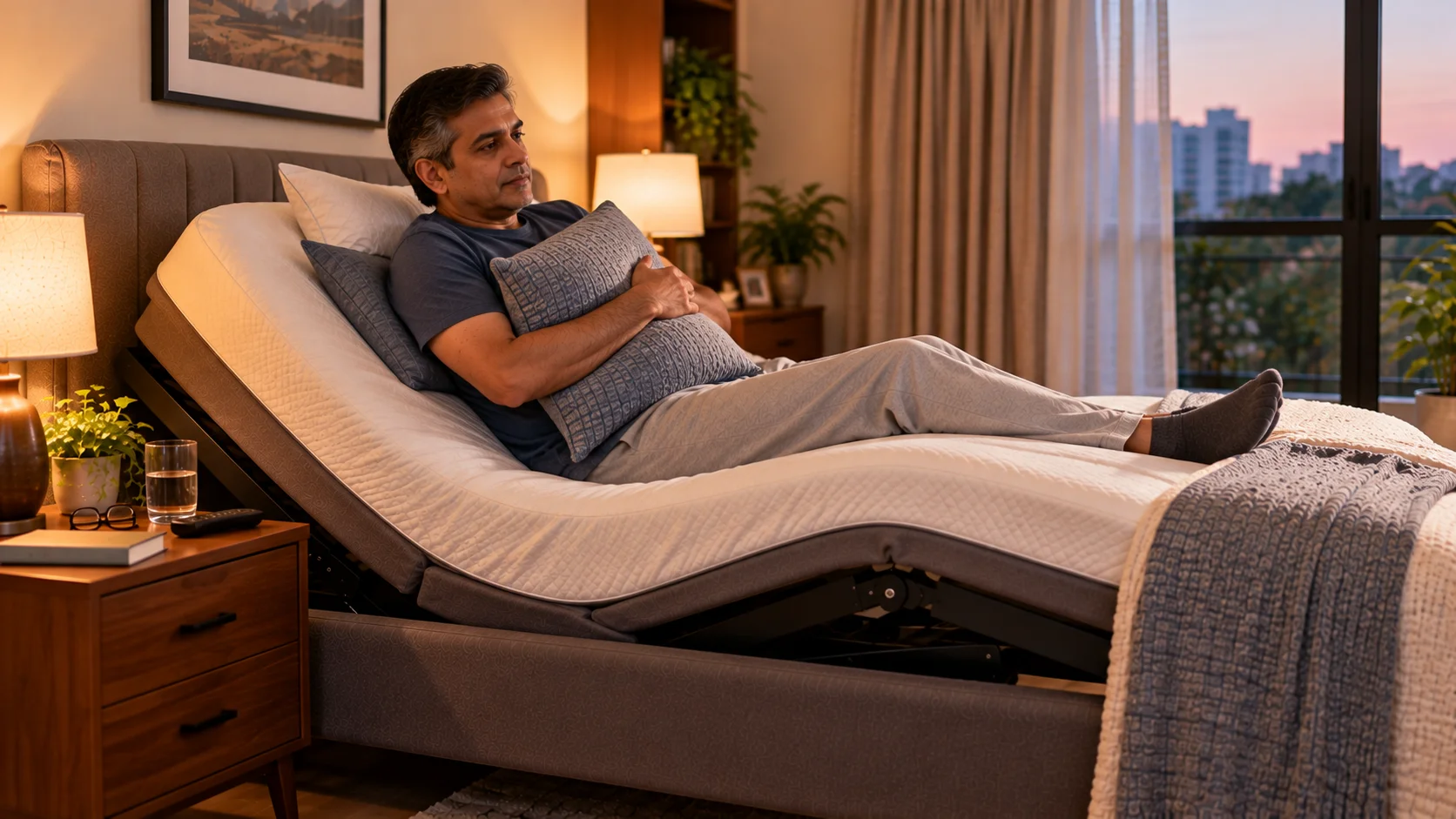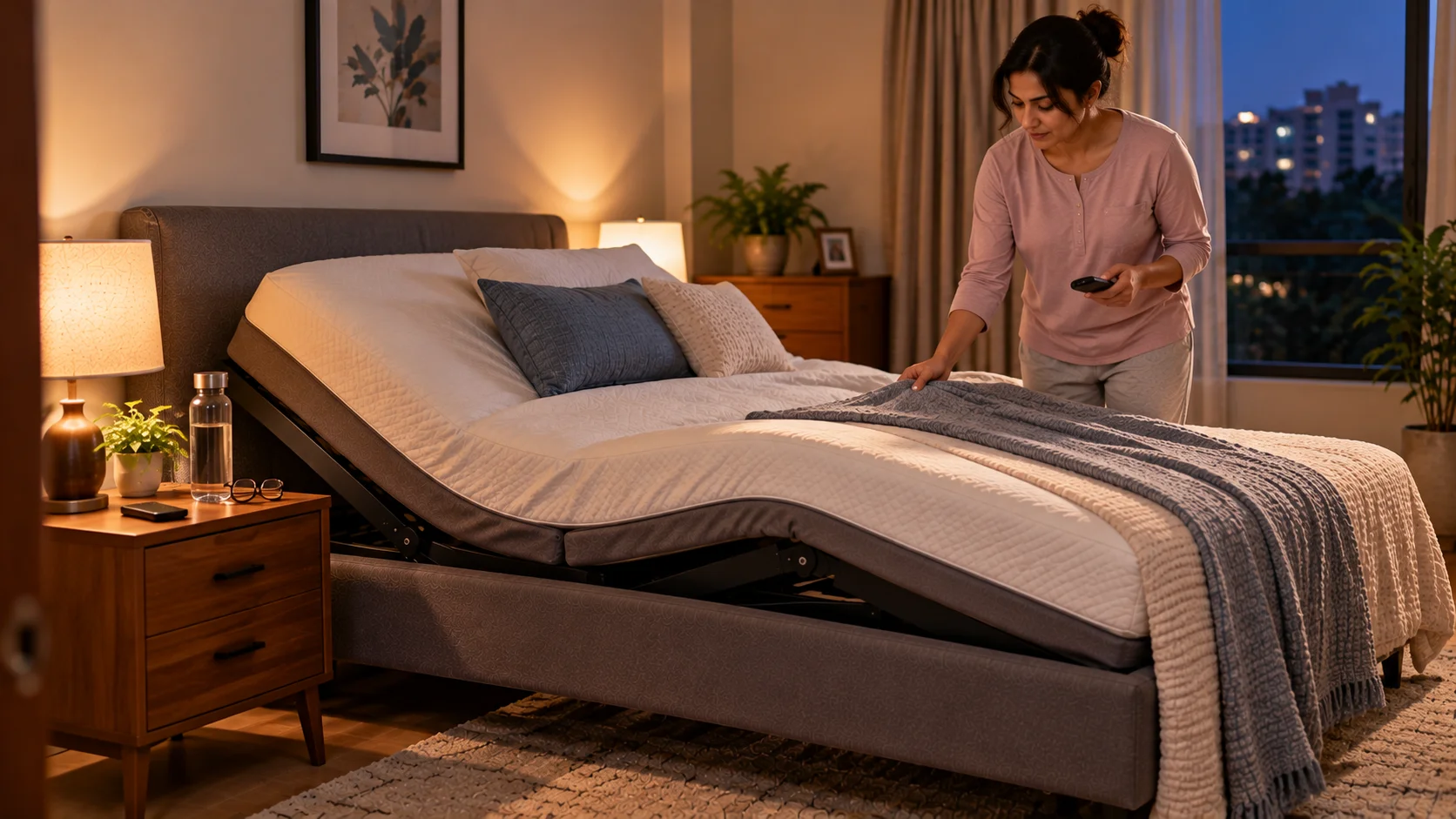
A sudden back spasm settles fastest when the lower back is unloaded and the muscles are allowed to relax. On an adjustable bed, that means raising the knee section until your hips and knees are bent to roughly 90 degrees, keeping the head only slightly raised, and getting out of bed by rolling to your side. Rest in short spells, because staying in bed for days slows recovery.
You bend to pick something up, turn awkwardly, or simply wake up one morning and the lower back has locked. A back spasm, often called a lumbar strain, is one of the most common reasons people suddenly cannot get comfortable in bed. It feels alarming, but most episodes improve within days to a few weeks. This guide covers how an adjustable bed can help you sleep with a back spasm, and the mistakes that keep the muscles clenched.
What Is Actually Happening in a Spasm
When a muscle or ligament in the lower back is strained, the surrounding muscles tighten reflexively to guard the area. That guarding is what feels like a vice grip. Lying flat can make it worse because the lower back arches slightly and the tight muscles are held under tension. Positions that bend the hips and knees flatten the lower back and let the guarding muscles let go.
The 90/90 Position on an Adjustable Bed
Physiotherapists often suggest lying on the back with the calves resting on a chair or stack of pillows so the hips and knees are both bent to about 90 degrees. An adjustable bed does this without the furniture: raise the knee section until your thighs are roughly vertical and your lower legs rest level, and keep the head section only mildly raised. It is the quickest way to take load off the lumbar muscles.
| Position | Effect on the Spasm | Comfort Tip |
| Back, knees high (90/90 style) | Flattens the lower back, relaxes guarding muscles | Keep the head only 10 to 15 degrees up |
| Side, knees bent, pillow between them | Keeps the spine level and the pelvis stacked | Good alternative if back-lying hurts |
| Flat with legs straight | Can arch the lower back and keep muscles tight | Usually the worst choice at first |
| Steep recline, Zero Gravity style | May over-flex the spine and feel unstable | Use a gentle version only |
| Stomach | Arches the lower back and twists the neck | Avoid |
A Step-by-Step Plan for the First Few Nights
- Raise the knee section until your lower back feels flat against the mattress and the tension eases.
- Keep the head low, 10 to 15 degrees, so the spine is supported without being pushed into a slump.
- Add heat before bed. A warm pack for 15 to 20 minutes, with a cloth between it and the skin, helps tight muscles let go.
- Use a pillow between the knees if you are on your side, so the pelvis does not twist.
- Keep the remote within reach so you can make small changes without twisting to reach it.
Back pain with loss of bladder or bowel control, numbness around the groin or buttocks, progressive leg weakness, fever, pain after a significant fall or accident, or pain that is unrelenting at night needs urgent medical attention. People over fifty with a first episode, or with a history of cancer, should also have it checked.
Getting Out of Bed Without Re-Triggering It
- Lower the knee section and bring the bed flat or to a comfortable level first.
- Bend both knees and roll to your side as one unit, keeping the shoulders and hips moving together.
- Drop your legs over the edge while pushing up with your arms, letting the weight of the legs help you sit.
- Pause before standing. Sit for a few seconds, then stand with a straight back, using your legs rather than bending forward.
- Use the height adjustment, if your frame has one, so you do not have to push up from a low position.
Resting Is Fine, Staying in Bed Is Not
Current guidance for acute back pain is to keep moving gently within what is tolerable, because prolonged bed rest stiffens the back and weakens the muscles. Use the bed for short, supported rests and for the night, but get up every hour or two in the day to walk around the house. Most people recover faster by staying lightly active than by staying flat for days, and the adjustable bed is best seen as a rest aid, not a place to hide.
Why a Spasm Sometimes Keeps Coming Back
Repeated spasms often point to something fixable: weak core and glute muscles, long hours of sitting, poor lifting habits, or a sleep setup that leaves the lower back unsupported. If it keeps recurring, review your daily routine and your sleeping position with the checklists in 7 adjustable bed mistakes that make back pain worse. Morning stiffness is a related pattern covered in why lower back pain feels worse in the morning.
Pillows and Bolsters That Help
A small rolled towel or pillow under the knees, a firm pillow between the knees for side sleepers, and a thin cushion behind the lower back can all increase comfort during an acute episode. The thickness and placement tricks in our DIY pillow and bolster setup guide apply directly, and they cost nothing if you use items you already own.
When It Is More Than a Spasm
A spasm that is accompanied by pain shooting down the leg, tingling or numbness suggests nerve involvement rather than a simple muscle strain. That pattern is explained in best adjustable bed positions for sciatica and herniated disc pain relief. If symptoms have not improved after a couple of weeks, or keep recurring, see a doctor or physiotherapist rather than relying on positioning alone.
Preventing the Next Spasm
Once the worst has passed, a few habits reduce the chance of a repeat. Bend at the hips and knees rather than the waist when lifting, keep loads close to the body, break up long sitting with short walks and build core and glute strength gradually with a physiotherapist’s guidance. A supportive sleep setup matters too, and a medium-firm surface with a gentle knee lift keeps the lower back from being left unsupported night after night.
A back spasm feels dramatic but usually settles quickly if you unload the lower back and keep gently moving. A raised knee section, a low head angle, heat before bed and a careful roll to get up are the practical pieces. Use the bed to rest well, not to stay put, and see a doctor if any warning sign appears.
Explore our Adjustable Bed for Back Pain range or Leg Rest Beds collection.
Related Reading: