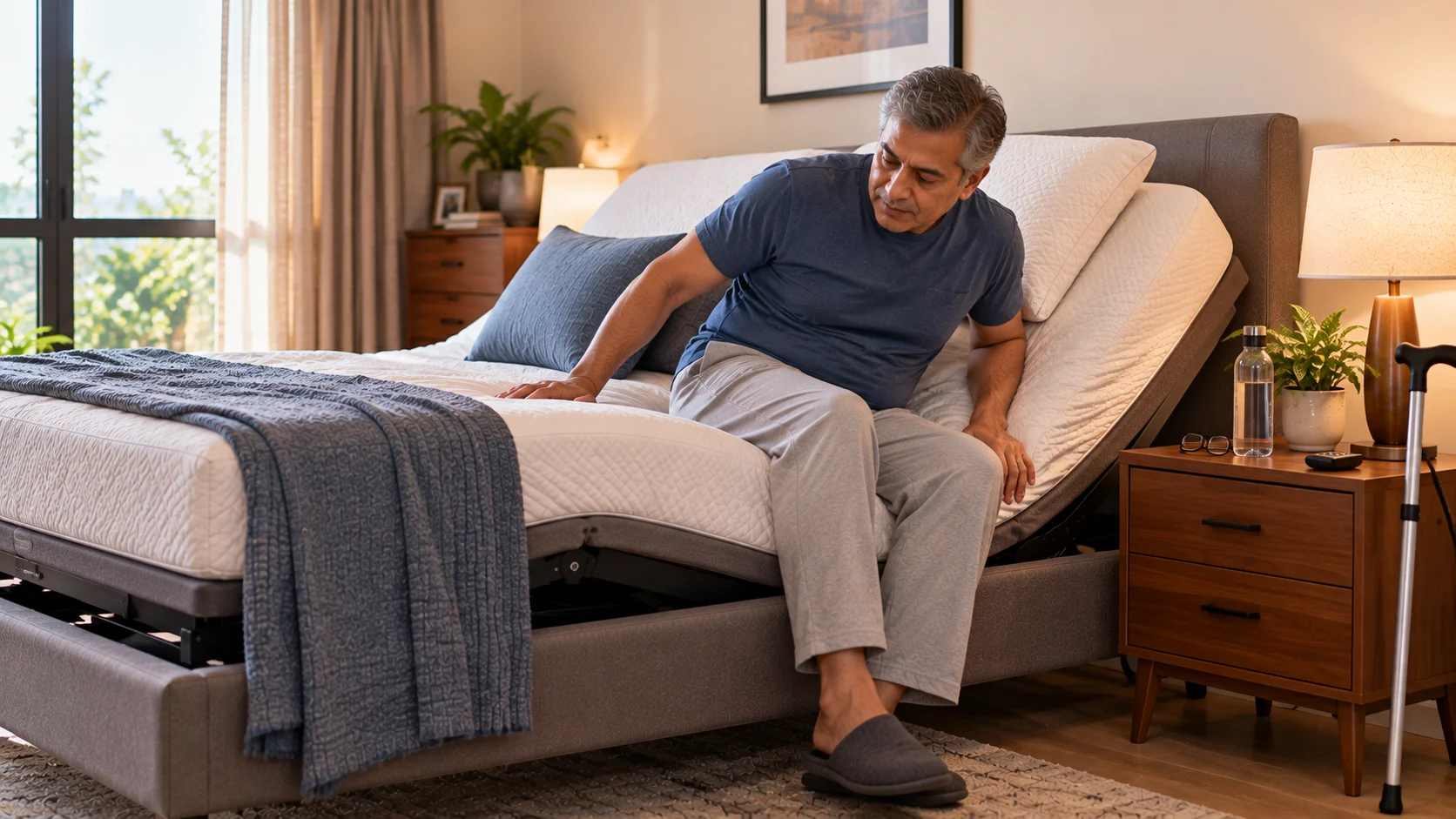
After abdominal surgery, the hardest movement is getting up from lying flat, because it makes the stomach muscles pull on the incision. An adjustable bed removes most of that effort: a gentle semi-reclined position keeps the abdominal wall relaxed, and the motor does the sitting up for you. Always follow your surgeon’s own restrictions on activity and lifting.
Hernia repair, gallbladder removal, appendicectomy, hysterectomy and bowel surgery all share one recovery headache: the abdominal muscles that guard the surgical site are the same ones you use every time you sit up in bed. Rolling over, coughing and standing all tug at a tender incision. This guide explains how an adjustable bed can make recovery after hernia and abdominal surgery easier, and what to watch for.
Why Getting Out of Bed Is the Hard Part
Moving from lying flat to sitting engages the rectus abdominis, the muscle running down the front of the stomach. After surgery these muscles are sore, weakened and protecting stitches or mesh. Pushing yourself up with your abdominals strains the repair, and many people end up bracing, holding their breath and gritting their teeth. Anything that reduces that effort is useful in the first weeks.
What an Adjustable Bed Changes
| Recovery Problem | On a Flat Bed | On an Adjustable Bed |
| Sitting up | Needs abdominal effort and often hurts | Motor raises the torso; you barely use the stomach muscles |
| Resting position | Flat lying can tighten the abdominal wall | Semi-reclined with knees raised relaxes the abdomen |
| Coughing or sneezing | Strong pull on the incision | A raised torso makes it easier to splint with a pillow |
| Standing up | Large drop, awkward transfer | Lowering the bed shortens the movement |
| Swelling and discomfort | Hard to find a comfortable angle | Easy small adjustments by remote |
A Comfortable Recovery Setup
- Semi-recline the head section to roughly 30 to 45 degrees, which flexes the hips slightly and takes tension off the abdominal wall.
- Raise the knees a little, 15 to 20 degrees, to relax the stomach muscles further and stop you sliding down.
- Hold a pillow against the incision when you cough, sneeze or laugh, a technique called splinting that supports the wound.
- Sit up using the motor and your legs, not your stomach. Roll to the side, lower your legs over the edge, and let the head section lift you.
- Lower the bed height before standing, if your frame allows it, so you can stand without a big push.
Follow your surgeon’s written instructions, which vary by procedure and by whether the surgery was keyhole or open. Fever, spreading redness, discharge from the wound, a new bulge, severe or worsening pain, repeated vomiting, or no bowel movement with swelling need prompt medical attention.
Lifting, Straining and Constipation
Surgeons commonly restrict heavy lifting for several weeks after hernia repair, because strain can stress the repair. Constipation matters too: pushing on the toilet raises abdominal pressure, so fluids, fibre and any prescribed stool softener help protect the wound. An adjustable bed does not change those rules, but by cutting the strain of getting up it removes one daily source of pressure.
What About Sleeping Position?
Most people recover best on the back with a gentle recline, or on the side with a pillow hugging the abdomen. Lying on the stomach is usually uncomfortable and best avoided until the surgeon says otherwise. The idea of keeping the hips and knees slightly flexed is similar to the approach in our nursing mothers and postpartum recovery guide, where C-section recovery follows the same principle.
Supporting the Rest of Recovery
- Walk short distances often, which improves circulation, reduces clot risk and helps the bowels, as your surgeon advises.
- Keep essentials within easy reach of the bed so you do not twist or stretch.
- Eat and drink well, since healing needs protein and hydration.
- Take pain relief as prescribed so you can move and breathe deeply rather than guarding the wound.
- Attend follow-up visits and report any change early.
If the person recovering is older or has limited mobility, the broader safety points in how adjustable beds help people with mobility issues apply, and a height-adjustable base is especially valuable.
A Rough Timeline of What to Expect
Recovery varies by procedure. Keyhole (laparoscopic) surgery often allows light activity within days, while open surgery usually needs longer before lifting and driving. Many surgeons suggest avoiding heavy lifting for about four to six weeks after hernia repair, but your own instructions take priority. During the first one to two weeks the semi-reclined setup earns its keep. As soreness fades you can gradually flatten the bed and return to your usual sleeping position, always guided by how the incision feels rather than the calendar alone.
Practical Tips for Family and Caregivers
If someone is looking after you, show them how to work the remote and where the height and recline controls are, so they can help without lifting. Keep a pillow dedicated to splinting by the bed, and place water, medication and a phone on the side you roll to. Encourage the person recovering to ask for help with anything heavy, since reaching and straining are the most common ways a repair gets stressed in the early weeks, and a small amount of planning prevents most of them.
After abdominal surgery, the simplest wins come from avoiding unnecessary strain. An adjustable bed does the sitting up, keeps the abdomen relaxed in a semi-reclined position and shortens the drop to standing. Together with your surgeon’s guidance on lifting and activity, it can make the first weeks noticeably less painful.
Explore our Bed for Patients range, or Electric Hospital Bed options for higher-support recovery.
Related Reading: