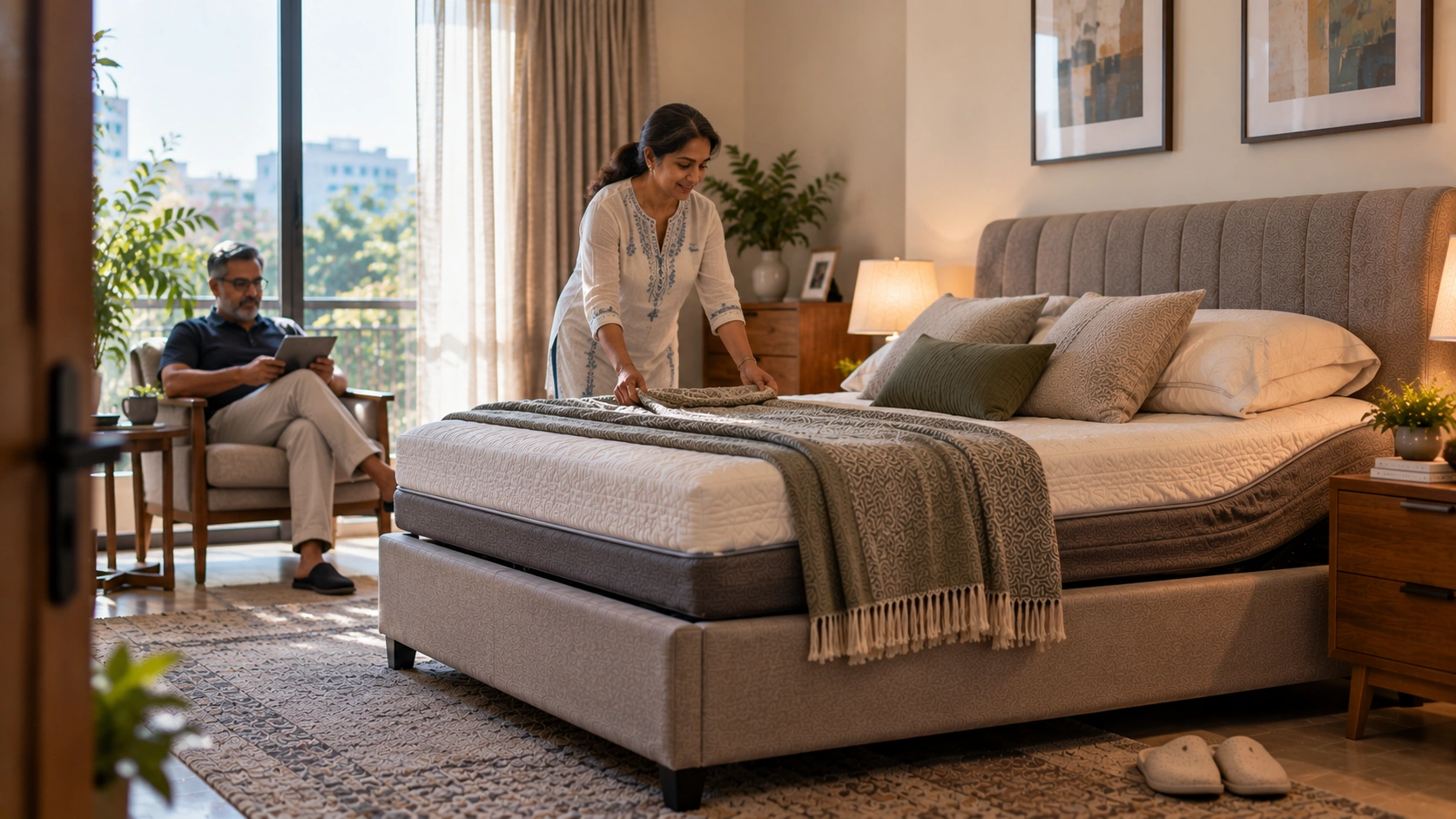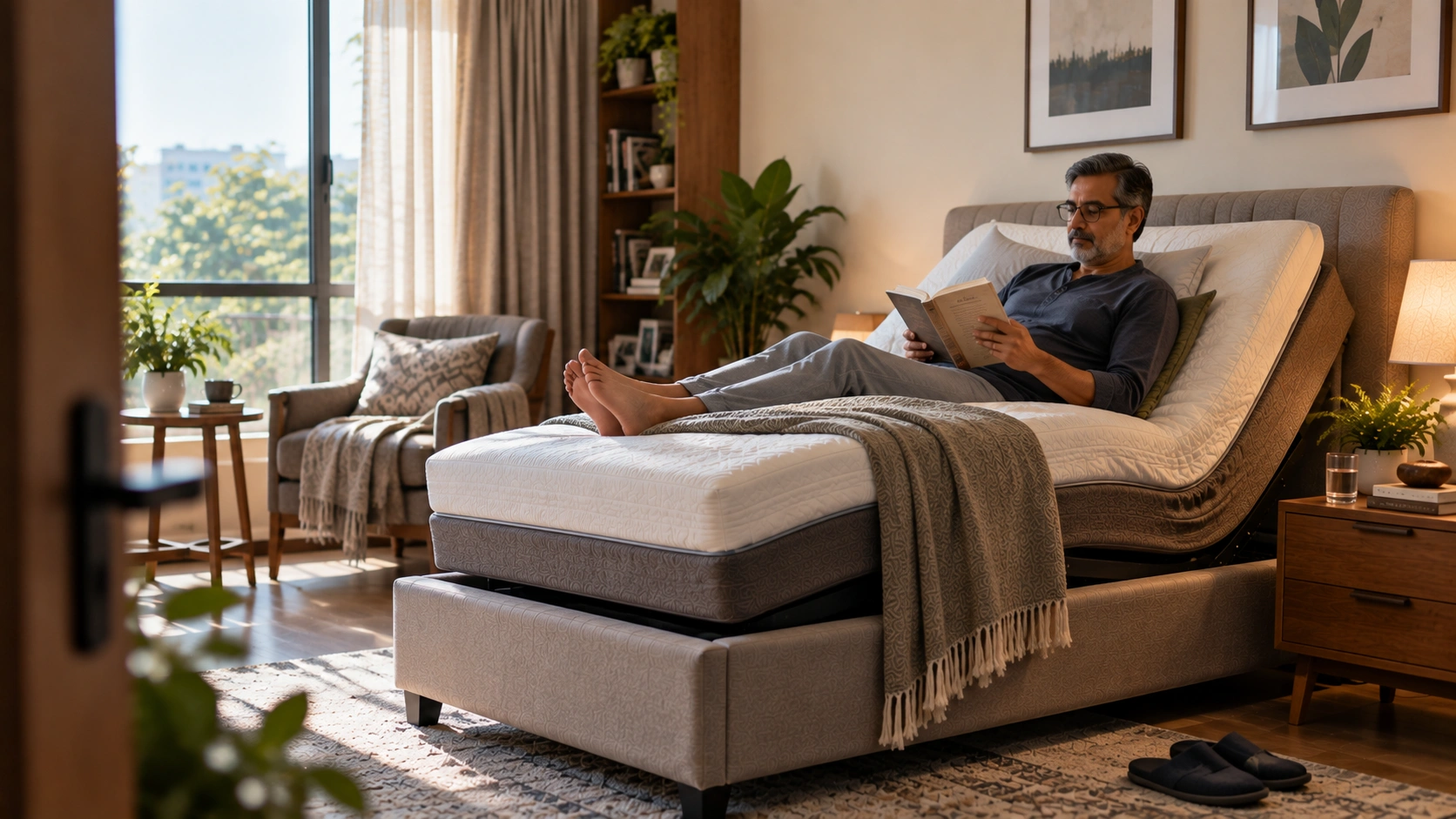
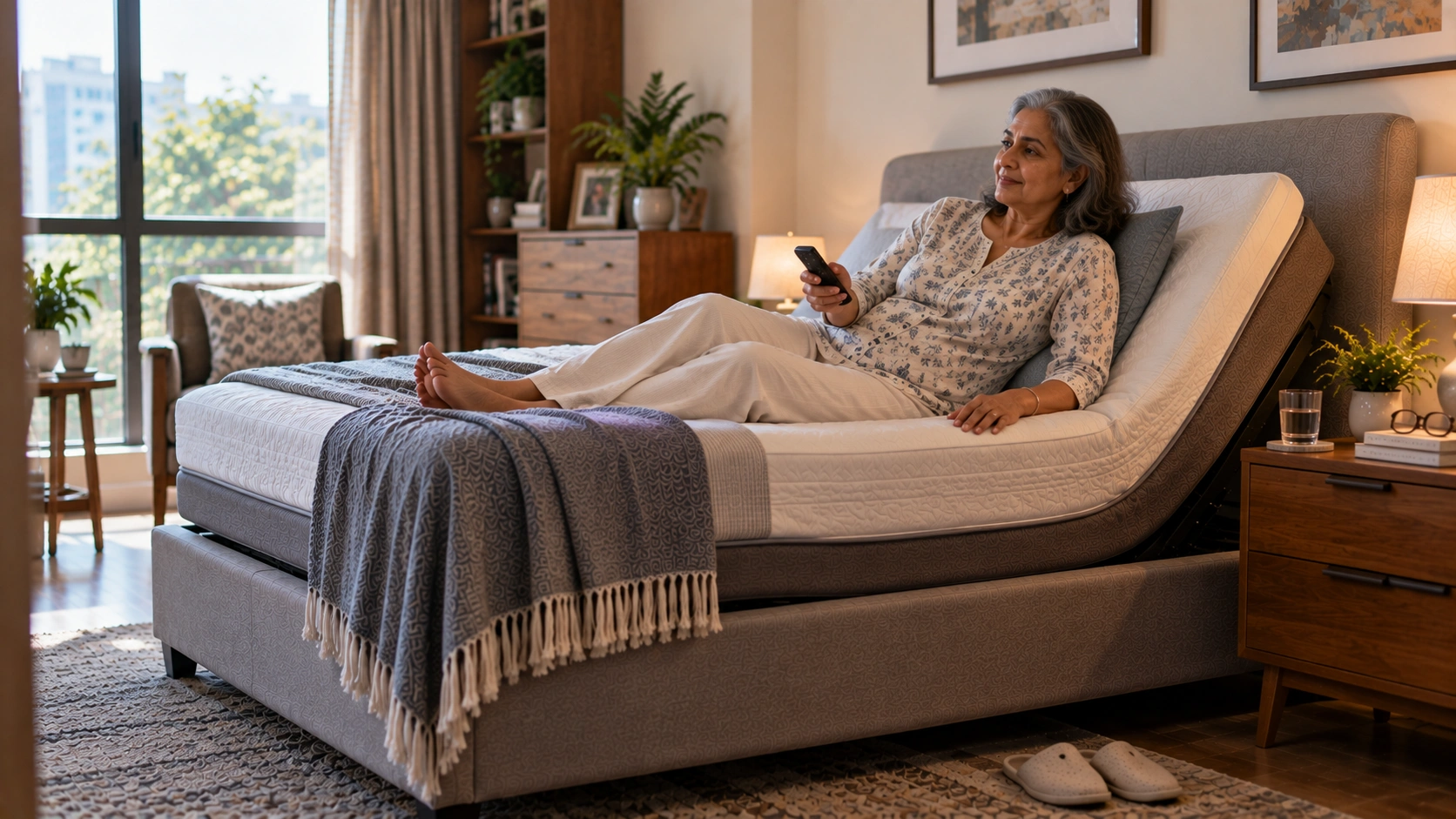
For people with osteoporosis, an adjustable bed helps most by reducing the physical strain of getting in and out of bed a common moment of fracture risk through height adjustability and gentle, gradual positioning changes. Sudden movements, awkward twisting to sit up, and jarring motor adjustments should all be avoided, since fragile bones require particularly careful, controlled movement.
Osteoporosis, a condition that weakens bones and increases fracture risk, changes how everyday movements need to be approached including something as routine as getting in and out of bed each day. For people managing osteoporosis, adjustable beds offer genuine practical value, though the priorities differ somewhat from general comfort or back-pain-focused positioning, with an emphasis on gentleness and fracture-risk reduction above all else.
Why Bed-Related Movements Matter for Osteoporosis
A significant share of osteoporosis-related fractures occur during routine daily activities rather than dramatic falls awkward twisting motions, sudden movements, or loss of balance during a transfer can be enough to cause a fracture in sufficiently fragile bone. Getting in and out of bed, particularly if it involves twisting, reaching, or an unsteady transition, represents exactly this kind of routine but genuinely risky movement for someone with significant bone density loss.
How an Adjustable Bed Reduces This Risk
| Risk Factor | How an Adjustable Bed Helps | Key Feature |
| Twisting motion to sit up from flat | Motorized elevation removes the need to twist or use core strength to rise | Gentle, gradual head elevation preset |
| High step-down height for standing transfers | Lowering the bed height reduces the drop and strain of standing up | Height-adjustable base with low-end range |
| Sudden, unstable movements during repositioning | Smooth, controlled motor movement avoids jarring shifts | Slow, gentle motor speed setting, if adjustable |
| Reaching or straining for support during transfers | Stable edge support provides a secure point of contact | Sturdy frame edge, ideally with grab-rail compatibility |
Osteoporosis management should always be guided by a doctor, who can advise on bone density status, fracture risk, and safe movement practices specific to your individual condition. This article provides general information only.
Positioning Principles for Fragile Bones
- Always move gradually, avoiding rapid transitions between flat and elevated positions, which can create sudden shifts in weight distribution.
- Use the flattest comfortable position for sleep rather than a steep recline, unless a doctor has specifically recommended otherwise for a related condition.
- Prioritize height adjustability over dramatic incline angles, since safer transfers generally matter more for fracture prevention than achieving the deepest possible Zero Gravity position.
- Avoid twisting to reach the remote or bedside items; keep frequently used items within easy, straight-ahead reach to prevent awkward rotational movements.
Complementary Bone Health and Fall Prevention Measures
An adjustable bed addresses one specific, meaningful piece of fracture risk bed-related transfers but osteoporosis management benefits from a broader, coordinated approach to fall and fracture prevention throughout the home. This typically includes adequate lighting for nighttime movement, removing loose rugs or clutter that could cause a trip, grab rails in bathrooms and near the bed, and any specific exercise or medication regimen recommended by a doctor to support bone density and balance. Our related guide on how adjustable beds help people with mobility issues covers several of these complementary home safety considerations in more depth.
Mattress Considerations for Osteoporosis
Mattress choice also deserves attention for osteoporosis specifically. A mattress that’s too soft can make transfers more effortful and unstable, since the body sinks and loses a stable push-off point, while a supportive but not overly firm surface such as a well-constructed memory foam or natural latex option tends to provide both comfort and the stability needed for safer, more controlled movement during transfers.
When to Involve Physical Therapy
For people with significant osteoporosis or a history of fractures, a physical therapist can provide personalized guidance on safe transfer techniques specific to individual bone density status and balance ability this professional guidance is genuinely valuable alongside the general positioning principles covered here, since individual fracture risk and safe movement patterns can vary considerably based on the specific severity and location of bone density loss.
Understanding Osteoporosis Severity and Its Effect on Bed Needs
Osteoporosis exists on a spectrum, from early bone density loss (osteopenia) to more advanced osteoporosis with a documented history of fractures, and the level of caution warranted for bed positioning reasonably scales with this severity. Someone with early-stage bone density loss and no fracture history may need only modest adjustments to their existing habits, while someone with a prior hip or spine fracture warrants considerably more caution around every transfer, potentially including additional safety features like bed rails or a caregiver present for transfers during higher-risk periods. A DEXA scan result and fracture risk assessment from a doctor can help clarify where on this spectrum an individual falls, which in turn should meaningfully inform how cautious the approach to bed-related movement needs to be.
Nutrition and Bone Health Beyond Positioning
While this article focuses on bed-related positioning, it’s worth briefly noting that bone health management extends well beyond sleep setup adequate calcium and vitamin D intake, weight-bearing exercise as recommended by a doctor, and, where appropriate, prescribed osteoporosis medication all play a more direct role in slowing bone density loss than any bed feature can. An adjustable bed addresses one specific, practical risk factor the safety of daily bed transfers as one piece of a much broader bone health picture that’s worth managing comprehensively with your doctor’s guidance.
For people managing osteoporosis, an adjustable bed’s value centers on safer, gentler movement particularly during the twice-daily transfers of getting in and out of bed, which represent a genuine, routine fracture risk. Prioritizing height adjustability and smooth, gradual positioning over dramatic recline angles tends to serve this specific need best.
Explore our Bed for Patients range or Adjustable Bed Frame collection for height-adjustable, gentle-motion options.
Related Reading: