
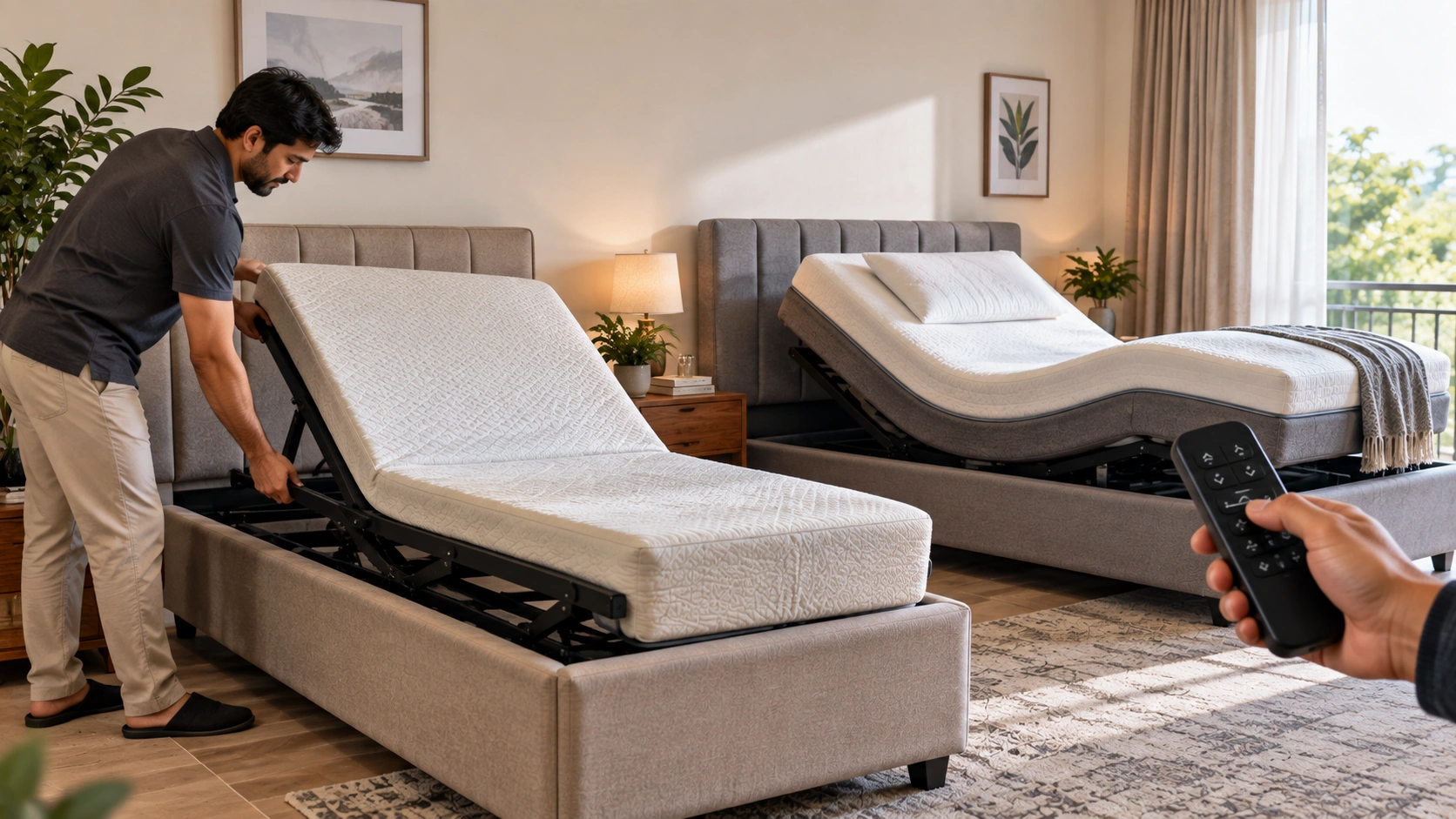
Electric adjustable beds are better for the vast majority of buyers, since one-touch motorized adjustment makes consistent, correct positioning far more likely night after night manual beds require physical effort that most people stop making consistently after the first few weeks. Manual beds remain a reasonable choice mainly for very tight budgets or areas with unreliable power, where a hand-crank mechanism guarantees function regardless of electricity.
Before motorized adjustable beds became widely available and affordable, manually cranked adjustable frames were the standard option and they’re still sold today, generally at a meaningfully lower price point than electric models. The comparison between manual vs electric adjustable beds isn’t just about cost, though; the practical, everyday differences matter just as much, if not more, for whether you’ll actually get the benefit you’re buying the bed for in the first place.
How Each Type Actually Works
A manual adjustable bed uses a hand crank or lever mechanism, requiring physical effort to raise or lower the head and leg sections similar in concept to a manual hospital bed crank. An electric adjustable bed uses a motor, controlled by a remote, to achieve the same movement with the push of a button, typically also offering presets like Zero Gravity that would be difficult to precisely and consistently replicate by hand each time.
Side-by-Side Comparison
| Factor | Manual Adjustable Bed | Electric Adjustable Bed |
| Typical price range (India) | ₹15,000 ₹35,000 | ₹35,000 ₹1,50,000+ |
| Effort required to adjust | Physical cranking or lever operation | One-touch remote control |
| Precision of positioning | Harder to fine-tune and repeat exactly | Precise, repeatable, often with presets |
| Power dependency | None works without electricity | Requires power, unless battery backup included |
| Consistency of actual use | Often used less consistently over time | Higher likelihood of consistent, correct use |
| Best for | Tight budgets; areas with unreliable power | Most buyers, especially for health-driven use |
Why Consistency Matters More Than People Expect
The single biggest practical difference between manual and electric adjustable beds isn’t found in a spec sheet it’s in how consistently people actually use them. A manual crank requires enough physical effort that many users, especially those already managing pain or limited mobility, simply stop adjusting the bed regularly after the initial novelty wears off, settling back into whatever position was easiest to reach rather than the position that’s actually most beneficial. An electric bed removes this friction almost entirely, which is a major reason electric models are generally recommended for anyone buying specifically for a health benefit like back pain relief, circulation support, or reflux management the benefit only materializes with consistent, correct use, and electric beds make that consistency far more achievable.
When a Manual Adjustable Bed Still Makes Sense
- Very tight budgets, where the price gap between manual and electric options is the deciding factor and some adjustability is better than none.
- Areas with genuinely unreliable power, where a manual bed guarantees function regardless of outages related to the considerations we cover in do adjustable beds work during power cuts.
- Users who only need occasional, infrequent adjustment, rather than a position that needs fine-tuning and repeating nightly.
- As a lower-cost trial option, to confirm that positioning genuinely helps before investing in a full electric setup.
When Electric Is Clearly the Better Choice
- Health-driven purchases, where consistent nightly use of a specific position like Zero Gravity for back pain is central to getting any real benefit.
- Elderly users or anyone with limited hand strength or dexterity, for whom manual cranking may be physically difficult or impractical.
- Anyone sharing a bed on a dual-adjustable frame, since independently motorized control for each side is far more practical than two people manually cranking their own sections.
- Caregivers managing a patient’s positioning, where quick, reliable, one-touch adjustment matters for both convenience and the patient’s comfort.
A Middle Ground Worth Knowing About
If budget is the main obstacle to going electric, it’s worth knowing that some electric adjustable bases and lower-cost conversion options exist between a full manual frame and a premium electric one we cover several of these in how to make any bed adjustable for back pain relief, including motorized backrest attachments that offer electric convenience at a lower price point than a full dual-motor frame.
Maintenance Differences Worth Knowing
Beyond initial cost and ease of use, manual and electric beds also differ in their long-term maintenance profile. Manual beds have fewer components that can fail no motor, no wiring, no remote which means less that can technically go wrong over the bed’s lifespan, though the mechanical crank or lever mechanism itself still needs occasional lubrication and inspection to keep operating smoothly. Electric beds require motor maintenance over time and eventual servicing or replacement as parts wear, but this is generally offset by warranty coverage in the earlier years of ownership. For buyers in areas without easy access to appliance servicing, the mechanical simplicity of a manual bed can be a genuine practical advantage worth weighing alongside the usability trade-offs discussed above.
Making the Decision Based on Your Specific Situation
If you’re still weighing the two options, a useful exercise is being honest about your own habits with other convenience-versus-effort trade-offs in daily life. If you’re someone who reliably sticks with manual routines hand-cranking a car window, for instance, never bothered you a manual adjustable bed might suit you better than the general recommendation above suggests. But if you know from experience that friction of any kind tends to derail good intentions, whether that’s skipping a workout because the gym is inconveniently far or abandoning a skincare routine that takes an extra step, that same pattern is very likely to apply to a manual bed’s crank mechanism as well, making the electric option the safer bet for actually achieving the health benefit you’re buying the bed for.
Manual and electric adjustable beds both technically offer positioning flexibility, but in practice, the ease of electric adjustment translates directly into more consistent, correct use which is usually the deciding factor in whether a buyer actually experiences the health or comfort benefit they purchased the bed for in the first place.
Explore our Adjustable Bed Frame range of electric options, or browse our ultimate guide for buying an adjustable bed for broader buying considerations.
Related Reading: