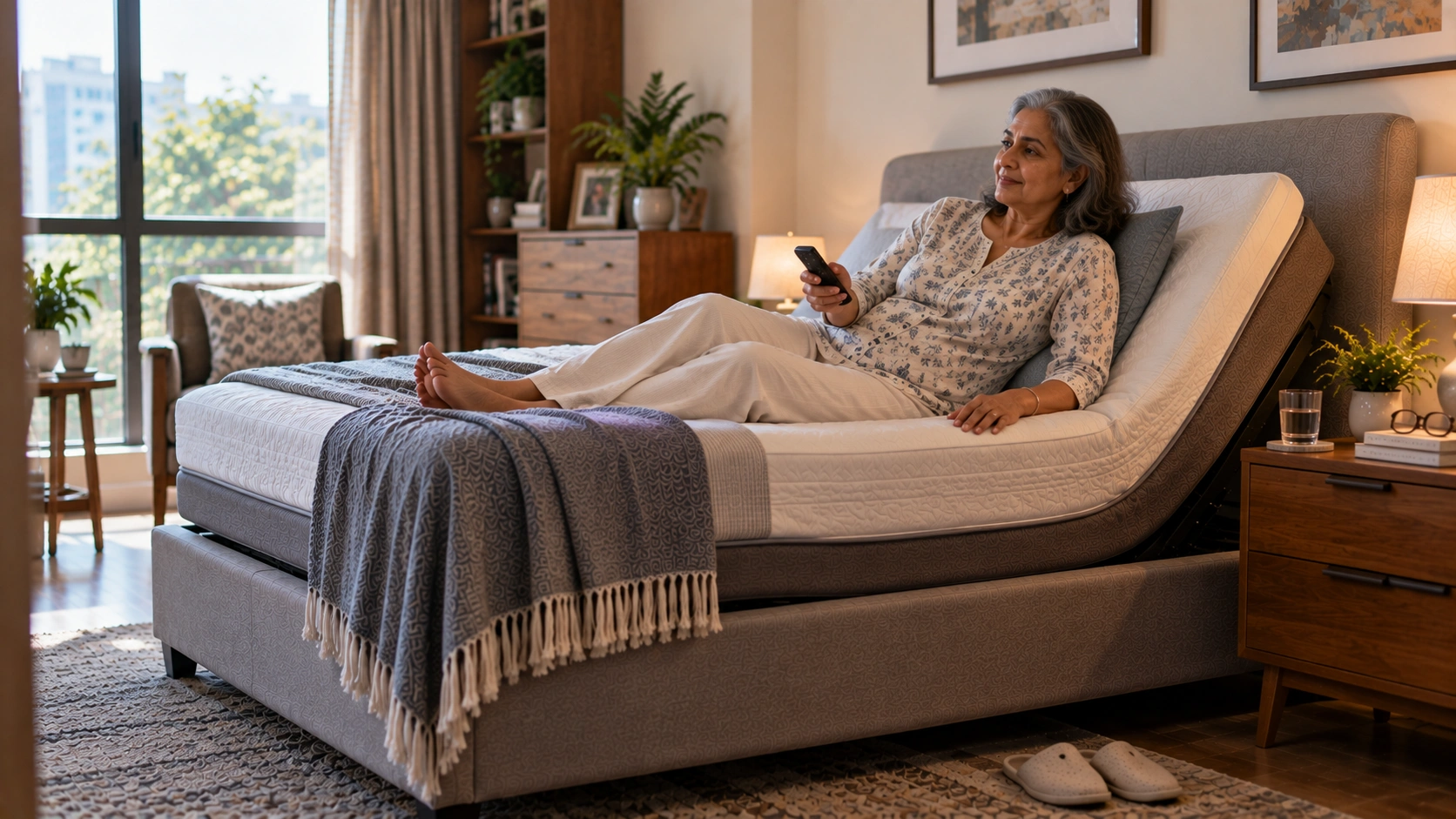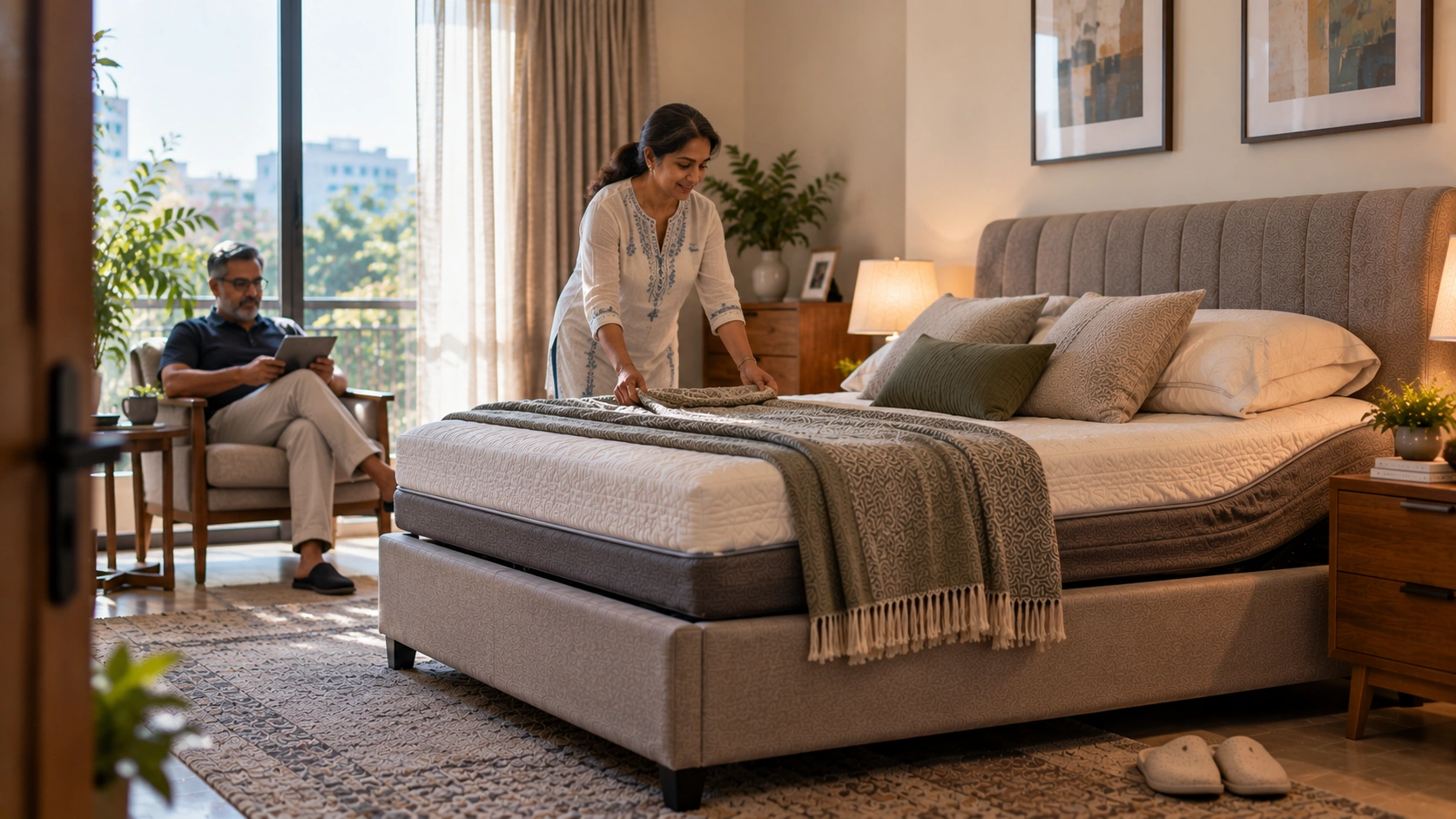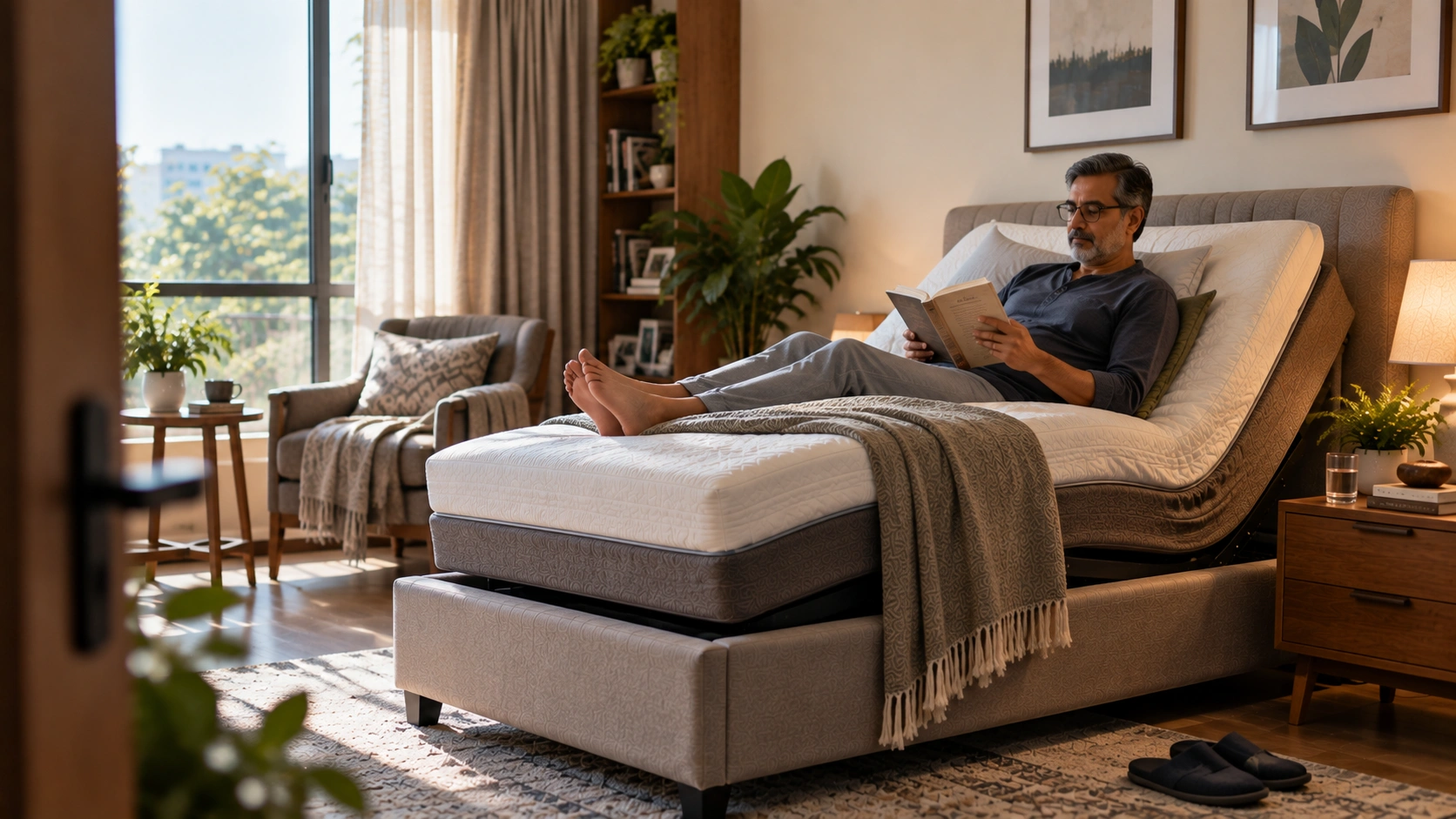

Side sleepers with back pain benefit most from a gentle Zero Gravity setting combined with a pillow between the knees, which keeps the spine in a neutral rotation rather than twisted. A steep, flat-back-style recline that works well for back sleepers often isn’t ideal for side sleepers the angle and support needs are genuinely different.
Most adjustable bed guidance is written with back sleepers in mind, but a large share of people with chronic back pain sleep on their side and side sleeping has its own distinct set of needs. If you’ve set up your adjustable bed using generic advice and haven’t felt the relief you expected, it may simply be because the standard recommendations weren’t built for your sleeping position in the first place.
Why Side Sleeping Changes the Equation
When you sleep on your side, your spine is naturally rotated compared to back sleeping, and your hip and shoulder bear more of your body weight against the mattress. A recline angle that flattens the lower back perfectly for a back sleeper can, for a side sleeper, do very little because the pressure point causing pain often isn’t the lower back directly, but the hip or shoulder pulling the spine out of alignment as you lie on your side.
The Right Adjustable Bed Setup for Side Sleepers
- Start with a gentler Zero Gravity angle than you might use as a back sleeper a mild recline of the head and legs, rather than the fullest available angle, tends to work better for the side-lying spine rotation.
- Add a pillow between the knees. This is essential for side sleepers regardless of bed type, and it becomes even more important on an adjustable frame, since it keeps the hips level and prevents the spine from twisting as the frame elevates.
- Support the waist gap. Side sleepers often have a small unsupported gap at the waist between the ribs and hips; a slim supportive pillow or the frame’s lumbar-zone contouring, if available, can fill this gap effectively.
- Keep the head pillow matched to shoulder width, not the elevated angle of the frame too thick a pillow tilts the neck upward, too thin lets it drop, and either creates a new pressure point regardless of how well the frame itself is set.
Comparing Positions by Sleep Style
| Sleep Position | Best Adjustable Bed Setting | Key Support Add-On |
| Back sleeper | Fuller Zero Gravity recline (15–20° head, legs above hip level) | Slim pillow under the knees |
| Side sleeper | Gentler Zero Gravity recline (10–15°) | Pillow between the knees, waist support |
| Combination sleeper (shifts through night) | Moderate recline, gradually increased over weeks | Adjustable firmness pillow that suits multiple positions |
| Stomach sleeper (generally not recommended for back pain) | Minimal head elevation, focus on leg support instead | Thin or no pillow under the head to avoid neck strain |
What If You Switch Positions Through the Night?
Many people don’t sleep in just one position for eight straight hours they start on their back and roll to their side, or shift between the two multiple times. If this describes you, aim for a moderate setting that works reasonably well for both positions rather than optimizing perfectly for just one. A pillow between the knees works for side sleeping and does no harm if you roll onto your back, making it one of the more universally useful add-ons regardless of how you move through the night.
Signs Your Side-Sleeper Setup Needs Adjusting
- Waking with hip or shoulder soreness on the side you sleep on most, even though your lower back feels fine
- Feeling like your spine is slightly twisted or misaligned upon waking
- Needing to constantly readjust your knee pillow through the night, which often signals the recline angle itself isn’t quite right for your position
- Lower back relief at night but new discomfort appearing in the hip or shoulder instead a sign the pressure has simply moved rather than been resolved
For more on finding your personal ideal angle through trial and adjustment, our guide on the expert way to find the best sleeping position on an adjustable bed walks through the process step by step.
Mattress Considerations for Side Sleepers
Side sleepers generally need a bit more cushioning at the hip and shoulder than back sleepers do, since these points bear direct weight in this position. A mattress that’s too firm can create pressure points exactly where side sleepers are most vulnerable, even on a well-adjusted frame. Memory foam, which contours closely to the body’s shape, tends to work particularly well for side sleepers using an adjustable bed, since it accommodates both the frame’s bend points and the body’s natural side-lying curves at the same time.
Adjusting for Pregnancy and Side Sleeping Together
Side sleeping is also the generally recommended position during pregnancy, which means many pregnant side sleepers are navigating both sets of needs at once. The same core principles apply a gentle recline, a pillow between the knees with the additional consideration of a pillow supporting the belly and, for many, a preference for left-side sleeping specifically to support circulation. For a deeper look at pregnancy-specific positioning, our article on health benefits of zero gravity position during pregnancy covers this in more detail.
How Long to Trial a New Side-Sleeper Setup
Give any new side-sleeper configuration at least seven to ten nights before deciding whether it’s working, since the body needs time to adapt to a genuinely new spinal alignment, even a correct one. During this trial period, keep a simple mental note or even a quick written log of where discomfort shows up each morning. A consistent shift from lower back pain toward hip or shoulder discomfort over this window is actually a good sign: it usually means the core back pain is resolving and you’re now just fine-tuning secondary pressure points with a knee pillow or softer mattress zone.
If generic adjustable bed advice hasn’t fully solved your back pain, sleep position is often the missing piece. Side sleepers need a gentler recline, a knee pillow, and attention to the waist gap details that get glossed over in one-size-fits-all setup guides. Fine-tune around your actual sleep position, not just your pain, for the most lasting relief.
Explore our Adjustable Bed for Back Pain range, or browse Natural Latex Mattress and memory foam options suited to different sleep positions.
Related Reading: