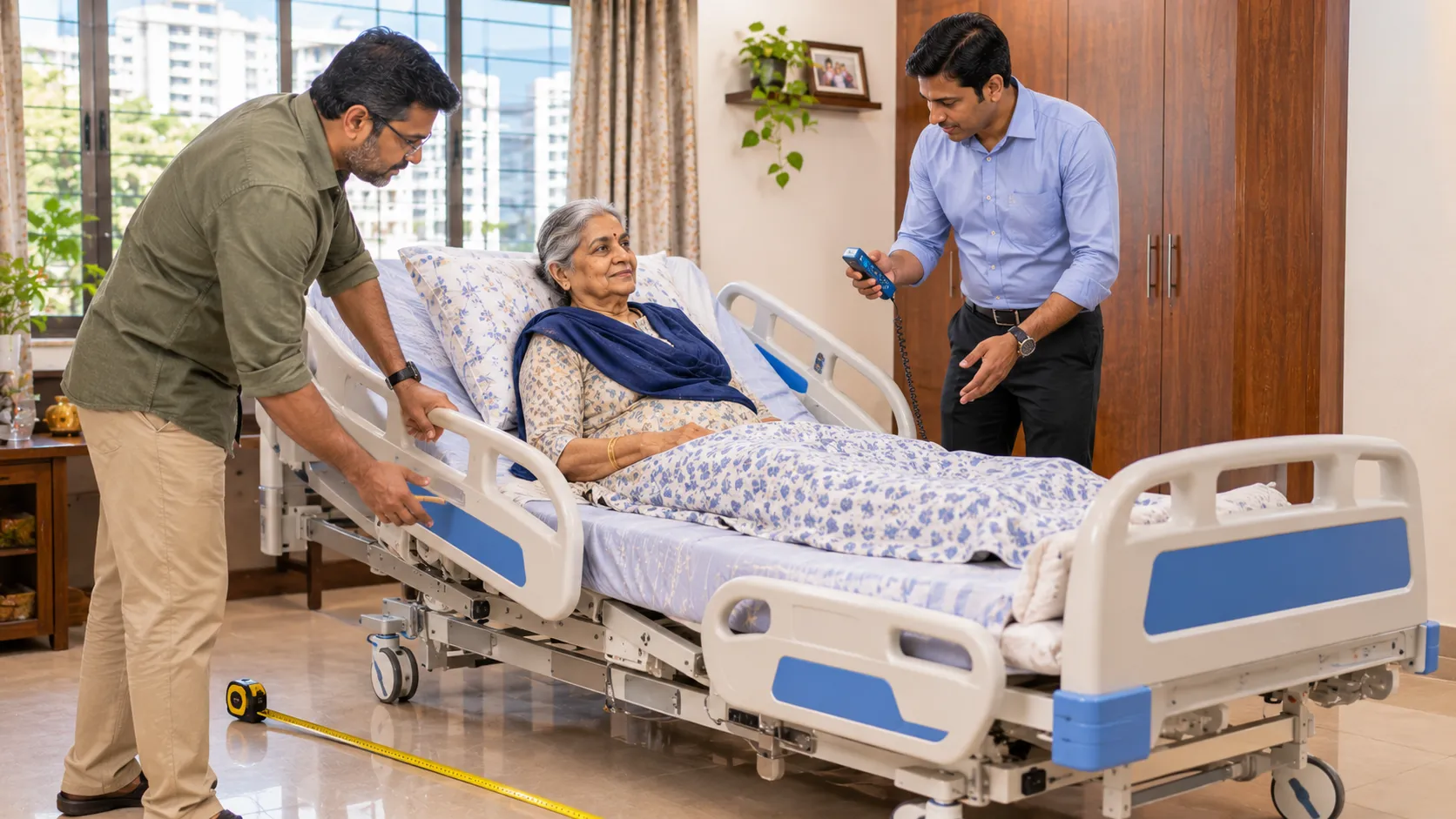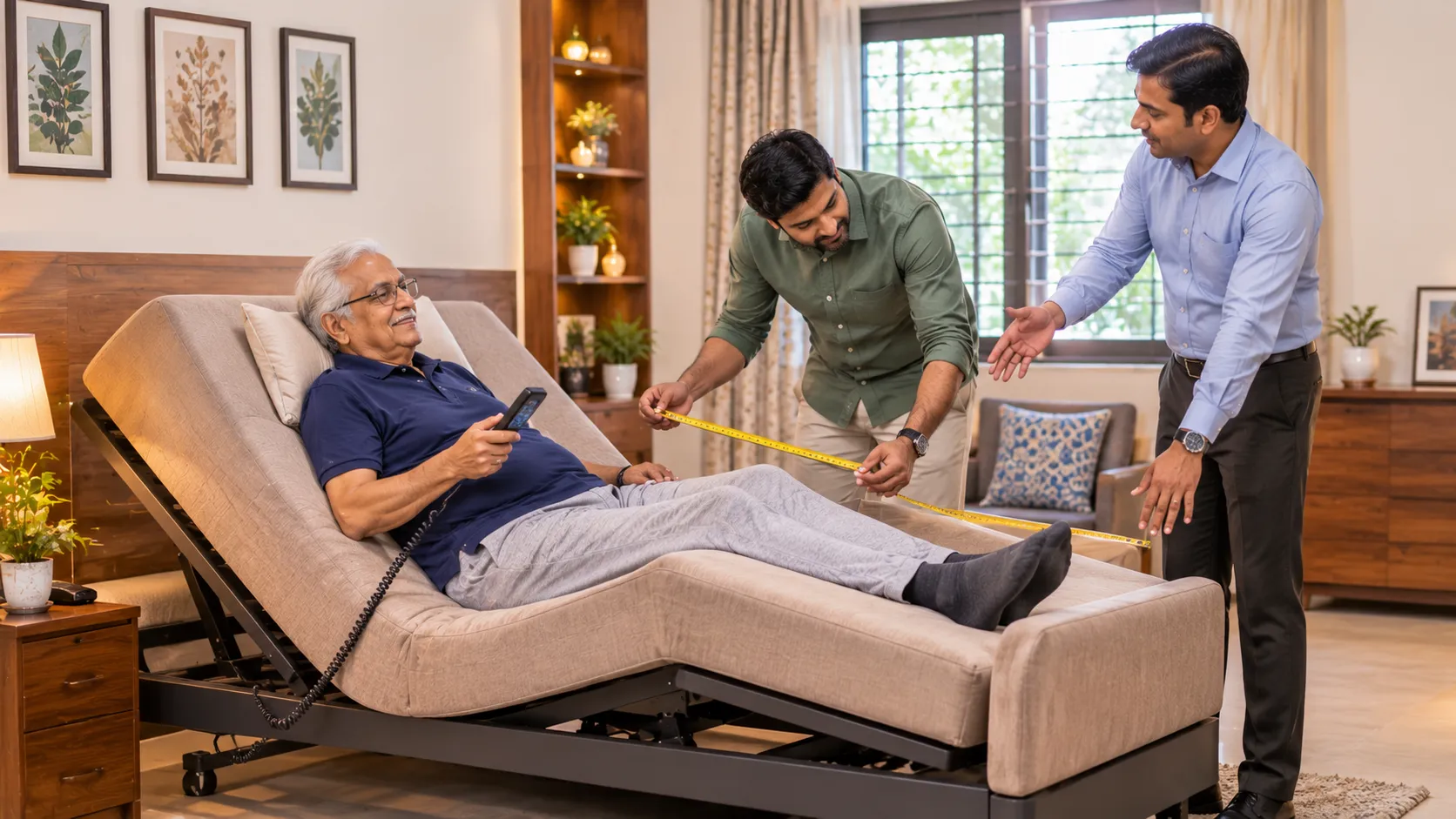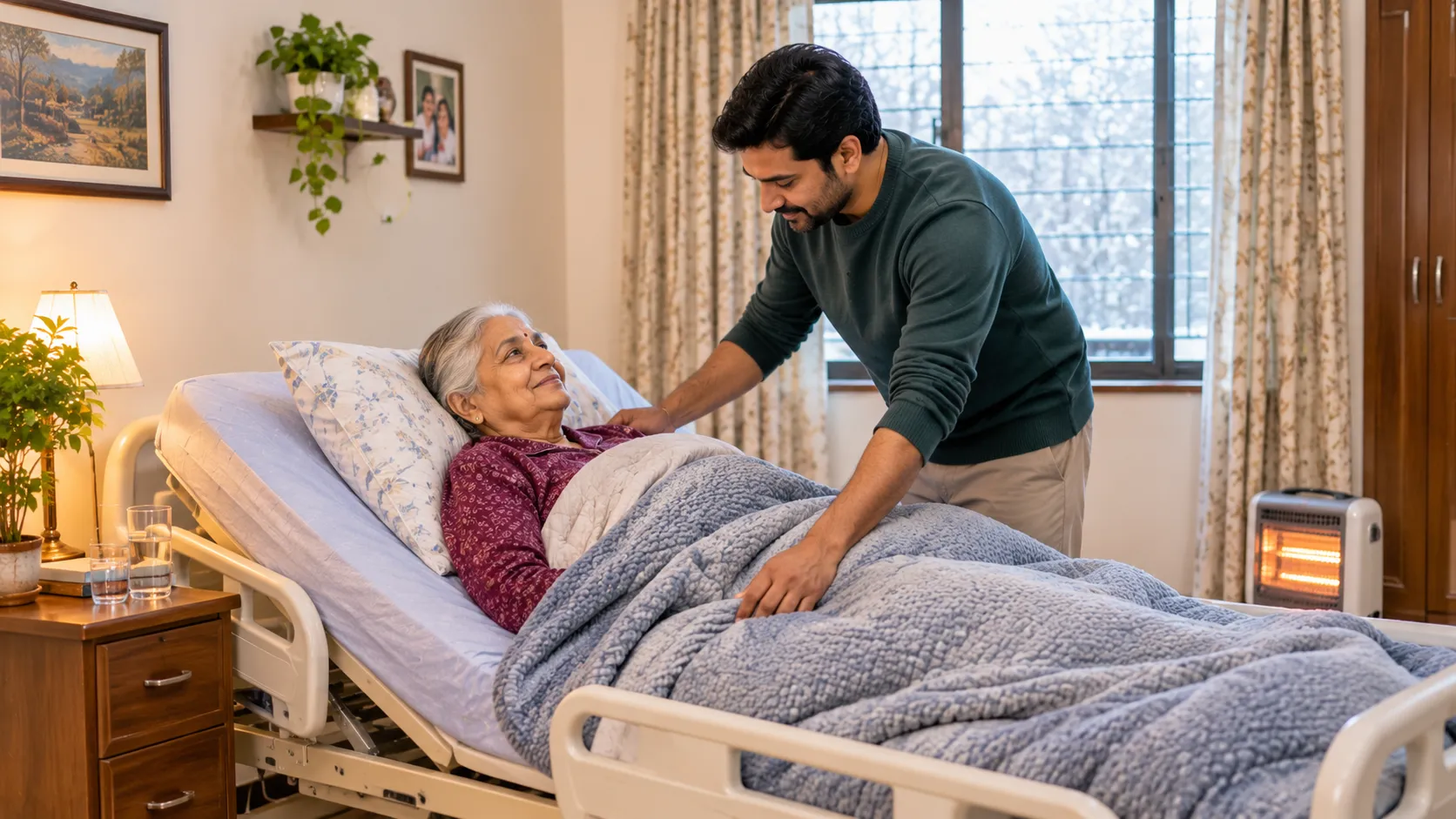
In winter, elderly and bedridden patients need a room that is warm but not overheated, bedding that is light and layered, extra attention to skin and drinking enough fluid, and a raised sleeping position if breathing is harder in cold or smoggy air. Use heaters and hot-water bags with care, keep the bed away from draughts and always check with the doctor about chest symptoms, confusion or unusually cold skin.
Winter brings stiff joints, dry skin, chest infections and, in many Indian cities, smog. For older and bedridden people, the cold is more than a discomfort, since they move less, feel temperature changes differently and are more vulnerable to chills and breathing problems. A few changes to the room and the bed can make the season much safer. Here is a practical guide to winter care for patients at home.
Winter Risks at a Glance
| Winter Problem | Why It Happens | What Helps |
| Stiff, aching joints | Cold and reduced movement | Warm room, gentle movement as advised, supportive positions |
| Dry, cracked skin | Dry air and heating | Moisturiser, gentle washing, checking the skin daily |
| Chest infections and cough | Cold, smog and lying flat | Raised head position, clean air, doctor’s advice |
| Chilling or low body temperature | Poor circulation and thin clothing | Layered bedding, a warm room and prompt medical advice |
| Dehydration | Less thirst in cold weather | Regular small drinks through the day |
Set the Room Temperature Sensibly
Aim for a comfortably warm room, avoiding both chill and overheating. Keep the bed away from windows and draughts, close gaps under doors, and use a thermometer in the room if you can. Older patients may not tell you they are cold, so check the hands, feet and neck.
Use Heaters and Warmers Safely
- Keep heaters well away from the bed and bedding, and never leave them on unattended.
- Provide ventilation with any heater, and never burn coal or wood in a closed room.
- Avoid hot-water bags directly on skin, especially if the patient has numb skin or cannot move away.
- Be careful with electric blankets, particularly for patients who are incontinent or have reduced sensation.
- Do not overload sockets. A room heater, bed motors and other devices can draw a lot of power together. Our guide on electric beds and power cuts explains safe wiring and sockets.
Bedding and Clothing
Several light layers trap warmth better than one heavy blanket, and are easier to adjust. Avoid heavy covers pressing on the chest or feet. Cotton and wool layers breathe better than synthetic ones. Keep sheets smooth and dry, and change damp clothing promptly, since wet fabric makes a patient colder.
Breathing Comfort in Cold and Smoggy Weather
Cold air and smog can irritate the airways. Raising the head section of an adjustable bed, usually at a gentle angle, can make breathing more comfortable than lying flat. On days when the air quality is poor, keep windows closed, consider an air purifier suited to the room size and follow the doctor’s advice on medicines. Our guide to recliner bed positions for night-time asthma and our guide on recliner beds for heart failure and breathlessness explain the positions in more detail.
IMPORTANT NOTE
Call the doctor promptly for fever, a cough that is getting worse, breathlessness, confusion, unusual drowsiness, shivering that will not stop or skin that feels very cold. For severe symptoms, call emergency services. This guide gives general information and does not replace medical advice.
Protect the Skin
- Moisturise dry areas after washing, avoiding the gaps between toes if they stay damp.
- Use warm, not hot, water for washing.
- Check the skin daily over the tailbone, heels, hips and elbows, because pressure sores can develop faster when skin is dry and cold.
- Change position regularly, as covered in our guide on caring for a bedridden patient.
Drinking, Eating and Movement
People often drink less in cold weather, which raises the risk of dehydration and urinary infections. Offer small drinks through the day, including warm soups and herbal drinks if the doctor allows. Keep meals warm and sit the patient upright to eat. A physiotherapist can suggest gentle movements to reduce stiffness, such as moving ankles and wrists while in bed.
Choose and Set Up the Bed for Winter
- Place the bed away from windows, and away from a direct blast of heater air.
- Use a mattress and bedding that keep warmth without overheating, and check that covers do not trap cables or moving parts.
- Set the head section to a comfortable angle for breathing, and add a slight knee lift to stop sliding.
- Keep the remote and a call bell within reach so the patient can adjust or call for help.
- Check cables and sockets each week, particularly when heaters and electric blankets are in use.
Winter care is mostly about warmth, clean air, skin, fluids and watchfulness. Set the room and the bed up before the cold deepens, use heaters safely and keep an eye out for early signs of trouble. A little preparation lets elderly and bedridden family members stay comfortable and safe through the season.
Explore our Recliner Beds range or the Electric Hospital Bed collection.
Related Reading