Understand how adjustable beds make sitting up, movement, and daily recovery easier for patients at home.
Recovery at home often brings simple challenges that affect comfort and movement. Sitting up from a flat bed, changing position, or shifting the body can require effort, especially after surgery, illness, or during long-term care.
In many cases, patients need support not just for rest, but for basic movement during the day. This is where bed design plays an important role in recovery comfort.
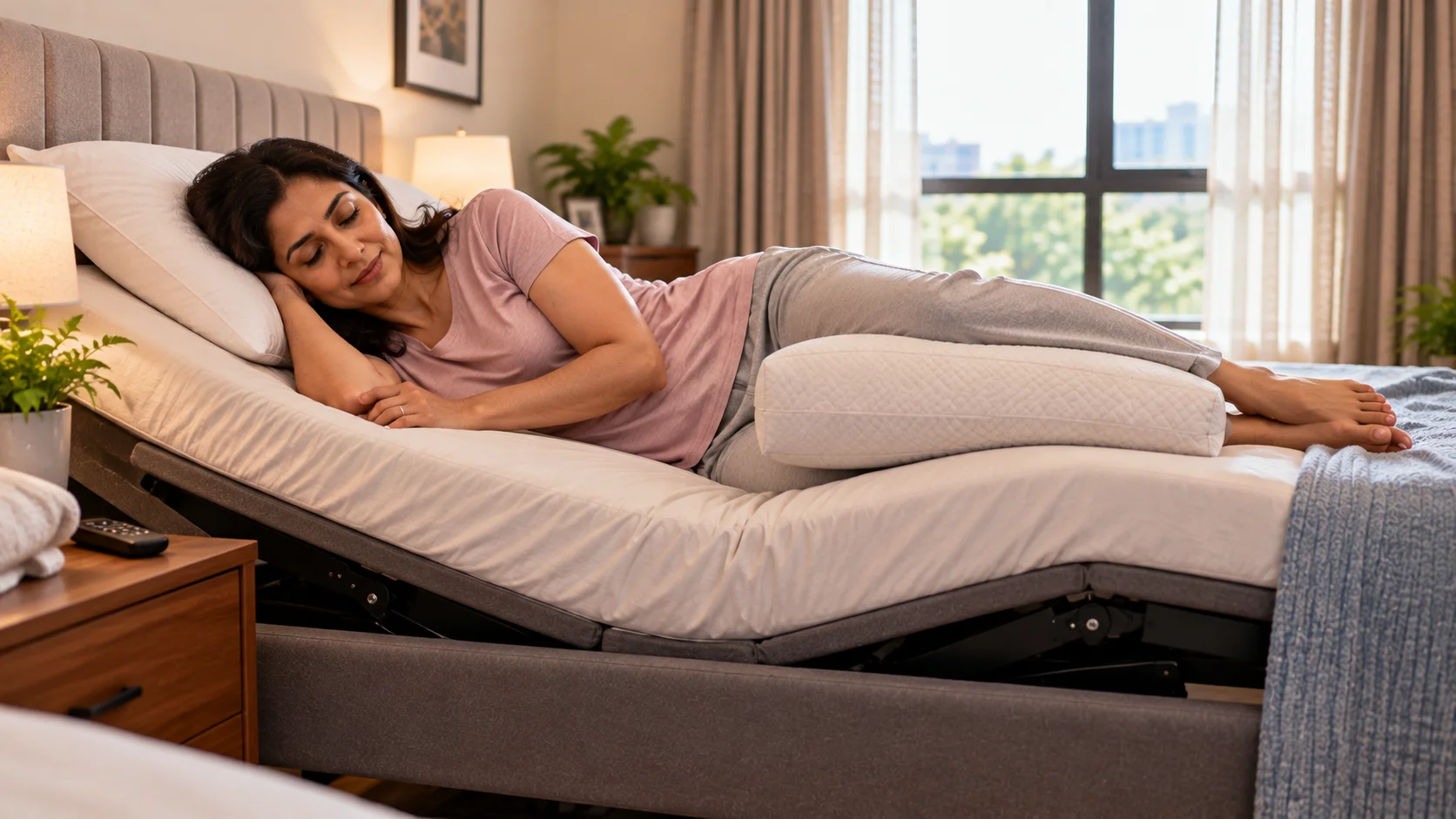
An adjustable bed for patient use allows controlled movement of the head and legs, making it easier to transition between lying, sitting, and resting positions without strain. Instead of depending fully on assistance, patients can adjust their position gradually and safely.
This improved control over movement is one of the main reasons best adjustable beds are increasingly used in home care settings, especially for elderly users and recovery patients who need consistent support.
Why Sitting and Moving Become Difficult During Recovery
Pain and stiffness during recovery can make simple movements like sitting up or repositioning difficult without proper body support. These conditions directly affect how easily a patient can sit up or move in bed.
- Pain and stiffness after surgery or illness
After medical treatment or prolonged rest, the body often feels stiff and sensitive. Even small movements like sitting up can cause discomfort.
- Weak muscle support during recovery
Muscles tend to lose strength during inactivity, making it harder for patients to support their own body weight while changing positions.
- Difficulty transitioning from lying to sitting
Moving from a flat position to sitting requires core strength and balance, which may be limited during recovery.
- Dependence on caregiver assistance
Many patients need help from caregivers to adjust their position safely, especially during early recovery stages.
- Limited movement flexibility in flat beds
Standard beds lack positioning support, which limits comfort and makes movement more effort-intensive.
This makes it easier to understand why solutions like an adjustable bed for patients become important in improving mobility and reducing strain during recovery.
How Adjustable Beds Make Sitting Up and Movement Easier
Adjustable beds make movement easier during recovery by reducing physical effort. Adaptable beds have been designed with movement in mind, thus allowing for safe sitting, turning, and other movements without exerting extra strain on the body.
How do adjustable beds help people with mobility issues?
They reduce the physical effort required for movement by providing motorised support and adjustable positioning that adapts to the patient’s comfort level.
- Head elevation helps transition from lying to sitting
Another major difficulty experienced by patients involves getting into a sitting position from a horizontal one. This challenge can be managed more comfortably with adjustable positioning support. that can slowly raise the upper body from horizontal to vertical, making the process more comfortable for them.
- Motorised control reduces effort during movement
Electric adjustments remove the need for manual lifting or caregiver assistance. Patients can change positions with simple controls, making daily movement safer and less tiring. A key reason why many consider the best adjustable beds option for home care.
- Stable positioning supports safer movement
An adjustable bed allows for placing the body in an adequately stabilised position. The ability to stabilise the body becomes essential when a patient shifts from one position to another in order to minimise the risks associated with falling or slipping.
- Gradual angle changes improve control during repositioning
A gradual shift from one position to another helps the body adjust to the new position. It helps, especially for patients who have recently undergone surgery or have weak muscles and joints, by avoiding extra stress on the muscles.
- Improved independence with an adjustable bed for patient use
When all of these elements are combined together, the result is that people can take care of themselves when it comes to making simple motions due to the adjustable bed for patients support system.
Why Mobility Support Matters for Seniors and Long-Term Patients
As seniors or long-term patients grow older, their natural strength, sense of balance, and range of joint motion decline, making mobility an issue. It is reflected in the way that people move into certain positions while sitting or turning in bed.
This is one reason why adjustable beds are recommended at home as they help such people get better mobility while lying down.
- Easier sitting and standing transitions
As mobility reduces, moving from lying to sitting can require significant effort and balance control. Adjustable beds help by gradually raising the upper body, allowing a smoother and more supported transition without sudden strain on the back or abdomen.
- Safer movement in bed
Postural changes for older adults can have an effect on their balance. Through adjustable beds, one is able to have the ability to move without affecting balance negatively.
- Supports long-term care needs at home
For ongoing care situations, consistency and ease of movement are critical. An adjustable bed for patient setup ensures stable support, making daily routines easier for both patients and caregivers without repeated physical strain.
- Reduced fall and strain risk
Strain when moving from one position to another in bed or when transferring in and out of bed can be one of the most important problems related to elderly care. Adjusting the height and angle provides support that minimizes joint strain and eases movement.
- Why are adjustable beds recommended for senior citizens
They are recommended because they directly address the core mobility challenges of ageing, reduced strength, slower movement, and higher dependency by enabling controlled, safe, and independent positioning throughout the day.
How Adjustable Beds Improve Recovery Experience at Home
Adjustable beds help recovery by providing comfort, better sleep, and safe positions all day. Patients can adjust the bed as needed, making daily rest easier and more effective.
Key Recovery Benefits at a Glance
| Recovery Factor | How Adjustable Beds Help | Real Impact on Patients |
| Comfort during rest | Allows head and leg adjustment for better positioning | Reduces body strain and improves relaxation |
| Sleep quality | Supports natural spinal alignment and pressure relief | Fewer disturbances and deeper sleep cycles |
| Body circulation | Elevation improves blood flow in legs and upper body | Less stiffness and reduced swelling |
| Movement support | Easy switching between lying and sitting positions | Safer and more independent daily movement |
| Daily recovery routine | Flexible positioning throughout the day | More consistent and structured recovery at home |
Why does this matter in home recovery
This flexibility makes recovery smoother because patients are not restricted to a single flat position. Instead, they can adjust comfort levels throughout the day, which supports both healing and independence.
An adjustable bed for patients is helpful in long-term care, keeping them comfortable without needing constant assistance.
ZeroG Beds focuses on adjustable sleep and recovery solutions designed for patient comfort, mobility support, and long-term usability. With expertise in ergonomic bed systems and home-care comfort solutions, the brand develops adjustable beds that improve daily recovery experiences for both patients and caregivers.
Conclusion: Making Recovery Easier with the Right Bed Support
Recovery at home becomes much more manageable when the body gets proper support during rest, sitting, and movement. Adjustable beds help bridge this gap by allowing patients to change positions easily, reduce strain on the body, and maintain comfort throughout the day.
Instead of relying on a fixed sleeping surface, patients can adjust their posture based on pain levels, mobility needs, and daily activities. This not only improves comfort but also supports safer movement and better recovery routines at home.
An adjustable bed for patient care is especially valuable for seniors, post-surgery recovery, and long-term support needs, where ease of movement and stability are essential parts of daily life.
At ZeroG Beds, we focus on designing solutions that make recovery simpler and more comfortable at home. Our adjustable beds are built to support better positioning, improved mobility, and everyday ease of use for both patients and caregivers.
Whether the need is short-term recovery or long-term care, choosing the right adjustable bed can make a meaningful difference in comfort, independence, and overall quality of rest.