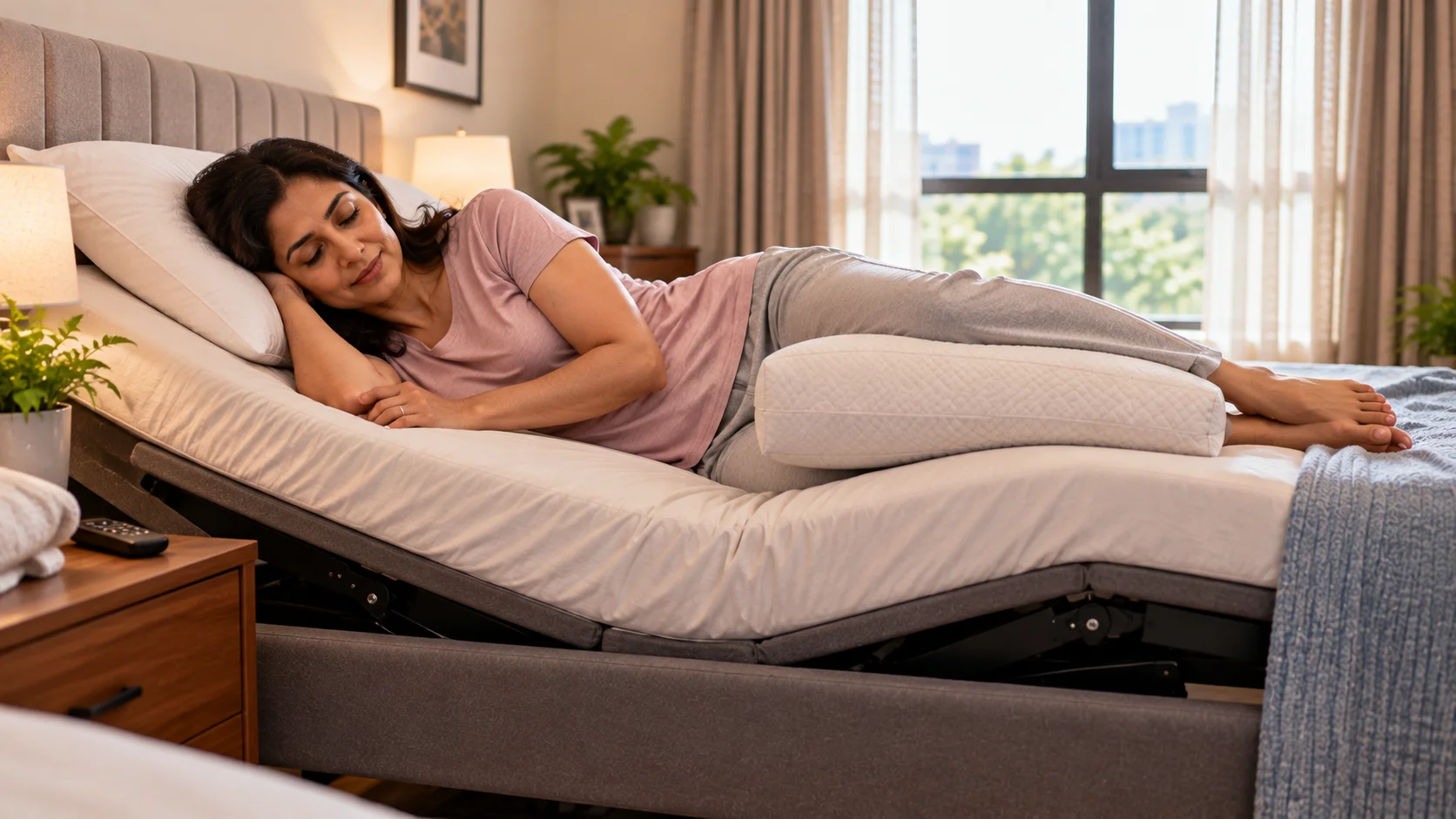
SI joint pain sits low on one side of the back, near the dimple above the buttock, and tends to flare when the pelvis twists or tilts unevenly. The fix at night is symmetry: a mild knee lift on an adjustable bed, a pillow between the knees for side sleepers, and no deep recline. Keep the pelvis level and the joint stops being pulled in two directions.
Pain on one side of the lower back that spreads into the buttock, worsens when you stand up from a chair, and stabs when you roll over in bed is a classic description of sacroiliac (SI) joint pain. These two joints connect the base of the spine to the pelvis, and when they get irritated, ordinary back-pain advice does not always fit. This guide covers how an adjustable bed can ease SI joint pain at night, and which settings quietly make it worse.
Why the SI Joint Hates Uneven Positions
The SI joints are built for stability, not movement. They move only a few millimetres, but they take the load whenever you shift weight from one leg to the other. Sleeping with one knee pulled up, one leg crossed over, or the pelvis twisted relative to the spine asks the joint to bear an uneven pull for hours. Common triggers include pregnancy and the months after it, arthritis, a past fall, and a small leg length difference, but a lot of everyday SI pain is simply made worse by lopsided sleeping posture.
Positions That Help and Positions That Hurt
| Position | Effect on the SI Joint | Verdict |
| Back, knees gently raised on the frame | Keeps both sides of the pelvis level and supported | Usually the best starting point |
| Side, pillow between the knees | Stops the top leg dragging the pelvis forward | Good, if lying on the pain-free side |
| Side, lying on the painful side | Direct pressure on the irritated joint | Often uncomfortable, avoid if it flares |
| Stomach | Twists the pelvis and arches the lower back | Best avoided |
| Deep recline (steep Zero Gravity) | Can tilt the pelvis backwards and load the sacrum | Keep the recline mild |
Setting Up the Bed Step by Step
- Raise the knee section first, only 10 to 20 degrees, until your lower back feels flat and supported rather than arched.
- Keep the head section low, around 10 to 15 degrees. A steep recline tilts the pelvis and can irritate the joint instead of easing it.
- Check that you are level. Lying on your back, your hips should feel even. If you feel pulled to one side, a rolled towel under the lower hip can square things up.
- Give it three or four nights. SI pain settles gradually, so change one angle at a time rather than rearranging everything each evening.
Pain after a significant fall or accident, fever with back pain, new leg weakness, numbness in the groin or saddle area, or any change in bladder or bowel control needs urgent medical assessment. This article covers comfort measures for diagnosed, stable SI joint pain.
Side Sleepers: The Pillow Between the Knees Matters
If you sleep on your side, choose the pain-free side and put a firm pillow between your knees and ankles, thick enough that the knees stay stacked level with the hips. Without it, the top leg falls forward, twists the pelvis and tugs at the SI joint all night. The same principle is covered in our guide to adjustable beds for side sleepers with back pain, and a gentle 10 degree recline can make it easier to hold the position without rolling onto your stomach.
Getting In and Out of Bed Without Aggravating It
- Log-roll instead of twisting. Bend both knees together, roll to your side as one unit, then push up with your arms while swinging your legs down.
- Keep your knees together when you roll, since letting them drift apart opens the pelvis unevenly.
- Use the height adjustment, if your frame has one, to bring the bed to a level where you can stand without leaning hard on one leg.
- Avoid sitting up from flat with a twist, which is a fast way to provoke a sharp jab at the joint.
Mattress and Daytime Habits
A medium-firm surface supports the pelvis while letting the hips settle slightly, which is the balance explained in best mattress firmness for back pain on an adjustable bed. In the day, avoid standing on one leg, crossing your legs when you sit, and carrying loads on one side. Many physiotherapists also suggest a pelvic support belt for flare-ups and targeted glute and core strengthening, which does more for long-term stability than any bed can.
How This Differs From Sciatica Advice
SI joint pain and sciatica can feel alike, since both can send pain into the buttock and thigh. Sciatica is a nerve problem and responds to the positions covered in best adjustable bed positions for sciatica and herniated disc pain relief. SI pain is a joint problem, so level, symmetrical support matters more than a particular recline. If pain travels below the knee with tingling, that points toward a nerve cause worth checking with a doctor.
Pregnancy, Postpartum and SI Joint Pain
Hormones released in pregnancy loosen the ligaments around the pelvis, which is why SI joint pain is so common in the later months and in the weeks after birth. The same level, supported positioning applies: a pillow between the knees, a mild knee lift and no twisting when rolling over. If you are in this stage, the gentle elevation principles in the health benefits of the zero gravity position during pregnancy are a helpful companion, and a physiotherapist who treats pelvic girdle pain can add a belt and targeted exercises.
How Long Until You Notice a Difference?
Give the new setup at least a week before judging it, since SI joint irritation settles slowly and the first nights are often dominated by the strangeness of a new position. A useful check is the morning: if the first few steps out of bed feel less sharp, or you wake fewer times with a jab on one side, the pelvis is being supported better. If nothing changes after two to three weeks of consistent use, review pillow height and angle, and mention the pattern to your physiotherapist, who may want to reassess whether the joint is the true source.
SI joint pain rewards symmetry and gentleness. A mild knee lift, a level pelvis and a pillow between the knees for side sleepers take the tug-of-war out of the night, and that usually shows up as an easier morning. Pair the setup with physiotherapy and everyday movement habits for lasting relief.
Explore our Adjustable Bed for Back Pain range, or Leg Rest Beds if gentle knee elevation is the main need.
Related Reading: