
This guide is general information to help buyers make informed decisions. It isn’t medical advice — please confirm the rated specifications of any bed with the manufacturer, and check anything specific to a patient with their doctor or care team before you buy.
“Fully automatic” gets used loosely across hospital bed listings, and it’s worth knowing exactly what it means before you compare the fully automatic hospital bed price on offer — because the term covers everything from a basic remote-controlled frame to a bed with memory positions, auto-contour, and app-based control. If you’re comparing options for a home setup or a clinical-facility purchase, understanding the functions behind the label is what actually lets you compare like for like, and what actually drives the automatic hospital bed price you’re quoted.
This guide breaks down what “fully automatic” genuinely means, the functions that matter across different conditions, and how automatic hospital bed pricing breaks down — so you’re comparing real capability, not just marketing language.
Talk to a care advisor — free, no obligation. Call or WhatsApp: +91 9820138189 Tell us your use case and we’ll recommend the right bed and functions.
What Does “Fully Automatic” Mean for a Hospital Bed?
A fully automatic hospital bed motorises every major adjustment — head elevation, leg elevation, and overall height — controlled by remote, app, or sometimes voice, with no manual cranking required at any point. This distinguishes it from:
- Manual beds, adjusted entirely by hand crank.
- Semi-electric beds, where the head and legs are motorised but height still requires a manual crank.
The word “automatic” is sometimes used to describe additional smart functions layered on top of full electric control — memory positions, app control, or voice commands — though this isn’t universal across sellers, so it’s worth confirming exactly which functions a specific “automatic” bed includes rather than assuming from the label alone. This is also why the fully automatic hospital bed price can vary so widely between two listings that use the same wording.
Benefits of a Fully Automatic Hospital Bed Across Different Conditions
What makes fully automatic beds useful across such a wide range of care situations — from a short surgical recovery to long-term facility care — is that the core benefit is the same regardless of the underlying condition. Positioning changes can be made without physical effort, as often as needed throughout the day.
That consistency matters differently depending on the situation:
- For a post-surgery patient, it means sitting up for meals without straining a healing incision, dozens of times over a few weeks.
- For a long-term bedridden patient, it means frequent, easy repositioning that supports the care team’s prevention plan, without depending entirely on caregiver availability.
- For a facility with multiple patients, it means nursing staff can adjust positioning quickly across a full patient load, without the physical toll of manual cranking repeated dozens of times a shift.
- For a caregiver managing care alone at home, it removes a significant and repeated source of physical strain from the daily routine.
Key Features and Functions of a Fully Automatic Hospital Bed
Not every “fully automatic” bed offers the same functional depth. Here’s what to actually compare:
Head (backrest) elevation
The core function — raising the upper body for sitting up, eating, and easier breathing. Check the actual degree range (commonly up to 70–90°) rather than assuming “adjustable” covers everything.
Leg elevation
Supports circulation and reduces lower-limb swelling, and takes pressure off the lower back during long periods in bed.
Hi-low height adjustment
Brings the entire bed to a safe working height for caregivers or nursing staff, and lowers again for patient comfort or reduced fall risk — genuinely one of the most functionally valuable automatic features, in both home and facility settings.
Auto-contour
Synchronises head and knee movement so the patient doesn’t slide down the bed as the backrest rises — a detail that matters more the more often positioning is adjusted through the day.
Memory positions
Let’s a caregiver or nurse save a preferred position and return to it with one button, rather than re-adjusting manually each time — genuinely useful in facility settings with multiple staff and shift changes.
Trendelenburg / reverse Trendelenburg (clinical settings)
This function should only be used when clinically appropriate and according to the healthcare professional’s instructions.
App or voice control
Adds convenience and, for patients with sufficient hand function, a degree of independence — though a simple, reliable remote often outperforms an app in practice, especially for older patients or caregivers less comfortable with phone-based controls.
Still comparing options? Book a free home demo — Call/WhatsApp: +91 9820138189 See the functions in person before deciding what you actually need.
Fully Automatic Hospital Bed: Home Use vs. Facility Use
| Home Use | Clinical / Facility Use | |
| Priority functions | Head/leg elevation, hi-low height, simple controls | All home-use functions, plus memory positions and possibly Trendelenburg |
| Design priority | Blending into a bedroom (retrofit/wood-finish options) | Durability and ease of cleaning across many uses |
| Control complexity | Simple remote usually preferred | Memory positions and multi-user access useful for shift changes |
| Weight capacity needs | Matched to one specific patient | Often standardised across a wider patient range, or bariatric-rated |
| Warranty/service priority | Long-term home reliability | Fast service turnaround, given continuous facility use |
If you’re buying for home use, it’s worth resisting the pull toward every available function — a bed built for facility-level complexity often costs more without adding real value to a single-patient home setup. If you’re buying for a facility, functions like memory positions and durability under continuous use become genuinely worth the extra cost, and that’s usually where the automatic hospital bed price climbs fastest.
Tell us your use case. Call/WhatsApp: +91 9820138189 We’ll help you compare functions against what you actually need.
Automatic Hospital Bed Price by Function Tier
| Tier | Typical Functions | Where It Sits on Price |
| Basic automatic | Head + leg elevation, manual height crank (semi-electric) | Lower |
| Standard fully automatic | Head + leg elevation + motorised height | Mid |
| Advanced fully automatic | Standard functions + auto-contour + hi-low height | Mid-to-higher |
| Smart / facility-grade | Advanced functions + memory positions + app/voice control | Highest |
What Drives Automatic Hospital Bed Price Within Each Tier
- Motor quality and noise level — quieter, more durable motors cost more but matter daily.
- Frame strength and weight capacity — Weight capacity varies by model. Confirm the rated capacity of the specific Zero-G Beds model with the team before purchase.
- Number of functions — each additional automated function (auto-contour, memory positions, Trendelenburg) adds to the price.
- Mattress — often priced separately; basic foam versus latex or alternating-pressure air changes the total meaningfully.
- Design and finish — retrofit and wood-finish designs versus standard clinical metal frames.
- Warranty and service — coverage length and service turnaround, particularly relevant for facility buyers.
Get a personalised quote! Call/WhatsApp: +91 9820138189 Tell us your use case (home or facility) and functional priorities, and we’ll send exact fully automatic hospital bed price figures.
Common Mistakes to Avoid When Buying a Fully Automatic Hospital Bed
- Buying facility-grade complexity for a single-patient home setup, paying for functions that add cost without adding real day-to-day value.
- Under-buying functions for a facility purchase, then discovering staff need memory positions or Trendelenburg after the fact.
- Assuming “fully automatic” means the same functional set across every seller — confirm the specific functions included, not just the label.
- Skipping written warranty and service-turnaround terms, particularly costly for facility buyers if a bed goes down.
- Choosing app-only control for patients or staff who’d genuinely be better served by a simple physical remote.
Automatic Hospital Bed Buying Checklist
- Exact functions confirmed for the specific “automatic” model — not assumed from the label
- Functions matched to home vs. facility use case
- Rated weight capacity confirmed for the specific model
- Motor noise level checked, ideally via demo
- Mattress compatibility and cost confirmed separately
- Warranty and service-turnaround terms in writing
- Itemized price breakdown requested before comparing suppliers
Why Choose Zero-G Beds for Your Automatic Hospital Bed
- 10,000+ families and buyers across India have chosen Zero-G Beds since 2003.
- Transparent, function-by-function pricing — no guessing what “automatic” includes, and no hidden line items in your automatic hospital bed price quote.
- At Zero G Beds, we can convert your existing bed into a customized adjustable bed based on your comfort and support requirements—without replacing your current bed.
- CE-marked adjustable bed systems, where applicable, indicating conformity with relevant European regulatory requirements.
- Enjoy long-term peace of mind with a 15-year warranty.
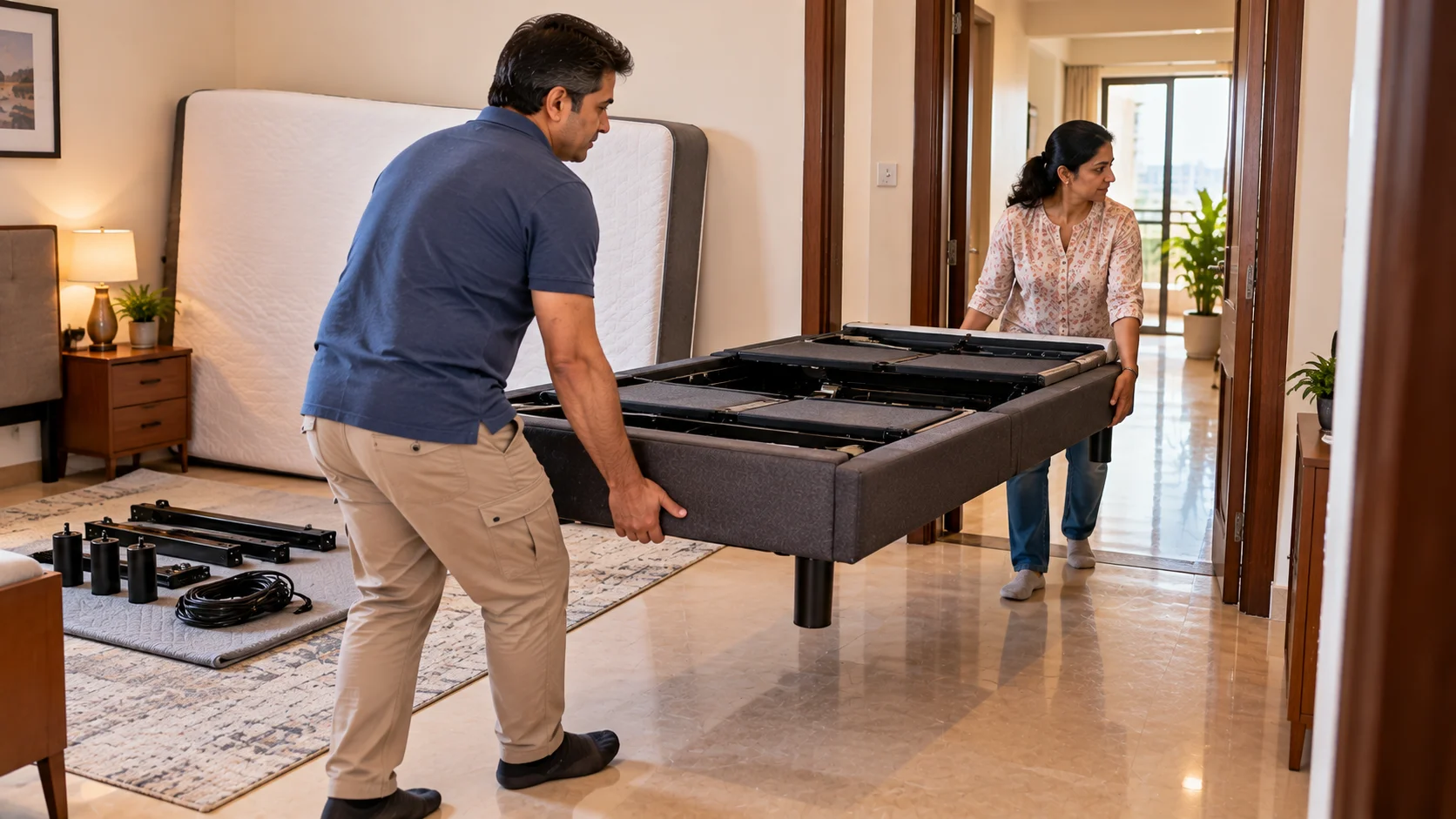
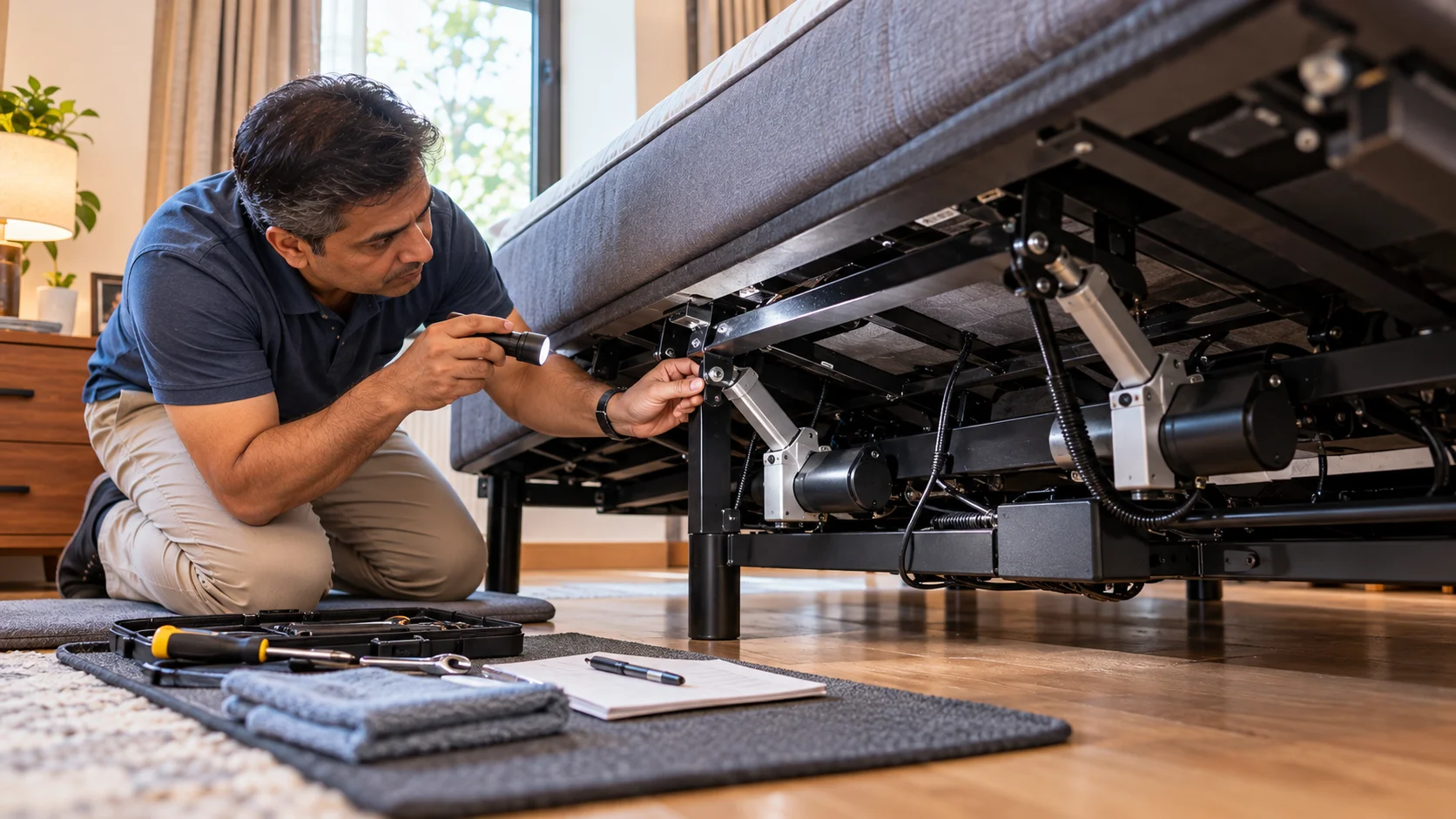
- Professional delivery within 1 week, along with installation and a complete product demonstration by trained technicians.
- Real after-sales service — reachable directly at +91 9820138189 or info@zerogbeds.com.
- Facility-specific service-turnaround commitments aren’t stated on zerogbeds.com — confirm directly with the team if pitching to a facility buyer.
Ready to compare functions and pricing? Talk to us: +91 9820138189 or email info@zerogbeds.com
Bottom Line: Choosing the Right Fully Automatic Hospital Bed
“Fully automatic” isn’t a single, fixed specification — it’s a functional tier that ranges from basic remote-controlled positioning to facility-grade beds with memory positions and specialised tilt functions. The right choice, and the right automatic hospital bed price, comes from matching the functions to the actual use case — home or facility — rather than assuming more automation is automatically better, or defaulting to the cheapest option without checking what functions it actually includes.
Tell us your use case and we’ll recommend the right bed and functions today. Call/WhatsApp: +91 9820138189 or email info@zerogbeds.com
References
- NICE Quality Standard QS89 — Pressure ulcers: advice on repositioning. https://www.nice.org.uk/guidance/qs89/chapter/quality-statement-5-advice-on-repositioning
- US Vein Clinics — Health benefits of elevating your legs. https://www.usaveinclinics.com/blog/health-benefits-of-elevating-your-legs/
- IEC 60601-2-52:2009 — Medical electrical equipment, Part 2-52: basic safety and essential performance of medical beds. https://www.iso.org/standard/36067.html
- IEC 60601 vs. ISO 13485: Medical Device Risk Management. https://eureka.patsnap.com/article/iec-60601-vs-iso-13485-medical-device-risk-management
- Central Drugs Standard Control Organisation (CDSCO), Ministry of Health & Family Welfare, Government of India — Medical Devices Rules, 2017 (governs hospital bed classification and registration in India). https://cdsco.gov.in/opencms/opencms/en/Acts-and-rules/Medical-Devices-Rules/