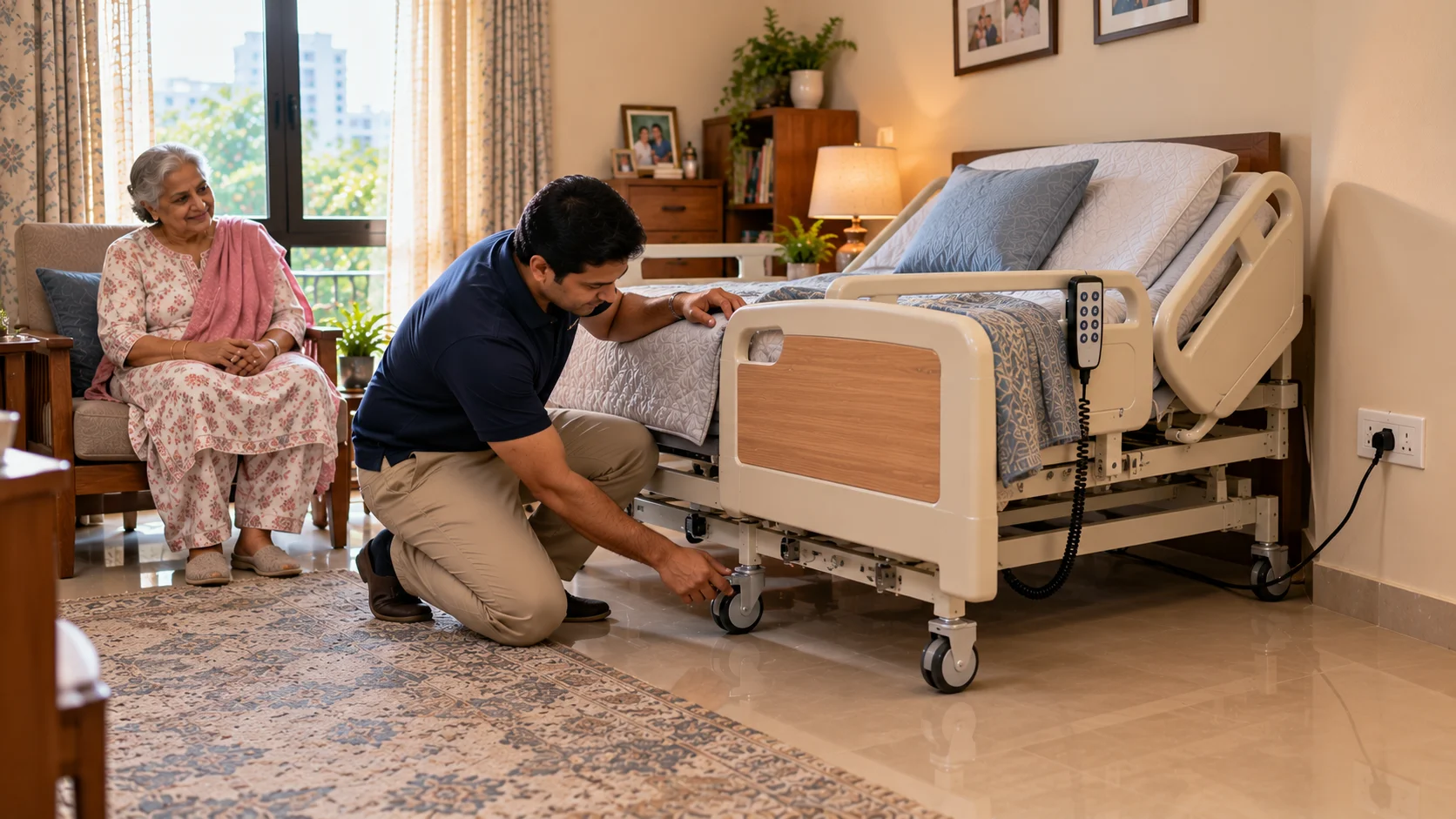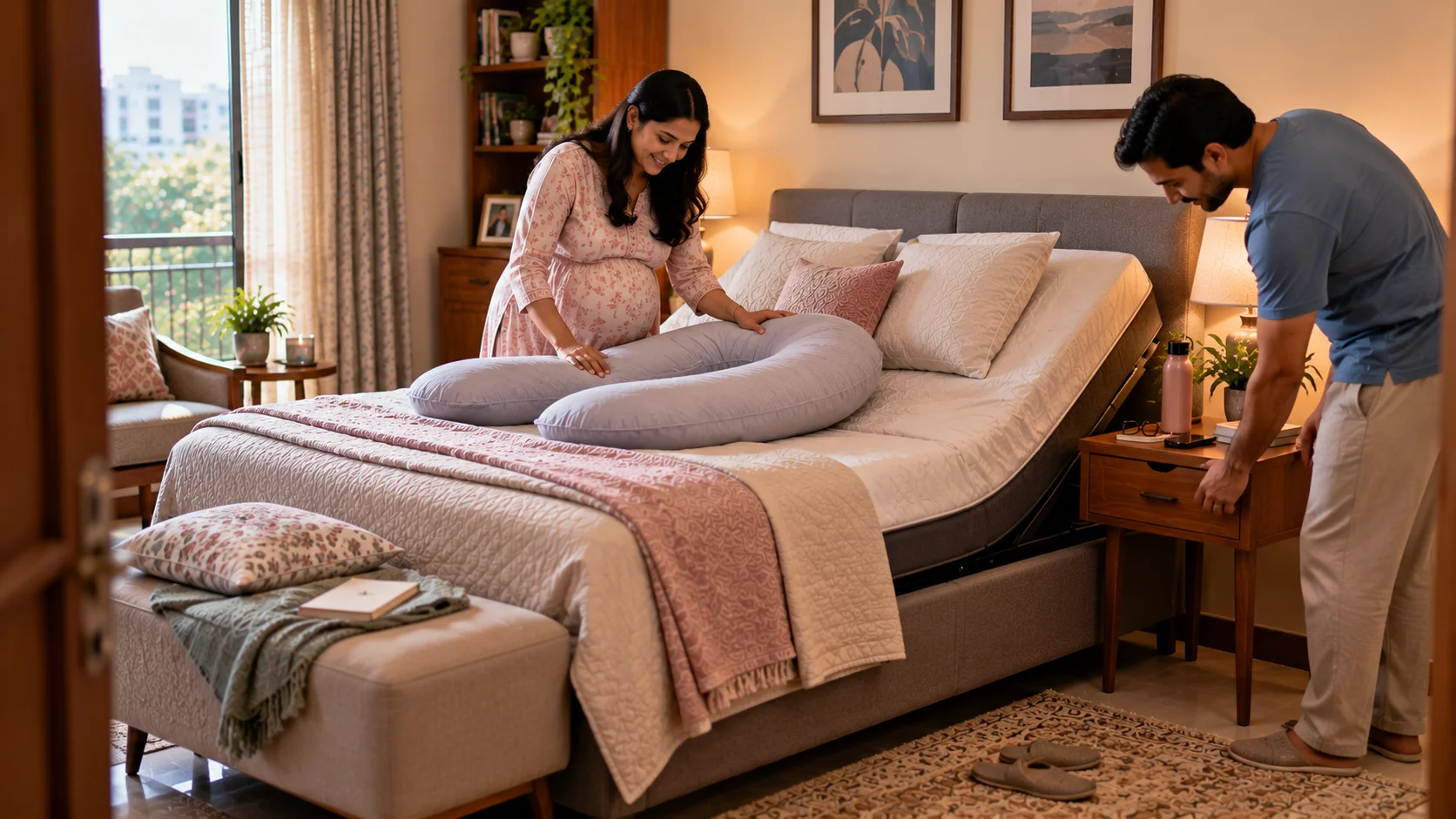
A pregnant women bed should let you change position as your body changes, with a raised head, raised legs and a mattress that supports hips and back. Many doctors suggest sleeping on the left side, so choose a bed that helps you reach and hold that position comfortably. Ask your doctor before changing your sleeping setup.
Why is sleep harder during pregnancy?
Sleep gets harder as pregnancy advances. Zero G’s pregnancy page lists common problems: lower back pain, hip and pelvic discomfort, swollen legs and feet, difficulty changing positions, heartburn, shortness of breath and frequent night waking.
A flat bed holds you in one shape all night. A bed that adjusts lets you change that shape in small steps, without piling up pillows.
What should a bed for pregnant ladies offer?
A Bed For Pregnant Ladies does not need to be complicated. Look for these basics:
- Head raise, so heartburn and breathing feel easier.
- Leg raise, for tired and swollen legs.
- A remote you can use without getting out of bed.
- Quiet motors that will not wake a partner.
- A mattress that supports hips and shoulders.
- Enough width to roll and change position.
Zero G lists adjustable head and foot elevation, personalised comfort settings and an easy remote on its pregnancy bed page.
How does the setup change from trimester to trimester?
The right position changes as the baby grows. Use this as a conversation starter with your doctor, not as medical advice.
| Stage | Common issue | Bed setup to discuss |
| First trimester | Tiredness, nausea | Slight head raise in the morning, flat to sleep |
| Second trimester | Back and hip discomfort | Gentle knee raise, left-side sleeping with pillow support |
| Third trimester | Heartburn, breathlessness, leg swelling | Head raised more, legs lifted for rest |
| Bed rest, if advised | Long hours in bed | Positions set by your doctor, changed often |
What is the best position for pregnancy bed rest?
Healthcare professionals often recommend side sleeping, particularly on the left, because it may help circulation. Zero G’s page says the same. On a bed that adjusts, you can gently raise the head or legs and still stay on your side.
If your doctor has ordered bed rest, ask which angles are safe, how long to stay in each and when to change. Our post on the zero gravity position during pregnancy explains how raised head and legs may feel.
Can a Sleeping Bed For Pregnancy help with specific problems?
An adjustable bed does not treat any condition, but it can make some discomfort easier to manage.
| Problem | What many women try |
| Heartburn | Raise the head gently, as the doctor advises |
| Swollen feet | Raise the legs for short rest periods |
| Back ache | Slight knee raise with pillow support |
| Breathlessness | Slightly raised head |
| Hard to get up | Raise the backrest, then sit up |
For back pain in particular, read how to set up your adjustable bed for lower back pain relief.
What should you check before you choose a bed?
- Doctor’s advice. Mention your plan at the next visit.
- Remote control. It should be easy to hold in the dark.
- Mattress flexibility. It must bend with the bed. Zero G’s mattress page advises checking compatibility.
- Partner comfort. Ask whether each side can be set separately on larger models.
- After delivery. Make sure installation and a demo are included.
- Weight and size. Check the bed fits your room and your needs.
Which pillows help alongside the bed?
A bed does most of the work, but pillows still help. Many women place a pillow between the knees to keep the hips level, and a small wedge or folded towel under the belly when lying on the side. Keep a firm pillow behind the back when sitting up. Ask your doctor or midwife about pillow use, and avoid anything that leaves you propped at an angle that hurts. Try each change for a few nights and note what helps, because comfort in pregnancy is personal and changes from week to week.
How does it help after the baby arrives?
The same bed helps after delivery. Raising the backrest makes it easier to sit up for night feeds, and many mothers rest with raised legs. If you plan to breastfeed, see our page on the adjustable bed for nursing mothers.
What are the cautions?
- Do not use any bed position that makes you dizzy or short of breath.
- Skip long periods flat on your back in later pregnancy unless your doctor says it is fine.
- Tell your doctor if swelling, pain or breathlessness gets worse.
- Do not use a bed as a substitute for medical care.
Zero G’s page also makes the point: no bed can replace proper medical care.
For more, explore the Zero G pregnancy bed page.