
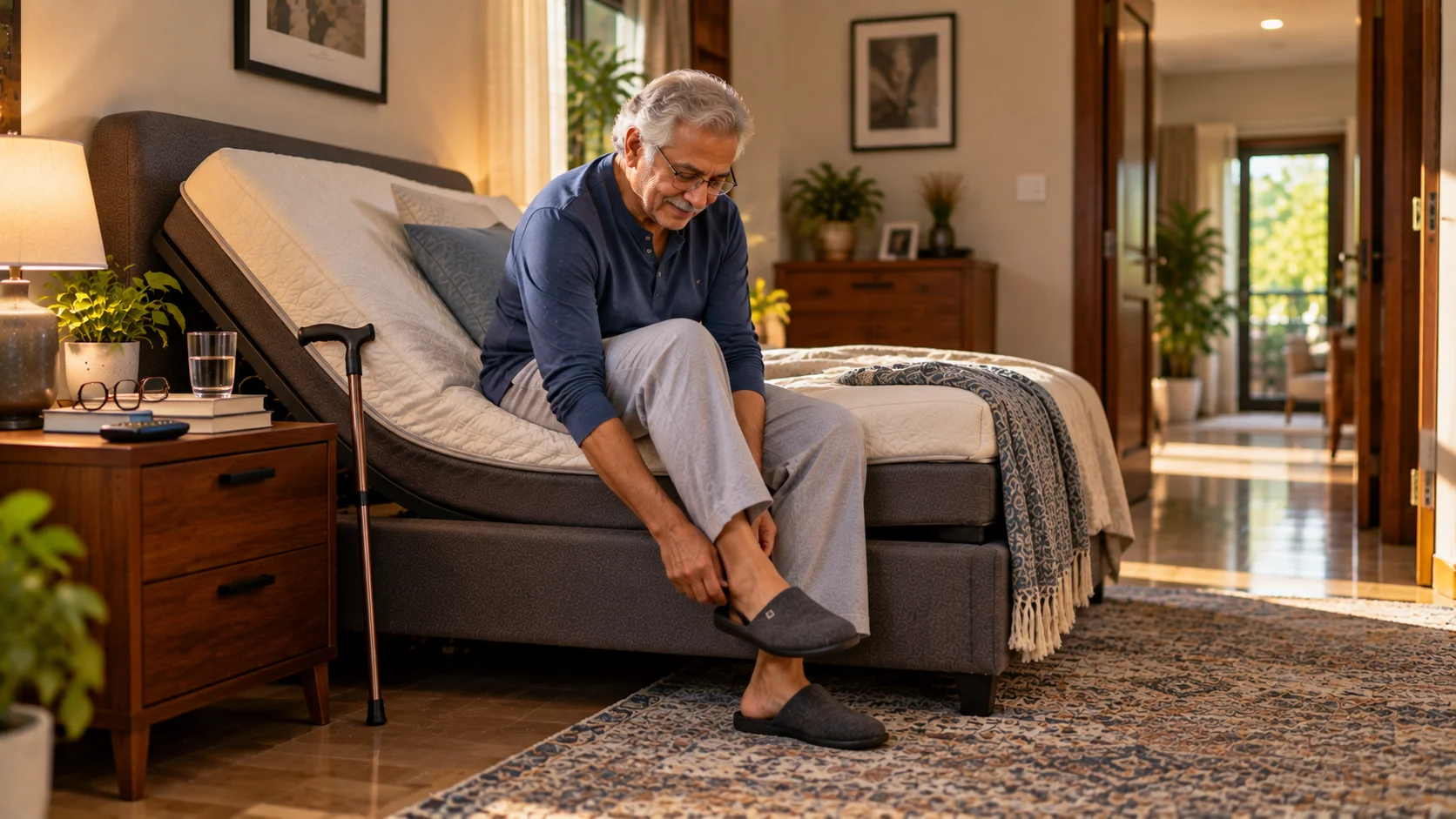
The best adjustable bed for elderly people at home prioritizes height adjustability for safer transfers, a simple large-button remote for limited dexterity, gentle and smooth motor movement, and confirmed weight capacity generally more important for this specific group than achieving the deepest possible Zero Gravity recline. Safety and ease of daily use should outweigh advanced features when buying specifically for a senior.
Buying an adjustable bed for an elderly parent or family member involves a somewhat different priority list than buying for general comfort or back pain relief. When people search for the best adjustable bed for elderly people at home, they’re usually asking about safety and daily usability as much as, or more than, positioning presets this guide focuses specifically on that senior-centered priority list.
Why Elderly Buying Priorities Differ From General Buyers
For a general adult buyer, motor sophistication and positioning presets often top the priority list. For elderly users, safety during daily transfers, ease of operating the remote, and gentle, predictable motor movement typically matter more, since these directly affect fall risk and daily independence concerns that are less central for a younger, more mobile buyer without these specific needs.
The Priority Features for Elderly Buyers
| Feature | Why It Matters Most for Seniors | What to Look For |
| Height adjustability | Reduces fall risk and physical strain during transfers | A meaningful low-end range for easy standing transfers |
| Simple, large-button remote | Accommodates reduced dexterity and vision | Large, clearly labeled buttons; minimal complexity |
| Gentle, smooth motor movement | Sudden movement can be unsettling or unsafe for balance | Ask specifically about motor speed and smoothness |
| Confirmed weight capacity | Safety margin matters more given reduced fall recovery ability | Choose capacity comfortably above the user’s actual weight |
| Sturdy edge support | Provides a stable point for pushing off during transfers | Solid frame construction at the bed’s edge |
Why Positioning Presets Matter Less Than You Might Expect
It’s worth being direct: while Zero Gravity and other positioning presets remain useful for comfort, they’re generally not the deciding factor for elderly-focused buying decisions the way they are for younger buyers seeking back pain relief. A senior with mobility concerns benefits more from a bed that’s easy and safe to use every single day than from a bed with the most sophisticated positioning options but a complicated remote or a motor that moves too quickly for comfortable, confident adjustment.
Matching Features to Specific Elderly Needs
- For seniors with mobility issues or fall risk, height adjustability and gentle transfers should be the top priority see our related guide on how do adjustable beds help people with mobility issues for more.
- For seniors managing chronic back pain, positioning precision becomes more relevant alongside the safety fundamentals our adjustable beds for seniors with chronic back pain buying guide covers this combined need in depth.
- For seniors with osteoporosis or fracture risk, gentle, gradual motor movement becomes especially important covered in our guide on adjustable beds and osteoporosis.
- For seniors living alone, remote simplicity and reliable, predictable operation matter more than for those with a caregiver present who can assist with more complex controls.
A Practical Buying Approach for Family Members
If you’re buying on behalf of an elderly parent rather than for yourself, it’s worth involving them directly in testing the remote and the transfer height before finalizing a purchase, since what seems intuitive to a younger buyer isn’t always intuitive for someone less familiar with electronic devices or managing reduced dexterity. A brief in-person or video demonstration focused specifically on these two elements remote operation and transfer ease tends to reveal far more relevant information than a features list alone.
What to Avoid When Buying for Elderly Users
- Overly complex remotes with numerous small, unlabeled buttons or a confusing menu-based interface.
- Fast or jerky motor settings without the ability to adjust speed to a gentler pace.
- Beds without height adjustability, even if other features look impressive, since this specific feature addresses one of the most common daily safety concerns for elderly users.
- Assuming a lower weight capacity is fine without actually confirming it against the specific individual’s weight and any expected changes over time.
Involving Occupational Therapy for Complex Cases
For elderly users with multiple overlapping health concerns or significant mobility limitations, a brief consultation with an occupational therapist can add real value beyond general buying guidance like this article offers. An occupational therapist can assess the specific individual’s transfer technique, balance, and any equipment they already use, then provide personalized recommendations about bed height, remote placement, and room layout that account for their particular situation far more precisely than general recommendations can. This is a worthwhile investment for families navigating a more complex combination of needs, even though many elderly buyers do perfectly well working from general guidance alone.
Planning for Changing Needs Over Time
It’s worth choosing a bed with some flexibility for changing needs, since an elderly user’s mobility and health status can shift over the years the bed will be in use. A frame with a genuinely wide height adjustment range, for instance, accommodates both a currently mobile senior and the possibility of increased assistance needs later, without requiring a full replacement if circumstances change. Similarly, choosing a weight capacity with reasonable margin, rather than exactly matching current weight, provides some buffer for natural fluctuation over time. This kind of forward-thinking consideration, while impossible to fully predict, tends to serve families better than optimizing narrowly for only the present situation.
The best adjustable bed for elderly people at home prioritizes safety and daily usability height adjustability, a simple remote, and gentle motor movement over the positioning sophistication that matters more for other buyer groups. Involving the elderly user directly in testing these specific features before purchase leads to a much better long-term fit.
Explore our Bed for Patients range, built around exactly these senior-focused safety priorities.
Related Reading: