This guide provides general information to help patients and families understand therapeutic positioning. It isn’t medical advice — please follow your doctor’s, surgeon’s, or physiotherapist’s specific instructions for your condition, and confirm the rated specifications of any bed before you buy.
When someone is recovering from surgery, managing a chronic condition, or simply finding it harder to breathe or rest comfortably lying flat, the position of their body in bed stops being a minor detail — it becomes part of the care plan. Nurses and physiotherapists talk about “positioning” for a reason: where the head, torso, and legs sit relative to each other can meaningfully affect comfort, breathing, swelling, reflux, and skin health.
A recliner bed for patients is what makes consistent, appropriate positioning realistically possible at home, night after night, without a pile of pillows collapsing by 3 a.m. This guide explains what therapeutic positioning means, which positions help with which issues, and how to choose a reclining bed for patients that supports the specific situation you’re managing.
Talk to a care advisor — free, no obligation. Call or WhatsApp: +91 9820138189. Tell us the patient’s condition and we’ll recommend the right bed and mattress.
What Does “Therapeutic Positioning” Actually Mean?
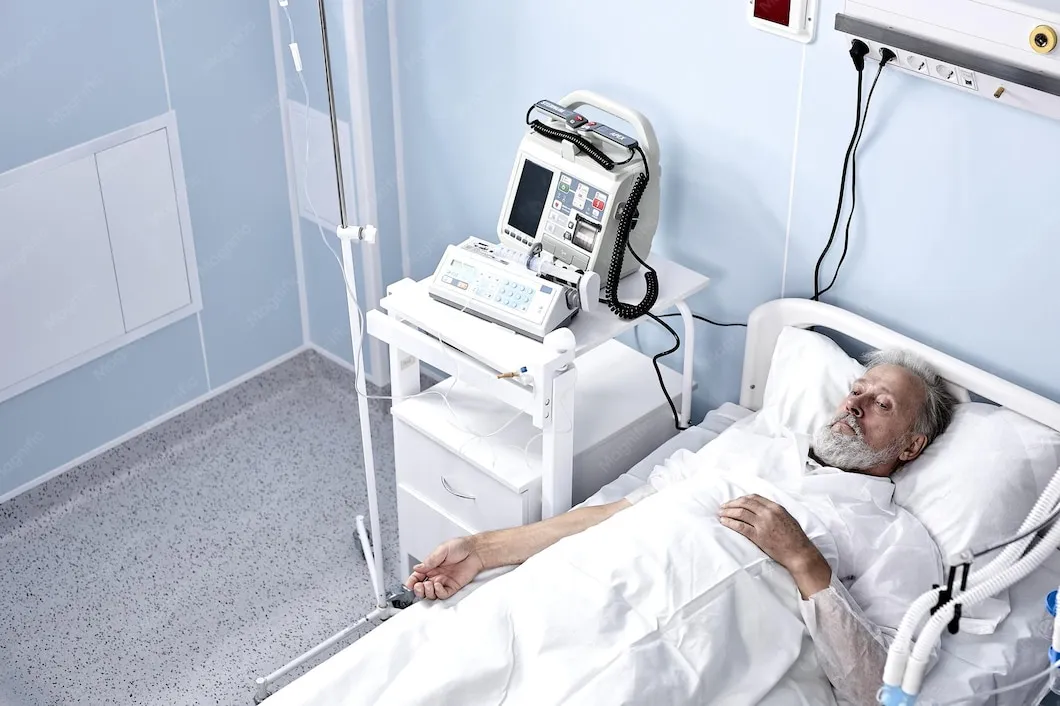
Therapeutic positioning simply means placing the body at an angle that supports a specific clinical goal — easing breathing, protecting a surgical site, reducing swelling, limiting reflux, or relieving pressure on the skin — rather than just “however feels comfortable in the moment.” In hospitals, nurses reposition patients on a schedule for exactly these reasons. At home, a reclining bed lets a caregiver or the patient recreate those same supported positions with a remote, instead of improvising with cushions that shift overnight.
It’s worth being clear from the outset: positioning is a genuine, evidence-informed part of care for many conditions, but it works alongside medical treatment, not instead of it. Always follow your care team’s specific instructions for your condition — this guide explains the general principles and is not a substitute for that guidance.
Who Needs Therapeutic Positioning at Home?
- Patients recover from surgery — particularly abdominal, cardiac, spinal, or orthopaedic procedures — where a specific angle protects the incision or reduces strain.
- People managing GERD or acid reflux, especially at night, when lying flat allows stomach acid to travel more easily up the oesophagus.
- Patients with respiratory conditions such as COPD, heart failure, or general breathlessness, who may find breathing more comfortable with the upper body raised.
- Anyone dealing with swelling (oedema) in the legs or feet, from surgery, illness, pregnancy, or reduced mobility.
- Patients at risk of pressure injuries (bedsores) — those who are bedbound or spend long hours in one position and need regular, gentle repositioning.
- Patients with limited mobility from stroke, Parkinson’s, or a neuromuscular condition, who cannot easily reposition themselves.
Key Therapeutic Positions and What They’re Used For
Head and upper-body elevation (semi-Fowler’s position)
Raising the head and upper body — often within a range such as 30–45°, depending on the patient’s needs and care-team guidance — is one of the most widely used positioning techniques in both hospital and home care. It’s associated with a few specific benefits:
- Easier breathing. Raising the upper body can make breathing feel more comfortable for some patients, which is why semi-recumbent positioning is commonly used in clinical care.
- Reduced night-time reflux. Keeping the head raised limits the backward flow of stomach acid that tends to worsen when lying completely flat.
- Post-surgical comfort, particularly after procedures involving the chest, abdomen, or upper body, where a slight incline is often more comfortable and reduces strain on the surgical area — though the exact angle and timeline should always come from the surgeon, since it varies by procedure.
Leg and foot elevation
Leg elevation may help with comfort and swelling in some situations. The appropriate height and duration depend on the patient’s condition and care-team advice. This is especially relevant for patients who are less mobile than usual, recovering from lower-limb surgery, or managing conditions like varicose veins.
Zero-Gravity position (combined head and leg elevation)
This position raises the head and knees together, so the legs sit roughly level with the heart, distributing support more evenly and changing the way pressure is experienced across the body. It’s a genuinely comfortable resting position that combines several of the benefits above — but it’s worth being clear that this is a comfort and pressure-redistribution position, not a medical treatment.
Regular repositioning for pressure relief
For patients who are bedbound or spend extended periods in one position, changing position regularly is the primary way to protect the skin from pressure injuries. Clinical guidance recommends following an individualised repositioning schedule set by the care team for anyone at risk — a reclining bed makes it far easier to shift position frequently and gently, but it supplements a repositioning routine rather than replacing one.
How to Choose a Reclining Bed for Therapeutic Use
- Match the recline range to the condition
Some situations need a modest, specific angle (say, post-surgical head elevation), while others benefit from a wider range across the day — sitting up for meals, reclining flat for sleep, elevating legs separately. Check the bed’s actual angle range for both head and foot sections rather than assuming.
- Look for independent head and foot control
Many therapeutic positions rely on the head and legs moving separately, not together — for example, elevating the legs while keeping the back flatter for someone recovering from abdominal surgery. A bed that only reclines one unit is more limiting for this kind of use.
- Prioritise smooth, gentle motion
Fast or jerky motorised movement can be uncomfortable or even painful for a patient with a recent surgical wound, joint pain, or sensitivity. Ask specifically about motor smoothness and noise level, ideally by seeing a demonstration.
- Check weight capacity against the patient’s actual needs
Confirm the specific model’s rated weight capacity — accounting for the patient, mattress, bedding, and any equipment — rather than relying on a general figure and leaving a reasonable margin.
- Choose controls the patient (or caregiver) can manage independently
If the patient has limited hand strength or dexterity, a simple, large-button remote matters more than extra features. Voice control can be genuinely useful where hand mobility is limited.
Not sure which positions matter most for your situation? Call/WhatsApp: +91 9820138189 — tell us the condition and our team will help you match the right bed.
Choosing a Mattress That Supports Therapeutic Positioning
A compatible mattress is especially important when selecting a recliner bed for patients, because it must flex with the moving sections.
- 7-zone latex or high-density foam mattresses generally flex well at recline points and offer even more support.
- Memory foam helps distribute pressure at the hips, heels, and shoulders — relevant for pressure-injury prevention.
- Alternating-pressure air mattresses are often used for patients who are bedbound or at higher risk of pressure injuries, as the surface itself shifts pressure points automatically.
Mattress compatibility depends on the specific reclining-bed design — a mattress that cannot flex appropriately at the bed’s moving sections may interfere with movement and create uncomfortable pressure points, so always confirm compatibility with the bed and mattress manufacturer before using an existing one.
A Note on What Positioning Can and Can’t Do
It’s worth being straightforward here: a reclining bed is a genuinely useful tool for comfort, breathing ease, reflux management, circulation support, and pressure relief — but it works best as part of a broader care plan, alongside your care team’s medical guidance, medication, wound care, and mobility plan. None of the positions above are a substitute for treatment, and any specific concern — new swelling, breathing difficulty, or a change in a surgical site — should go to a doctor or nurse rather than being managed through bed position alone.
Quick Positioning Guide by Situation
- GERD / night-time reflux: head elevated, typically 30–45° — confirm the right angle with your doctor.
- Breathlessness / respiratory conditions: upper body raised (semi-Fowler’s), often combined with slight knee support.
- Leg swelling / oedema: legs elevated above heart level for periods throughout the day, as advised.
- Post-surgical recovery: The position depends entirely on the procedure — follow your surgeon’s specific instructions.
- Pressure injury prevention: frequent, scheduled repositioning as set by the care team, supported by an appropriate mattress.
Get a recommendation matched to the condition. Call/WhatsApp: +91 9820138189 — we’ll suggest the right bed and mattress combination for your situation.
What Affects the Price of a Therapeutic Reclining Bed?
- Range and independence of motion — beds with wider recline ranges and fully independent head/foot control generally cost more.
- Motor quality and smoothness — quieter, gentler motors suited to patient comfort add to the cost.
- Frame strength and weight capacity — reinforced frames for bariatric or higher-capacity needs cost more.
- Mattress type — from basic foam through to alternating-pressure air mattresses, the price range is wide.
- Design and finish — retrofit systems and wood finishes generally cost more than a plain metal frame.
- Accessories, warranty, and setup — rails, tables, extended coverage, and professional installation all factor in.
Flexible EMI options are available. Contact +91 9820138189 for current pricing and guidance based on the patient’s condition.
Delivery, Setup, and Ongoing Care
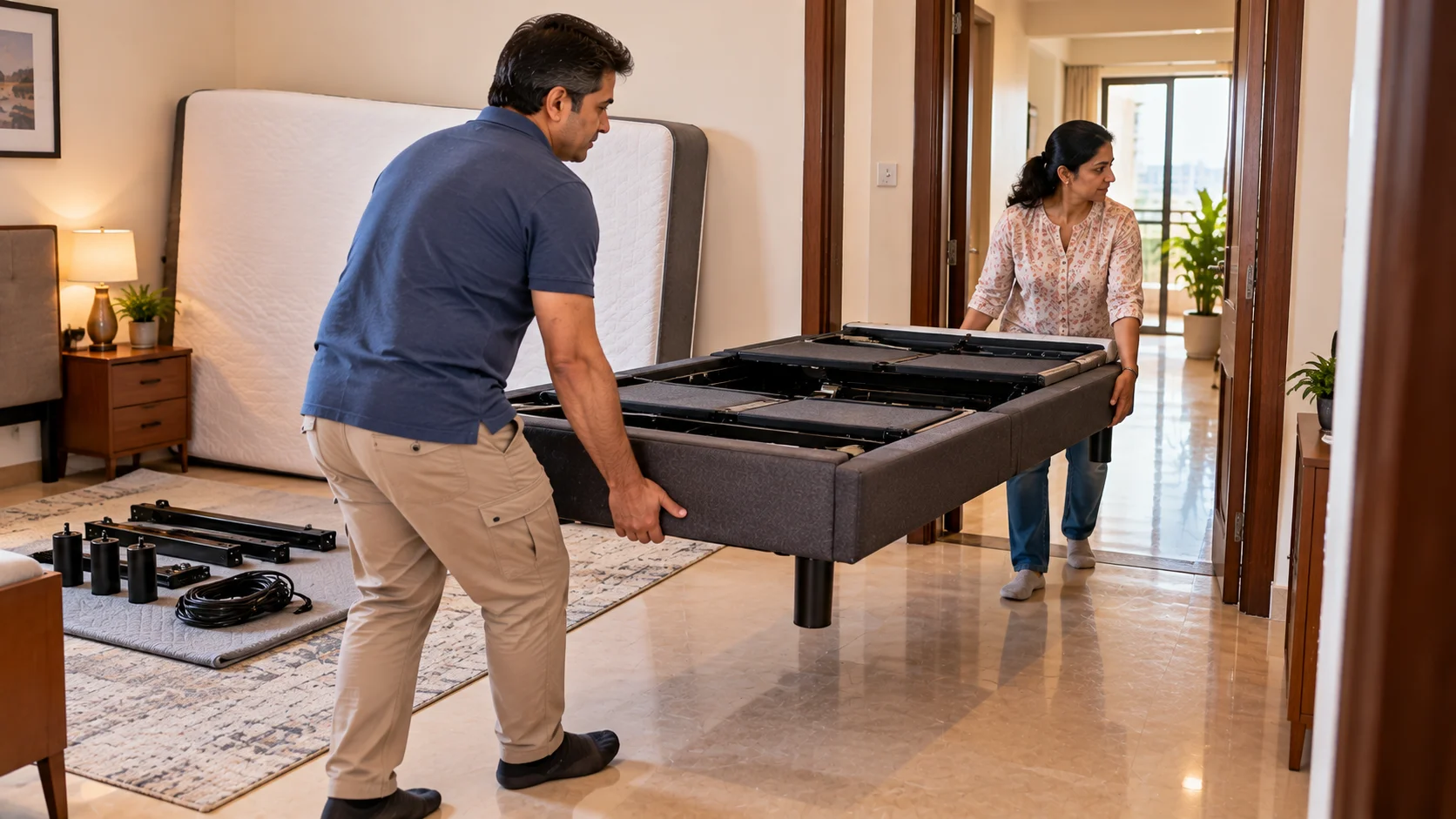
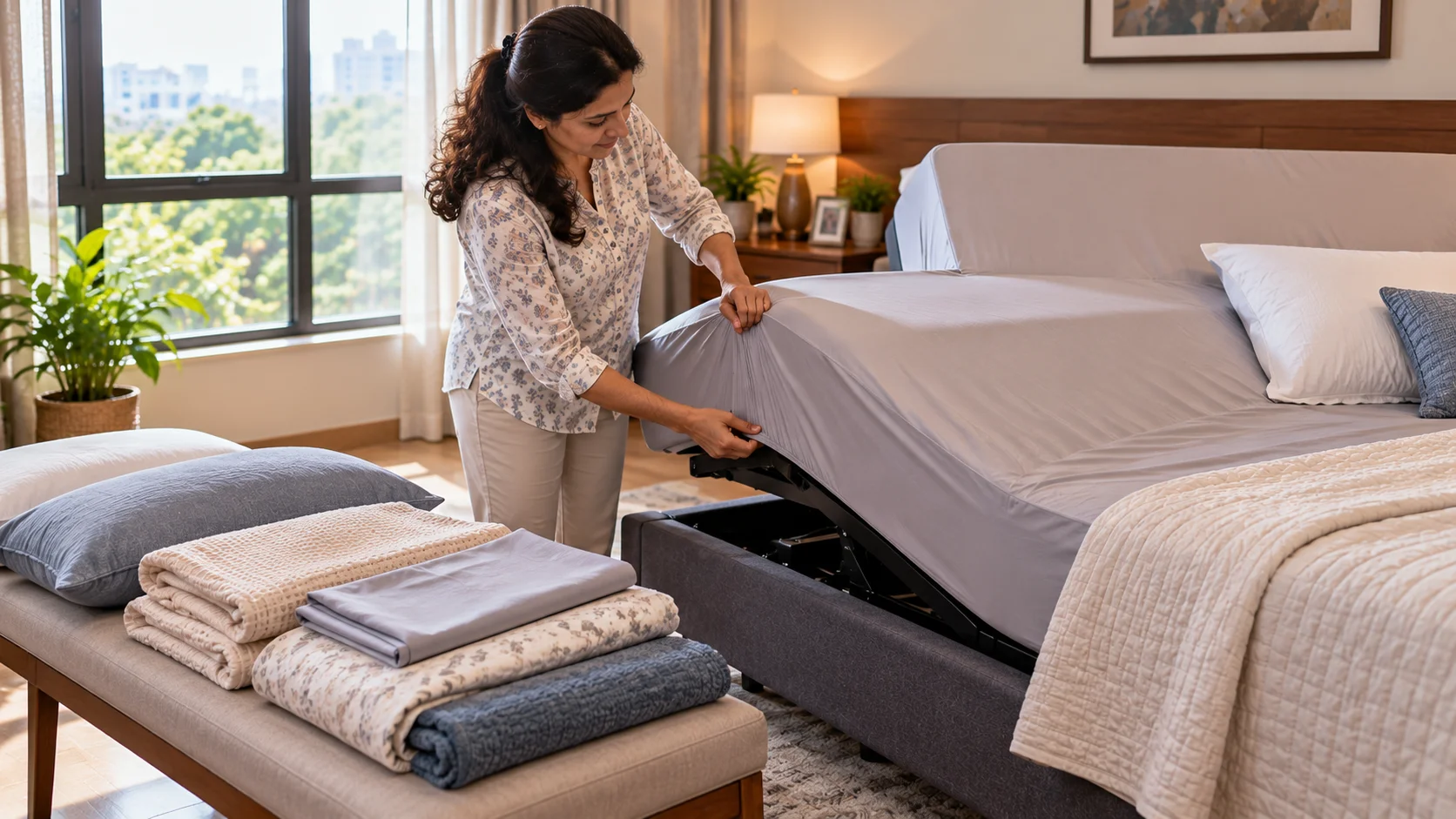
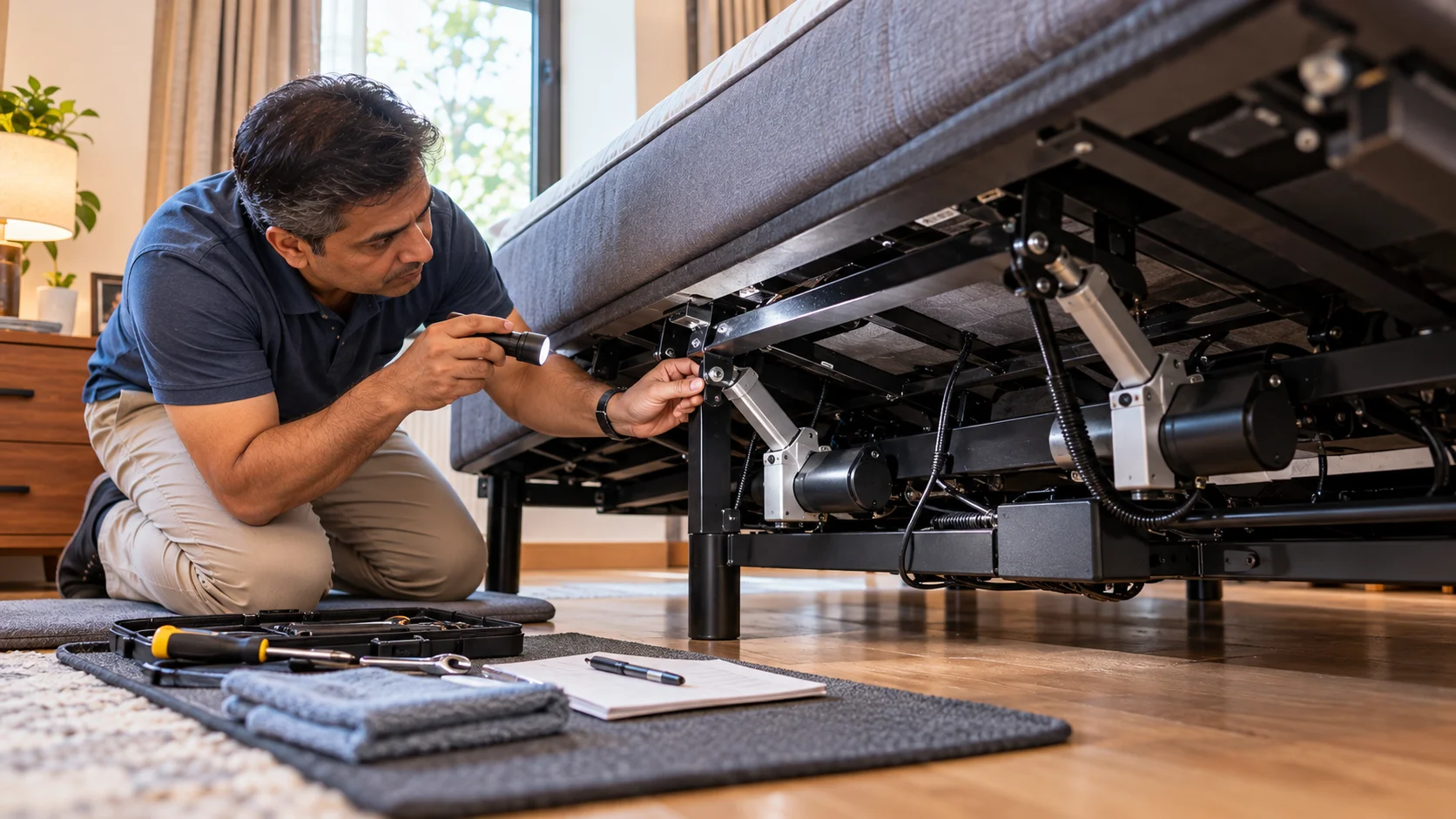
Setting it up: parts are checked against the packing list, the frame or conversion kit is assembled and aligned, mattress stoppers are fitted, motors are connected, and the remote or app is paired and run through its full range before handover — including a check that head and leg sections move smoothly and independently.
Keeping it going: wipe surfaces with a mild antibacterial wipe regularly, and check cables every few months for wear. If a surgical site, skin condition, or symptom changes, that’s a conversation for the care team, not something to troubleshoot through bed positioning alone.
Mistakes Worth Avoiding
- Guessing at recline angles instead of confirming specifics with the doctor or physiotherapist.
- Choosing a bed where the head and legs only move together, when the condition needs independent control.
- Using a mattress that hasn’t been confirmed as compatible with the specific reclining-bed design.
- Relying on bed position alone to prevent pressure injuries, instead of following a proper repositioning schedule.
- Overlooking motor smoothness, which matters more for patients with pain or sensitivity than for general comfort users.
Quick Buying Checklist
Use this checklist when evaluating a recliner bed for patients for home recovery or longer-term care.
- Clear on the specific positioning needs (reflux, breathing, swelling, post-surgical, pressure relief)
- Independent head and foot control if the condition needs it
- Recline range and angles confirmed against care-team guidance
- Motor smoothness checked, ideally via demonstration
- Rated weight capacity confirmed for the specific model
- Understand what any safety certification actually covers
- Mattress suited to flexing at recline points
- Controls the patient or caregiver can manage easily
- Warranty confirmed in writing
- Delivery, setup, and after-sales support clarified
Why Families Choose Zero G Beds
Families choosing a recliner bed for patients are usually looking for practical, dependable positioning support above all else. Here’s what Zero-G Beds offers:
- Reclining beds designed for genuine therapeutic positioning, not just general comfort.
- Independent head and foot adjustment across a wide, smooth recline range.
- At Zero G Beds, we can convert your existing bed into a customised adjustable bed based on your comfort and support requirements—without replacing your current bed.
- Professional delivery within 1 week, along with installation and a complete product demonstration by trained technicians.
- Dedicated after-sales support for setup and servicing.
- Easy assistance via Call/WhatsApp: +91 9820138189 for guidance, pricing, and support.
- Trusted by patients, caregivers, and families across India since 2003.
- 15-year warranty for long-lasting performance and peace of mind.
- CE-certified adjustable bed systems that meet internationally recognised European safety and quality standards.
Ready to make positioning easier at home? Talk to us: +91 9820138189 or email info@zerogbeds.com
The Bottom Line
Positioning is one of the simplest, most evidence-informed tools available for managing comfort during recovery or chronic illness — but only if it’s consistent, and consistency is hard to achieve with pillows alone. A reclining bed for patients, with independent head and leg control, smooth motorised movement, and a mattress built to flex at the right points, makes it realistically possible to hold the positions your care team recommends, night after night.
Always treat this as one part of a broader care plan, guided by the patient’s actual medical team — and if you’re not sure which bed configuration fits the situation, our team is glad to talk it through.
Tell us about the patient’s condition and we’ll recommend the right bed today. Call/WhatsApp: +91 9820138189
References
- Khan BA et al. Effect of bed-head elevation during sleep in nocturnal gastroesophageal reflux. PubMed. https://pubmed.ncbi.nlm.nih.gov/22098332/
- NICE Quality Standard QS89 — Pressure ulcers: advice on repositioning. https://www.nice.org.uk/guidance/qs89/chapter/quality-statement-5-advice-on-repositioning
- US Vein Clinics — Health benefits of elevating your legs. https://www.usaveinclinics.com/blog/health-benefits-of-elevating-your-legs/
- Sleep Advisor — How to get the Zero-Gravity position on an adjustable bed. https://www.sleepadvisor.org/how-to-get-zero-gravity-position-on-adjustable-bed/