
This guide is general information to help families make informed decisions. It isn’t medical advice — please check anything specific to the patient with their doctor, physiotherapist or nurse, and confirm the rated specifications of any bed before you buy.
When a loved one returns home after surgery, a stroke, or due to limited mobility, choosing the right adjustable bed for patients at home can significantly improve comfort, safety, and daily care. Unlike a standard bed, an adjustable patient bed allows caregivers to change the patient’s position with ease, reducing physical strain while improving recovery and overall quality of life.
This guide walks through what an adjustable bed actually does for a patient at home, which features matter versus which are just nice-to-have, and how to choose sensibly for the condition you’re caring for — in plain language, from people who fit these beds into real Indian homes every week.
Need help choosing the right adjustable bed? Call or WhatsApp: +91 9820138189 today for a free consultation. We’ll recommend the best bed based on the patient’s medical condition, mobility, and home environment.
What Does an Adjustable Bed Actually Do for a Patient?
At its core, an adjustable bed lets you change the patient’s position without moving the patient. Instead of stacking pillows or asking someone to shuffle up the mattress, a motor tilts the head section, the leg section, or both — smoothly, and usually to the exact angle needed.
For a patient at home, that translates into a few concrete things happening every single day:
- Sitting up safely for meals, medicines, or a video call, without straining a healing incision or a weak back.
- Reducing pressure on the lower back and hips by supporting the body’s natural curve instead of leaving it flat and unsupported.
- Helping with circulation and swelling by raising the legs above heart level when needed.
- Making breathing a little easier for patients with heart failure, COPD, or reflux, simply by raising the upper body.
- Cutting down how often a patient needs to be manually repositioned, since small adjustments can be made by remote rather than by hand.
None of this makes the bed a treatment on its own — it’s a supportive tool that works alongside the patient’s actual care plan. But for families managing day-to-day comfort, it’s often the single change that makes the biggest difference.
Who Should Buy an Adjustable Bed for Home Care? Patients Who Benefit the Most
Adjustable beds aren’t only for hospital-level care. In practice, we see them help a wide range of situations:
- Patients recovering from surgery — especially hip, knee, spine, or abdominal procedures — who need to sit up without pulling on the surgical site.
- Stroke and fall recovery patients in the first weeks home, when safe positioning and easy transfers matter most.
- People with chronic breathing or heart conditions, who sleep and breathe more comfortably with the head raised.
- Patients with limited mobility from Parkinson’s, arthritis, or a spinal injury, who can’t easily reposition themselves.
- Anyone dealing with reflux or GERD, where a raised upper body at night meaningfully reduces symptoms.
- Elderly patients at risk of pressure injuries, for whom regular, easy repositioning is part of the care routine.
If the patient you’re caring for needs help getting comfortable more than once or twice a day, an adjustable bed usually pays for itself in reduced strain — for both of you.
Is an Adjustable Bed Better Than a Hospital Bed for Home Care?
Families often wonder whether they should buy a traditional hospital bed or a home-style adjustable bed. The answer depends on the patient’s medical condition and level of care.
A hospital bed is ideal for patients who require intensive nursing care, frequent repositioning, or advanced medical support. On the other hand, an adjustable bed is designed for patients recovering at home who need better comfort, improved positioning, and easier daily care while maintaining the appearance of a normal bedroom.
If the patient can safely remain at home without continuous medical supervision, an adjustable home care bed is often the more comfortable and practical choice.
Essential Features to Look for in an Adjustable Bed for Patients
Not every feature on a spec sheet is worth paying extra for. Here’s what genuinely affects a patient’s comfort and a caregiver’s day-to-day life.
- Head (backrest) elevation
Raising the head end lets the patient sit up for eating, reading, or taking medicines without support from pillows. It’s also a well-established, drug-free way to reduce night-time acid reflux — raising the head of the bed has been shown to ease nocturnal gastroesophageal reflux symptoms.
- Leg elevation
Lifting the legs helps with lower-limb swelling and circulation, and takes pressure off the lower back during long stretches in bed. Elevating the legs above heart level is a commonly recommended way to support circulation and reduce swelling.
- Auto-contour (synchronised head and knee movement)
When the head and knee sections move together, the patient doesn’t slide down the bed as the backrest rises — a small detail that saves a lot of repositioning effort over a day.
- Hi-low height adjustment
Bringing the whole bed up to the caregiver’s waist height makes transfers and hands-on care far safer, and lowering it back down reduces fall risk when the patient is getting in or out on their own.
- Motor quality and noise level
A patient bed gets adjusted many times a day, often at night. Quiet, smooth motors matter more than they sound like they would — a jerky or noisy motor is genuinely disruptive for light sleepers and anxious patients alike.
- Controls the patient can actually use
Wired remotes, wireless remotes, phone apps, sometimes voice control — the “best” option is whichever one the specific patient and caregiver can operate without frustration. For a patient with limited hand strength, a simple large-button remote often beats a feature-packed app.
- Weight capacity and frame width
Rated weight limits vary by model, so don’t rely on a generic number. Add up the patient’s weight, the mattress, bedding, and any accessories, leave a 15–20% margin, and confirm the exact rated capacity of the specific model before buying.
Still weighing it up? Talk to our care expert. Call or WhatsApp us at +91 9820138189 for personalised guidance based on your patient’s condition.
Adjustable Bed vs Regular Bed: Which Is Better for Home Patient Care?
| Regular Bed | Adjustable Bed | |
| Sitting up for meals/medicine | Needs pillows, manual effort | One button, consistent position |
| Repositioning through the night | Manual, disturbs sleep | Motorised, minimal disruption |
| Caregiver strain during transfers | High — no height adjustment | Low — hi-low height support |
| Circulation/swelling support | Not possible | Leg elevation on demand |
| Reflux management at night | Pillow stacking only | Stable head elevation |
| Look and feel | Standard bedroom furniture | Can match home décor (see below) |
Can an Adjustable Patient Bed Look Like a Hospital Home Bed?
No. This is one of the more common worries families raise, and it’s a fair one — nobody wants their parent’s bedroom to suddenly feel like a ward.
Two options address this directly:
- Retrofit/convertible systems, where a motorised mechanism is fitted inside your existing wooden bed frame, so the room keeps its original look.
- Home-style adjustable beds, built with wood finishes and upholstered frames designed to sit naturally in a bedroom rather than a clinic.
Both give the patient the same functional benefits as a clinical hospital bed, just without the visual reminder of illness every time they walk into the room.
What about the Zero-Gravity position?
Many adjustable beds include a Zero-Gravity setting — a reclined posture where the upper body is raised and the knees are lifted so the legs sit roughly level with the heart. A common configuration raises the head to around 45° and the legs to around 15°, spreading body weight more evenly and taking load off the lower back.
People commonly find it helps with back comfort, circulation and swelling, and night-time reflux — but it’s worth being precise here: it’s a comfort position, not a medical treatment, and it works best as one part of a broader care routine rather than a stand-alone fix.
Can an Adjustable Bed Help Prevent Pressure Sores (Bedsores)?
It’s tempting to assume an adjustable bed alone prevents bedsores. It doesn’t — not by itself. Pressure injuries are prevented mainly through regular repositioning and skin care, following an individualised schedule set by the care team, particularly for anyone assessed as high-risk. What a good adjustable bed does do is make that repositioning much easier and less disruptive to carry out consistently — which matters, because consistency is exactly what prevention depends on.
Which Mattress Is Best for Different Patients?
An adjustable frame only works properly with a mattress designed to bend at the same points. Ordinary innerspring mattresses don’t flex correctly and can strain the motor mechanism over time.
| Patient Condition | Recommended Mattress |
| Post-Surgery | High-Density Medical Foam |
| Elderly Care | Latex Mattress |
| Arthritis | Memory Foam |
| Bedridden Patients | Alternating Pressure Air Mattress |
| Long-Term Home Care | Medical Foam + Pressure Relief Layer |
Best Adjustable Bed Features for Different Patient Conditions
- Post-surgery recovery: Fully adjustable head and knee support, smooth motor, easy remote.
- Chronic breathing or heart conditions: Reliable head elevation, quiet motor for night-time use.
- Circulation/swelling issues: Leg elevation as a core feature, not an afterthought.
- Limited mobility / high fall risk: Hi-low height, side rails, and a low-profile option if available.
- Long-term home care: Fully electric over manual or semi-electric — the effort saved adds up fast.
Tell us the condition, get a matched recommendation. [call/WhatsApp:9820138189] We’ll suggest the exact bed and mattress and send you the details.
Adjustable Bed Price Guide: What Affects the Cost?
A few factors consistently move the price up or down:
- Type of adjustment — manual is cheapest, semi-electric sits in the middle, fully electric costs more.
- Motor quality and functions — quieter motors and extras like hi-low height or auto-contour add to the cost.
- Frame strength and weight capacity — reinforced frames cost more.
- Mattress choice — basic foam is a fraction of the cost of an alternating-pressure air mattress.
- Finish and design — wood finishes and retrofit-into-your-own-bed options typically cost more than plain metal frames.
- Accessories, warranty, and installation — rails, tables, longer warranty coverage, and professional setup all factor in.
Get a personalised quote! [call/WhatsApp +91 9820138189] Share the patient’s weight and condition and we’ll send exact pricing, mattress options and delivery timelines.
Common Mistakes to Avoid When Buying
- Choosing a metal, clinical-looking frame when a wood-finish or retrofit option would suit the home just as well functionally.
- Pairing the bed with an ordinary innerspring mattress that won’t flex properly at the hinge points.
- Relying on a general weight-capacity figure instead of the specific model’s rated limit.
- Skipping written warranty terms for the frame, motor, and electronics.
- Picking controls that are too complicated for the actual patient to use independently.
- Overlooking fall-safety features — rails and hi-low height matter most for the least steady patients.
Adjustable Bed Buying Checklist: What to Check Before You Buy
- Adjustment type matches the length and intensity of care needed
- Rated weight capacity confirmed for the specific model
- Head and leg elevation genuinely suit the patient’s condition
- Hi-low height included for safe transfers
- Controls the patient and caregiver can both use comfortably
- Mattress designed to flex with the bed
- Fall-safety features present if needed (rails, low-profile option)
- Warranty terms in writing
- Delivery, setup, and after-sales support confirmed
Why Families Across India Trust Zero G Beds for Home Patient Care?
- Wide range of Single-Zone, Split and Split King adjustable bed frames for every bedroom.
- At Zero G Beds, we can convert your existing bed into a customised adjustable bed based on your comfort and support requirements—without replacing your current bed.
- Compatible mattress options selected to properly flex with the frame’s movement.
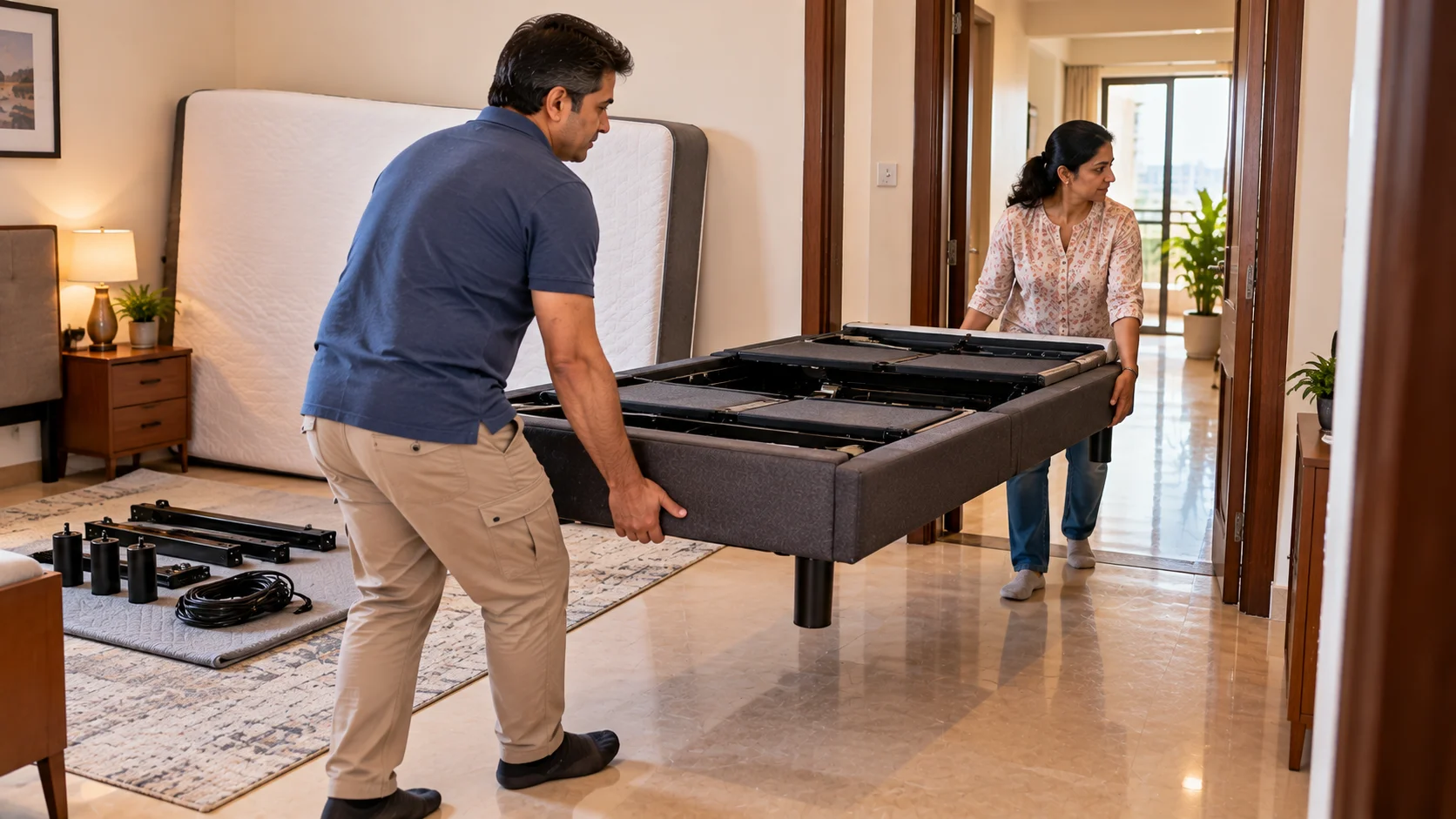
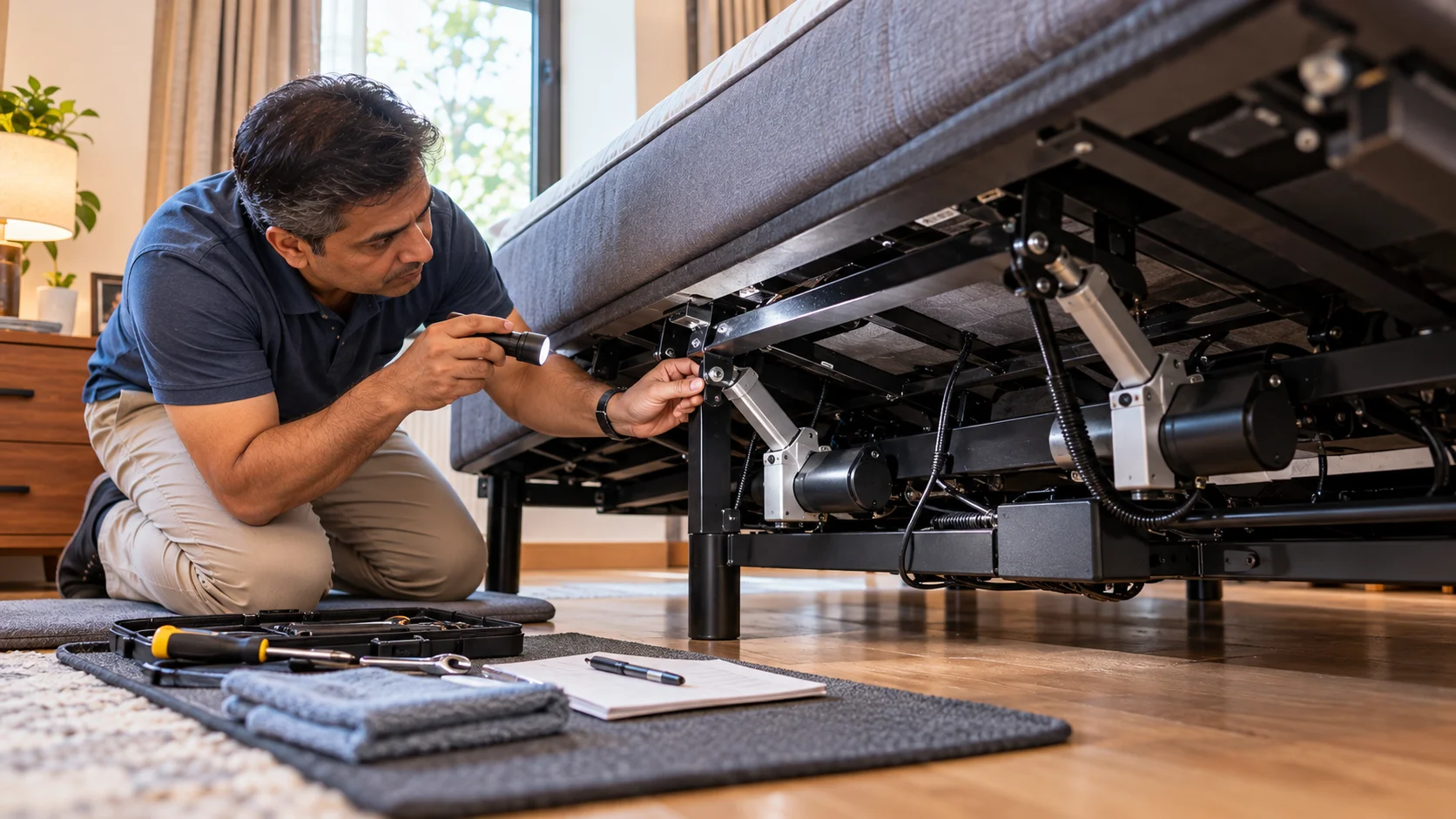
- Professional delivery within 1 week, along with installation and a complete product demonstration by trained technicians.
- Dedicated after-sales support to assist with setup and servicing
- 15-year warranty for long-lasting performance and peace of mind.
- Easy assistance via Call/WhatsApp: +91 9820138189 for product guidance, pricing, and support.
- CE-certified adjustable bed systems that meet internationally recognised European safety and quality standards.
- Trusted by families and couples across India for comfortable, practical home upgrades.
Ready to Make Home Care More Comfortable? Talk to a Zero G Beds Expert Today.
Get personalized recommendations for the right adjustable bed and mattress based on your patient’s needs.Call: +91 9820138189 Email: info@zerogbeds.com
Final Thoughts
Choosing the right adjustable bed for patients at home is about much more than comfort—it’s about improving safety, supporting recovery, and making everyday care easier for both patients and caregivers. By selecting the appropriate adjustment features, compatible mattress, and reliable after-sales support, families can create a safer and more comfortable home care environment.
If you’re unsure which model best suits your needs, the team at Zero G Beds can help you compare options and recommend the most suitable solution based on the patient’s condition, mobility level, and home setup.
Tell us about your loved one’s needs and we’ll recommend the right bed today. [call/WhatsApp: 9820138189]
References
- Khan BA et al. Effect of bed-head elevation during sleep in nocturnal gastroesophageal reflux. PubMed. pubmed.ncbi.nlm.nih.gov/22098332
- Which Doctor to Consult for Swollen Legs or Feet? — leg elevation and vascular evaluation guidance. PACE Hospitals, Hyderabad. pacehospital.com
- Bed Sores (Pressure Ulcers): Causes, Symptoms, Treatment and Prevention. Apollo Hospitals. apollohospitals.com/diseases-and-conditions/bed-sores
- NICE Quality Standard QS89 — Pressure ulcers: advice on repositioning. nice.org.uk/guidance/qs89
- Sleep position and nocturnal acid reflux relief. KIMS Advanced Gastroenterology & Endoscopy (KAGE), Hyderabad. kimskage.com
- Sleep Advisor — How to get the Zero-Gravity position on an adjustable bed. sleepadvisor.org