
This guide is general information to help families make informed decisions. It isn’t medical advice — please check anything specific to you or a loved one with a doctor or physiotherapist, and confirm the rated specifications of any bed before you buy.
Most people don’t go looking for a recliner bed out of curiosity. It’s usually one of a few things — a bad back that’s stopped responding to a better mattress, a parent who’s finding it harder to get up in the morning, or simply wanting to read, watch TV, or fall asleep without propping up a wall of pillows that slide off by midnight. Whatever brought you here, a recliner bed is a bigger, more considered purchase than a normal bed, so it’s worth understanding what it actually does before you decide on one.
This guide walks through what a recliner bed is, who tends to benefit most, the features worth paying attention to, and what shapes the price — written in plain language, from people who fit these beds into real Indian homes every week.
Talk to a comfort advisor — free, no obligation. Call or WhatsApp: +91 9820138189 Tell us what you’re hoping to fix — back pain, restless nights, an ageing parent — and we’ll point you to the right bed.
What Is a Recliner Bed and How Does It Work?
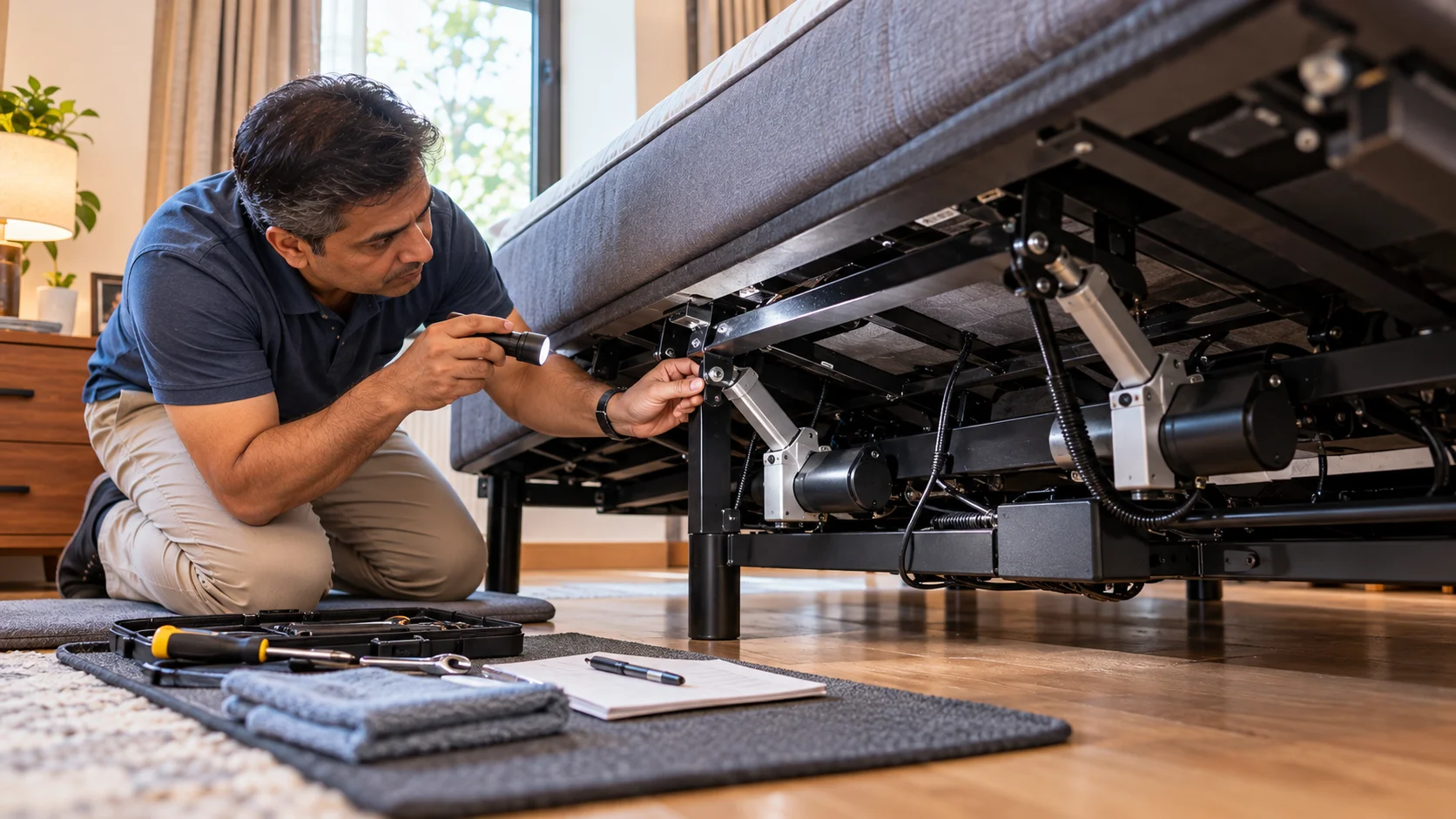
A recliner bed is a bed whose head and foot sections can be raised independently, usually by remote control, so you can go from lying flat to sitting up, or into a reclined “lounging” position, without getting out of bed. Some recliner beds are stand-alone units built for this purpose; others are conversion systems that slot a motorised mechanism into a wooden bed frame you already own, so the room still looks and feels like a normal bedroom.
Either way, the idea is the same: your bed stops being a single fixed shape and starts adjusting to whatever you’re doing in it — sleeping, reading, watching television, working on a laptop, or simply resting with your legs up after a long day.
Who Can Benefit from a Recliner Bed?
You don’t need a medical condition to enjoy a recliner bed, but certain situations make the case for one much stronger:
- People with ongoing back or neck discomfort who find flat lying uncomfortable and end up stacking pillows to get any relief.
- Anyone who spends a lot of time sitting up in bed — working, studying, or watching TV — and wants proper support instead of a slumped posture against the headboard.
- People who deal with night-time acid reflux or heartburn, since a raised upper body is a well-known way to ease symptoms.
- Older adults find it harder to push themselves upright or swing their legs out of a flat bed, especially the first thing in the morning.
- People managing swelling in the legs or feet — from long hours of standing, pregnancy, or circulation issues — who benefit from being able to elevate their legs without extra cushions.
- Snorers and their partners, since raising their head and shoulders, can reduce the airway narrowing that makes snoring worse.
- Couples with different comfort needs, particularly with split/dual-adjustable frames where each side reclines independently.
If two or three of those sound familiar, a recliner bed is likely to earn its place quickly.
Why not just add more pillows?
Pillows are the obvious first fix, and for an occasional bad night, they’re fine. The problem is they don’t hold their shape — you shift in your sleep; they flatten or slide, and you wake up back where you started, or with your neck at an odd angle instead. A recliner bed keeps the same supported angle all night without you having to do anything, and you can change it in seconds with a remote rather than rebuilding a pillow fort at 2 a.m.
How to Choose the Right Recliner Bed
- Decide what you actually need it to do
Be specific about the problem you’re solving. Is it mainly for sleeping more comfortably, or do you also want to sit up for long stretches to read or work? Do you need it to help with reflux or swelling specifically? The answer shapes how much recline range and how many independent zones (head, foot, or both together) you need.
- Choose manual, semi-electric, or fully electric
- Manual recliner beds adjust with a hand lever or crank. They’re the cheapest option but take physical effort every time, which matters if you’ll be adjusting the bed often or if strength/grip is a concern.
- Semi-electric beds motorise the head and foot sections but may still need manual adjustment for base height.
- Fully electric / smart recliner beds adjust everything by remote, app, or voice, and are the ones most people settle on if they’ll be using the bed’s recliner function regularly rather than occasionally.
- 3. Match the frame and weight capacity to who’ll use it
Standard recliner bed frames are usually built around a stated weight capacity that covers the person plus mattress and bedding — but that figure varies by model, so always confirm the specific bed’s rated capacity rather than assuming. If two people will share the bed, or if weight is close to a stated limit, ask about reinforced frame options.
- 4. Understand what the recline positions actually do
- Head elevation raises the upper body — useful for reading, screen time, and easing reflux symptoms, since raising the head of the bed is a recognised, drug-free way to reduce night-time acid reflux.
- Leg/foot elevation raises the legs above heart level, which can help with circulation and swelling in the lower legs and feet.
- Zero-Gravity position (head and legs raised together) is designed to spread body weight more evenly and take pressure off the lower back — more on this below.
- Hi-low height adjustment, if available, brings the bed up or down to make getting in and out easier, which matters more than people expect once mobility becomes a factor. Falls around getting in and out of bed are a genuine risk for older adults, and initiatives like the CDC’s STEADI programme exist specifically to help reduce that risk.
- 5. Think about controls and how the bed will look in the room
A remote is standard; some beds add app or voice control, which is genuinely useful if dexterity is a concern. And you’re not limited to a “hospital” look — retrofit systems fit inside your existing wooden bed frame, and purpose-built recliner beds increasingly come in finishes designed to sit comfortably in an ordinary bedroom rather than looking clinical.
Still weighing up manual vs. electric? Call/WhatsApp: +91 9820138189 — our team will walk you through the right fit for your routine and budget.
What Is the Zero-Gravity Position on a Recliner Bed?
Zero-Gravity is a reclined position where the upper body is raised and the knees are lifted so the legs sit roughly level with the heart — a common setup is the head at around 45° and the legs at around 15°, though exact angles vary by bed. The aim is to spread body weight more evenly across the frame and reduce the load concentrated on the lower back.
The name comes from the neutral body posture used by astronauts during spaceflight launch — a position that spreads physical strain across the body rather than concentrating it on the spine. It’s a genuinely comfortable, well-established resting position — but it’s worth being clear-eyed that this is comfort and pressure redistribution, not a medical treatment, and any specific back or health condition is still worth discussing with a doctor or physiotherapist.
What people commonly find it helps with:
- Back comfort, from more even weight distribution across the body
- Circulation and mild swelling, from legs raised above heart level
- Night-time reflux, from the raised upper body
- Easier breathing for some people, when the chest and airway aren’t compressed by a flat position
Types of recliner beds
- Convertible / retrofit recliner beds — a motorised mechanism fits inside your existing wooden bed frame, so the room keeps its normal look.
- Purpose-built electric recliner beds — a dedicated frame designed around the recline mechanism, often with more finish and design options.
- Manual recliner beds — hand-crank adjustment; lower cost, more physical effort.
- Split / dual-adjustable recliner beds — each side of a larger bed reclines independently, useful for couples with different comfort needs.
Manual vs. Semi-Electric vs. Fully Electric Recliner Beds
| Feature | Manual | Semi-Electric | Fully Electric / Smart |
| Back-rest lift | Hand lever/crank | Motor (remote) | Motor (remote / app / voice) |
| Leg lift | Hand lever/crank | Motor (remote) | Motor (remote / app / voice) |
| Effort required | High | Medium | Low |
| Independence for the user | Limited | Some | High — can self-adjust easily |
| Bedroom look | More utilitarian | Semi-clinical | Can match home furniture |
| Best for | Occasional, light use | Moderate everyday use | Daily, long-term use |
Warranty terms vary by maker and model — get the coverage on frame, motors, and electronics confirmed in writing before you buy.
For most households planning to use the recline function regularly rather than occasionally, a fully electric bed tends to be the one people are happiest with a year or two in — it’s simply easier to actually use every day.
How to Choose a Mattress for a Recliner Bed
This part is easy to understand. A recliner bed only works as well as the mattress on it — the wrong mattress won’t flex where the bed bends, and over time that can strain both your comfort and the mechanism.
Mattresses that suit a recliner bed:
- 7-zone latex — natural latex with varied support across different parts of the body
- High-density medical-grade foam — flexes cleanly at the bed’s hinge points
- Memory foam — moulds to the body, helpful for pressure relief at the hips and shoulders
Better to avoid standard innerspring mattresses, which are built for a flat, static surface and generally won’t bend cleanly at a recliner bed fold points.
Best Recliner Bed Options for Different Needs
- Everyday comfort: an electric recliner bed with a one-touch Zero-Gravity and a latex or foam mattress.
- Reflux or restless nights: focus on smooth, reliable head elevation and a firmer support zone under the shoulders.
- Ageing parent, easier mornings: hi-low height adjustment plus simple, large-button remote controls.
- Couples with different needs: a split/dual-adjustable frame so each side reclines independently.
Tell us your situation, get a matched recommendation. Call/WhatsApp: +91 9820138189 — we suggest the right bed and mattress combination and send you the details.
Recliner Bed Price: What Affects the Cost?
A few factors consistently drive the price difference between models:
- Adjustment type — manual is the least expensive; semi-electric sits in the middle, fully electric and smart-controlled beds cost more.
- Motor quality and features — quieter, longer-lasting motors, plus extras like hi-low height and auto-contour, add to the cost.
- Frame strength and weight capacity — reinforced frames for higher weight capacities cost more than standard ones.
- Mattress choice — a basic foam mattress is a fraction of the cost of a premium latex or pressure-relieving option.
- Design and finish — wood-finish and retrofit-into-your-own-bed options generally cost more than a plain metal frame.
- Accessories, warranty, and installation — extended coverage and professional setup all factor into the final number.
Flexible EMI options are available. Contact us at +91 9820138189 for current pricing and guidance on the right configuration for your budget.
Get a personalised quote. Call/WhatsApp: +91 9820138189 — tell us what you’re looking for and we’ll send exact pricing, mattress options, and delivery timelines.
Choose based on how you’ll actually use the bed day to day, not on price alone — but you deserve real numbers to plan around, so ask for a quote and we’ll be straightforward about every cost involved.
Delivery, setup, and looking after your recliner bed
Setting it up: components are unpacked and checked against the parts list; the frame or conversion kit is fitted and aligned; mattress stoppers are added so nothing slides during recline; motors are connected to a low-voltage power source; and the remote or app is paired and tested through its full range of motion before the bed is handed over.
Keeping it going wipe surfaces down periodically with a mild cleaning wipe, and check cables every few months for pinching or wear. If anything looks damaged, pause the bed until it’s checked.
Common Mistakes When Buying a Recliner Bed
- Buying based on looks alone without checking the rated weight capacity for the specific model.
- Pair the bed with a standard innerspring mattress that won’t flex properly.
- Assuming a general safety certification covers everything — ask what it tests.
- Skipping the warranty details — get frame, motor, and electronics coverage in writing.
- Choosing controls that are more complicated than the people using them will actually want to deal with daily.
- Overlooking hi-low height if getting in and out of bed easily matters to anyone who’ll use it.
Quick buying checklist
- Clear on what problem you’re solving (comfort, reflux, swelling, mobility, etc.)
- Adjustment type matches how often you’ll actually use it
- Rated weight capacity confirmed for the specific model
- Understand what any safety certification actually covers
- Head and leg elevation range suit your needs
- Hi-low height considered if mobility is a factor
- Controls are genuinely easy for everyone who’ll use them
- Mattress, is one made for adjustable/recliner beds
- Warranty terms confirmed in writing
- [Delivery, setup, and after-sales support clarified
Why Choose Zero G Beds for a Recliner Bed?
- Wide range of Manual, Semi-Electric, and Fully Electric recliner beds for every budget and need.
- At Zero G Beds, we can convert your existing bed into a customised adjustable bed based on your comfort and support requirements—without replacing your current bed.
- Home-friendly designs that blend into residential spaces while offering genuine functional benefits.
- Professional delivery within 1 week, along with installation and a complete product demonstration by trained technicians. , along with installation and a complete product demonstration by trained technicians.
- 15-year warranty for long-lasting performance and peace of mind.
- CE-certified adjustable bed systems that meet internationally recognised European safety and quality standards.
- Dedicated after-sales support for setup and servicing.
- Easy assistance via Call/WhatsApp: +91 9820138189 for guidance, pricing, and support.
- Trusted by families across India for reliable, comfortable home solutions since 2003.
Ready to upgrade your comfort? Talk to us: +91 9820138189 or email info@zerogbeds.com
The bottom line
A recliner bed is a genuine upgrade to how comfortably you sleep, sit, and rest — not just for people managing a health condition, but for anyone tired of stacking pillows to get a decent angle. Match the adjustment type to how often you’ll actually use it, confirm the rated weight capacity and what any safety certification really covers, pair it with a mattress built to flex, and choose controls everyone in the house can use without a second thought.
Whether you’re solving for back discomfort, restless nights, or simply want a more comfortable way to unwind at the end of the day, it’s a decision worth getting right — and you don’t have to figure it out alone.
Tell us what you’re looking for and we’ll recommend the right bed today. Call/WhatsApp: +91 9820138189
References
- IEC 60601-2-52:2009 — Medical electrical equipment, Part 2-52: basic safety and essential performance of medical beds. https://www.iso.org/standard/36067.html
- IEC 60601 vs. ISO 13485: Medical Device Risk Management. https://eureka.patsnap.com/article/iec-60601-vs-iso-13485-medical-device-risk-management
- Khan BA et al. Effect of bed-head elevation during sleep in nocturnal gastroesophageal reflux. PubMed. https://pubmed.ncbi.nlm.nih.gov/22098332/
- US Vein Clinics — Health benefits of elevating your legs. https://www.usaveinclinics.com/blog/health-benefits-of-elevating-your-legs/
- Sleep Advisor — How to get the Zero-Gravity position on an adjustable bed. https://www.sleepadvisor.org/how-to-get-zero-gravity-position-on-adjustable-bed/
- CDC STEADI — Older Adult Fall Prevention Initiative. https://www.cdc.gov/steadi/about/index.html