
This guide is general information to help you choose a supportive mattress. It isn’t medical advice — please check anything specific to a diagnosed condition with a doctor or physiotherapist, and confirm the details of any mattress before you buy.
If you’ve started waking up with a stiff lower back before you’ve even got out of bed, or you spend the first few minutes of every morning working the ache out of your hips and knees, the mattress underneath you deserves a proper look. Most people assume they simply need to sleep on something “harder” to fix back pain — and it turns out that’s not quite right, which is exactly why this guide exists.
Below, we walk through what an orthopedic mattress actually is (and isn’t), what the research genuinely shows about firmness and back pain, which materials tend to help with which issues, and how to choose the right one — without the marketing noise that usually surrounds this topic.
Talk to a comfort advisor — free, no obligation. Call or WhatsApp: +91 9820138189 Tell us about your back or joint concern and we’ll recommend the right mattress.
What Is an Orthopedic Bed Mattress?
Here’s something worth knowing upfront: “orthopedic mattress” isn’t a regulated medical term, and there’s no official certifying body that tests and approves a mattress as “orthopedic” the way there is for, say, a medical device. In practice, the term is used across the industry to describe mattresses designed with firmer, more even support intended to help maintain spinal alignment and reduce pressure on joints — which is a genuinely useful design goal, but it’s worth knowing it’s a descriptive category, not a formal certification.
That doesn’t make the category meaningless. It just means the specific construction, materials, and support zones matter far more than the word “orthopedic” printed on the label.
What Mattress Firmness Is Best for Back Pain?
For years, the common advice was simple: back pain means you need a firm mattress. The most-cited clinical research on this doesn’t fully support that.
A randomised, double-blind, controlled trial published in The Lancet followed 313 adults with chronic non-specific low back pain over 90 days, comparing firm mattresses against medium-firm mattresses. The result: people on medium-firm mattresses reported greater improvement in pain while lying in bed, pain on rising, and daily disability than those on firm mattresses.
This doesn’t mean softer is always better either — the trial compared firm against medium-firm, not against soft. The practical takeaway is that “as firm as possible” isn’t automatically the right goal. What actually matters is support that keeps the spine in a neutral position without creating pressure points — and that’s a more individual fit than a single firmness label.
Who Should Use an Orthopedic Bed Mattress?
- People with chronic or recurring lower back pain, especially pain that’s worse first thing in the morning or after lying flat.
- People managing osteoarthritis or joint pain, where morning stiffness is a common and well-documented symptom — joint stiffness is typically most noticeable on waking or after periods of inactivity, easing somewhat with movement.
- People with sciatica-type symptoms, where the right sleeping surface can support a more comfortable resting position, though the underlying nerve issue needs its own medical evaluation and treatment.
- Side sleepers, who need enough contouring at the hips and shoulders to avoid pressure points, alongside enough support to prevent the spine from sagging out of alignment.
- Older adults, for whom consistent, even support across the body becomes more important as joints and discs naturally change with age.
- Anyone recovering from a back or joint procedure, where the surface they rest on plays a genuine role in day-to-day comfort during recovery.
How to Choose the Right Orthopedic Bed Mattress
- Choose Support Over Firmness
The goal is a surface that keeps your spine in a neutral position — not sagging in the middle, not so hard it creates pressure points at the shoulders and hips. Medium-firm is a reasonable starting point based on the available research, but individual factors like body weight and sleeping position can change what feels supportive.
- Match firmness to sleeping position
- Side sleepers generally need more cushioning at the shoulders and hips to avoid pressure points, with enough underlying support to stop the spine dipping out of line.
- Back sleepers tend to do well on medium-firm surfaces that support the natural curve of the lower back.
- Combination sleepers usually need a balanced, zoned mattress that works reasonably well across positions.
- Look for zoned support
Many orthopedic-style mattresses use different support zones across the body — firmer under the lower back and hips, softer at the shoulders — rather than uniform firmness from head to toe. This is often more useful than a single overall firmness rating.
- Consider the material
- Natural latex — elastic, responsive material that contours to the body’s shape while pushing back with even support, generally resistant to sagging over time, and naturally breathable.
- High-density memory foam — moulds closely to the body and can be effective for pressure relief, particularly at the hips and shoulders, though it retains heat more than latex for some sleepers.
- Hybrid constructions — combine a support layer (coils or high-density foam) with a comfort layer (latex or memory foam) for a blend of contouring and structural support.
- Check zones count and density specifications
A “7-zone” latex mattress, for example, is built with different support densities across the body rather than one uniform layer — worth asking for the specific zone breakdown rather than taking “orthopedic” or “7-zone” as marketing shorthand alone.
- If it’s for an adjustable or recliner bed, confirm flexibility
If the mattress sits on an adjustable base, it needs to flex cleanly at the bed’s hinge points. Some standard innerspring mattresses may not be suitable, so always confirm compatibility with the bed manufacturer. Latex and high-density foam are commonly suitable options when designed for adjustable use.
Not sure which firmness or material is right for you? Call/WhatsApp: +91 9820138189 — tell us about your sleep position and any back or joint concerns, and we recommend the right fit.
Orthopedic Mattress Materials Compared
| Material | Support style | Best suited for | Considerations |
| Natural latex | Responsive, even support with contouring | Back and side sleepers, those wanting durability | Naturally breathable; typically, a higher upfront cost |
| High-density memory foam | Close body contouring, pressure relief | Side sleepers, pressure-point sensitivity | Can retain more heat; check density rating |
| Hybrid (coil + latex/foam) | Structural support with a contouring comfort layer | Combination sleepers, heavier body types | Often heavier and higher cost |
| Standard innerspring | Uniform bounce, less contouring | General use, not ideal for adjustable beds | Doesn’t flex at hinge points; less pressure relief |
Best Orthopedic Mattress for Sciatica: What to Consider
Sciatica — pain that radiates from the lower back down the leg — comes from irritation or compression of the sciatic nerve, and its underlying cause needs proper medical evaluation. A supportive mattress that keeps the spine in a neutral position and avoids pressure points can genuinely make resting more comfortable for someone managing sciatica-type symptoms, but it isn’t a treatment for the nerve issue itself. If leg pain, numbness, or weakness is part of the picture, that’s a conversation for a doctor, not a mattress specification sheet.
Can an Orthopedic Mattress Help with Morning Stiffness?
Morning stiffness — particularly common with osteoarthritis — is a joint-level symptom tied to the underlying condition, and it typically eases somewhat with movement rather than being caused by the mattress itself. That said, a mattress that lets you maintain a comfortable, well-supported position through the night — without new pressure points building up from an unsupportive surface — can make waking up meaningfully less unpleasant, even though it isn’t addressing the joint condition directly.
Best Orthopedic Mattress Options for Different Needs
- Chronic lower back pain: medium-firm latex or hybrid, zoned support under the lower back.
- Osteoarthritis / joint pain: consistent, even support with a comfort layer that reduces pressure points, alongside your prescribed treatment plan.
- Side sleeping with shoulder/hip discomfort: natural latex or memory foam can provide useful contouring at the shoulder and hips, although the right choice depends on individual comfort and support needs.
- Sciatica-type discomfort: medium-firm, well-zoned support, alongside proper medical evaluation of the underlying cause.
- Using an adjustable or recliner bed: natural latex or high-density foam that flexes cleanly at the hinge points.
Tell us your situation, get a matched recommendation. Call/WhatsApp: +91 9820138189 — we’ll suggest the right mattress and send you the details.
What affects the price of an orthopedic mattress?
- Material — natural latex generally costs more than synthetic foam, reflecting the raw material and manufacturing process.
- Zone count and construction complexity — genuinely zoned support (e.g., 7-zone) costs more to engineer than a uniform single-density mattress.
- Density and durability — higher-density materials that resist sagging over years cost more upfront but typically last longer.
- Thickness and layering — multi-layer constructions with distinct support and comfort layers cost more than single-layer foam.
- Size — larger mattresses (king, queen, custom) naturally cost more.
- Warranty — longer warranty coverage generally reflects confidence in the mattress’s durability.
Flexible EMI options are available. Contact +91 9820138189 for current pricing and guidance based on your needs.
Get a personalised quote. Call/WhatsApp: +91 9820138189 — share your sleeping position and any back or joint concerns, and we’ll send exact pricing and options.
Choose based on your body, sleeping position, and specific discomfort — not on the word “orthopedic” alone — but you deserve real numbers to plan around, so ask for a quote and we’ll be straightforward about every cost involved.
How to Care for an Orthopedic Bed Mattress
- Rotate the mattress periodically (check manufacturer guidance — not all mattresses need flipping).
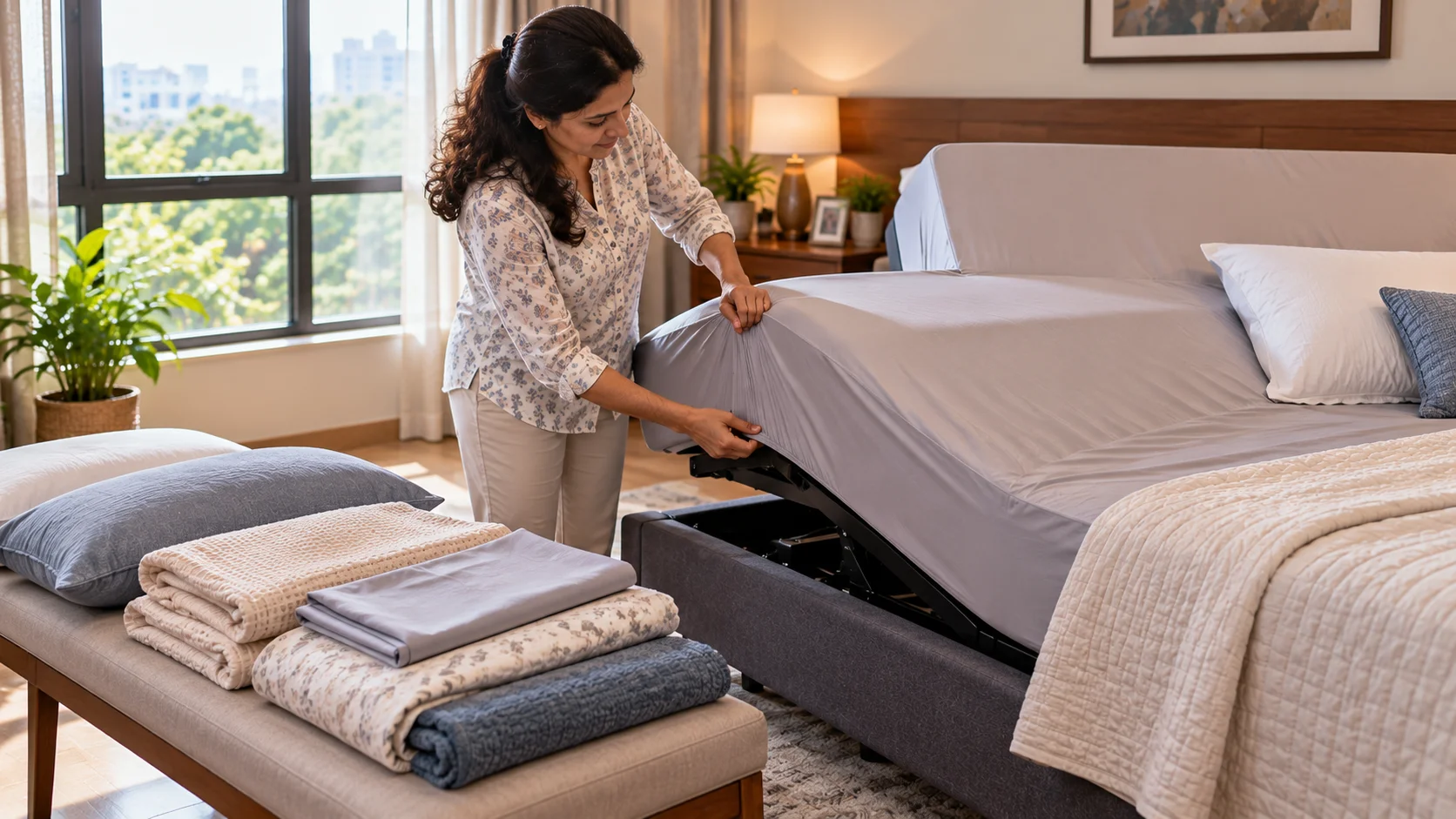
- Use a breathable, washable protector to keep the surface clean without trapping heat.
- Avoid folding or compressing latex or foam mattresses sharply, which can damage the internal structure.
- If using an adjustable base, confirm the specific mattress is rated for that use before purchase.
Common Mistakes When Buying an Orthopedic Bed Mattress
- Assuming “firmer is always better” for back pain — the research doesn’t support that as a blanket rule.
- Buying based on the word “orthopedic” alone without checking the actual zone construction and materials.
- Ignoring your usual sleeping position when choosing firmness.
- Pairing a standard innerspring mattress with an adjustable or recliner bed frame.
- Expecting a mattress to resolve a diagnosed condition like sciatica or advanced osteoarthritis on its own.
- Skipping the trial period or return policy, if offered — comfort is genuinely individual.
Orthopedic Bed Mattress Buying Checklist
- Clear on the specific issue (general back pain, joint pain, sciatica-type symptoms, side-sleeping discomfort)
- Firmness matched to sleeping position, not assumed to be “firmer is better”
- Zoned support construction understood, not just the word “orthopedic”
- Material chosen to fit priorities (latex for durability/breathability, foam for closer contouring)
- Confirmed suitable for an adjustable base, if applicable
- Warranty and return/trial policy confirmed
- Underlying medical conditions discussed with a doctor, not managed through mattress choice alone
Why Choose Zero G Beds for an Orthopedic Bed Mattress?
- 7-zone natural latex mattresses engineered with genuine, distinct support zones — not just a marketing label.
- Materials selected specifically to flex cleanly with adjustable and recliner bed frames.
- Options across firmness levels to match different body types and sleeping positions.
- Professional delivery and setup guidance from our team.
- Easy assistance via Call/WhatsApp: +91 9820138189 for guidance, pricing, and support.
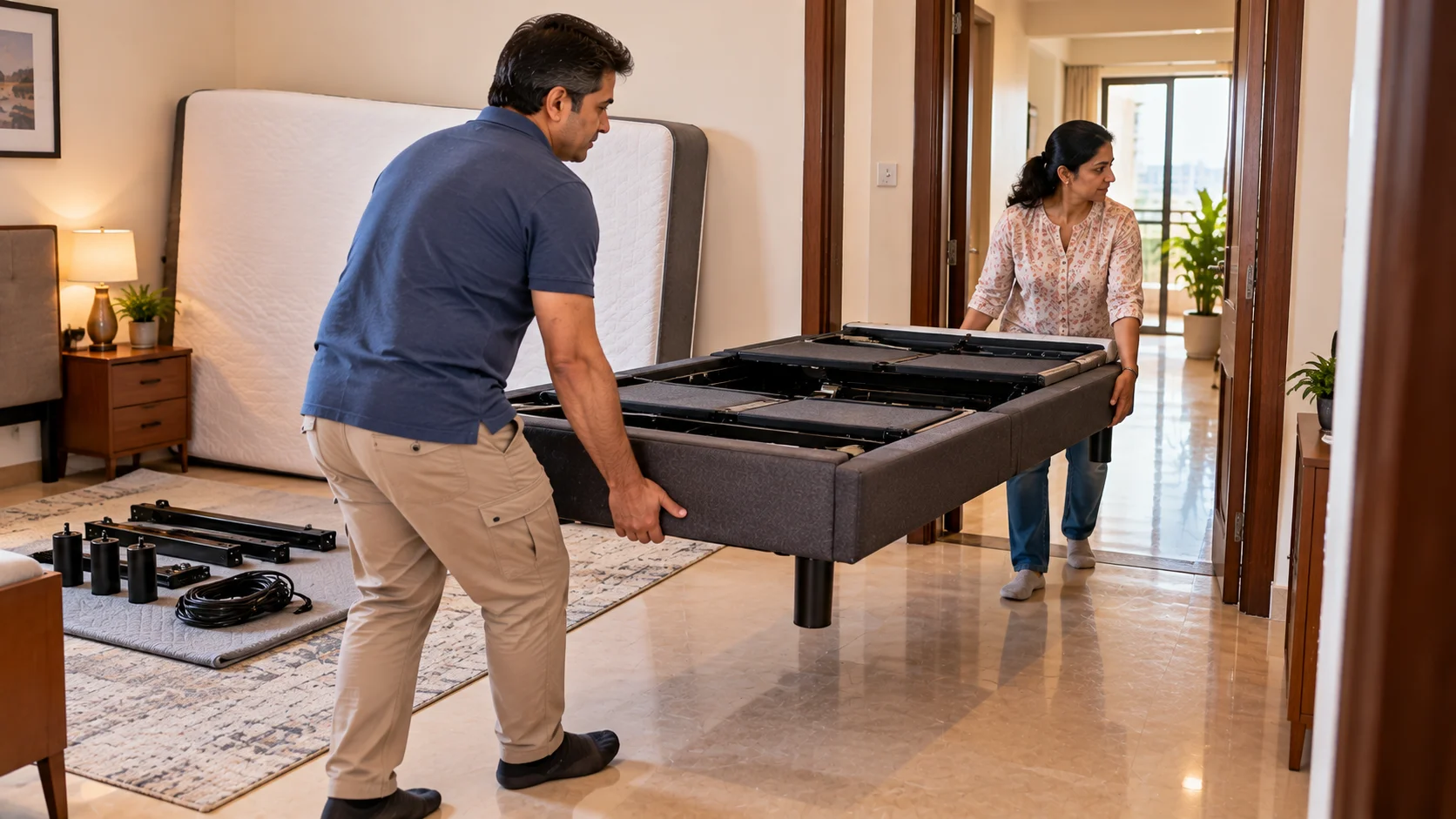
- At Zero G Beds, we can convert your existing bed into a customised adjustable bed based on your comfort and support requirements—without replacing your current bed.At Zero G Beds, we can convert your existing bed into a customised adjustable bed based on your comfort and support requirements—without replacing your current bed.
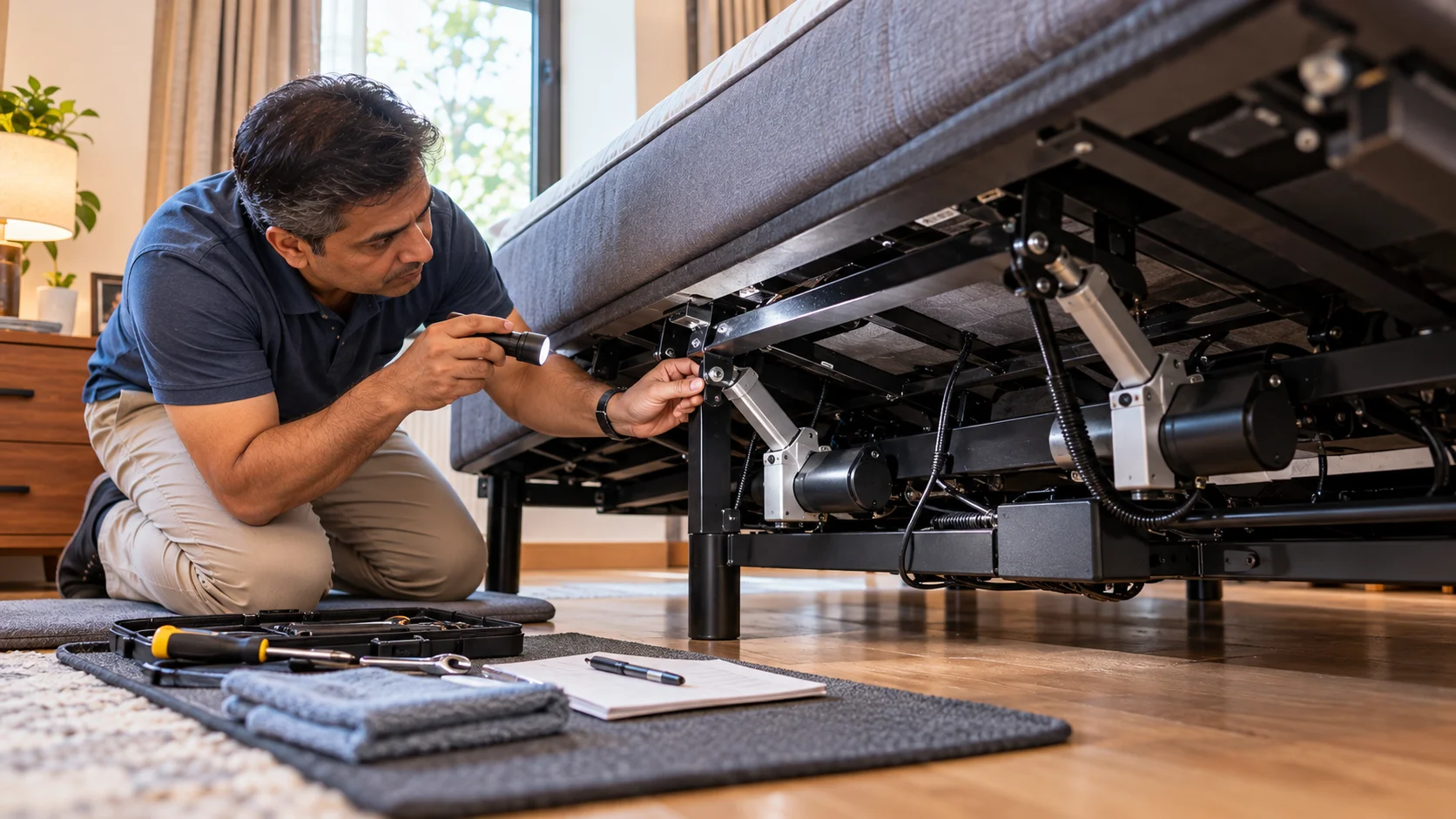
- Professional delivery within 1 week, along with installation and a complete product demonstration by trained technicians. 1 week, along with installation and a complete product demonstration by trained technicians.
- 15-year warranty for long-lasting performance and peace of mind.15-year warranty for long-lasting performance and peace of mind.
- Easy assistance via Call/WhatsApp: +91 9820138189 for product guidance, pricing, and support.
- CE-certified adjustable bed systems that meet internationally recognised European safety and quality standards. adjustable bed systems that meet internationally recognised European safety and quality standards.
- Trusted by families across India for reliable comfort and support solutions since 2003.
Ready for a mattress that actually supports you? Talk to us: +91 9820138189 or email info@zerogbeds.com
The bottom line
An orthopedic mattress isn’t a single, certified product — it’s a design approach aimed at even support and spinal alignment, and getting it right depends far more on genuine zoned construction, the right material, and a firmness matched to your body and sleeping position than on the word “orthopedic” printed on the label. The research is fairly clear that “as firm as possible” isn’t automatically the answer for back pain — supportive and well-distributed matters more.
Whether you’re managing chronic back discomfort, joint pain, or simply want mornings that don’t start with an ache, this is worth getting right — and our team is happy to talk through what fits your situation.
Tell us about your back or joint concern and we’ll recommend the right mattress today. Call/WhatsApp: +91 9820138189
References
- Kovacs FM, Abraira V, Peña A, et al. Effect of firmness of mattress on chronic non-specific low-back pain: randomised, double-blind, controlled, multicentre trial. The Lancet. 2003;362(9396):1599–1604. https://pubmed.ncbi.nlm.nih.gov/14630439/
- NIAMS (National Institute of Arthritis and Musculoskeletal and Skin Diseases) — Osteoarthritis Symptoms, Causes & Risk Factors. https://www.niams.nih.gov/health-topics/osteoarthritis
- Arthritis Foundation — Osteoarthritis: Symptoms, Diagnosis, and Treatment. https://www.arthritis.org/diseases/osteoarthritis