Back pain relief leans on leg elevation and a gentle full-body Zero Gravity angle. Snoring relief leans on upper-body elevation specifically. The good news is these two overlap more than they conflict: a moderate Zero Gravity setting, with slightly more head elevation than a pure back-pain setup would use, covers both needs reasonably well for most people. Here’s how to find that shared sweet spot.
It’s a common, very practical situation: you need your adjustable bed to ease back pain and quiet your snoring, and the two pieces of advice you’ve read seem to pull in slightly different directions. In reality, the overlap is larger than the conflict, and a single, well-chosen setup usually serves both needs without much compromise.
Why These Two Needs Mostly Overlap
Back pain relief depends mainly on the leg section, closing the gap under the lower back. Snoring relief depends mainly on the head section, keeping the airway open. Because an adjustable bed controls both independently, you’re rarely actually choosing one over the other -you’re simply making sure both sections are doing their specific job, rather than over-focusing on just one.
Side-by-Side: What Each Need Prioritizes
| Need | Primary Section | Typical Angle | What It’s Doing |
| Back pain relief | Legs, with moderate head support | Legs: 15–20° · Head: 10–15° | Closes the lumbar gap and redistributes weight |
| Snoring relief | Head and upper body | Head: 20–30° · Legs: optional | Keeps the airway open against gravity’s pull |
| Combined setup (recommended starting point) | Both, balanced | Legs: 15–18° · Head: 18–22° | Supports the lower back while still lifting the airway meaningfully |
Step-by-Step: Finding Your Combined Setting
- Start with your usual back-pain leg elevation -roughly 15 to 20 degrees, enough to close the lower-back gap.
- Raise the head section a few degrees higher than a pure back-pain setup would use, aiming for the upper end of the snoring-relief range rather than the lower end.
- Test for a few nights and track both factors -morning back stiffness and whether a partner notices less snoring -rather than judging on one dimension alone.
- Nudge head elevation up slightly if snoring persists, even if it means a marginally steeper angle than ideal for back pain alone; a small compromise here is usually unnoticeable for the back.
- Nudge leg elevation up slightly if back pain is the bigger concern that night, since the two sections can flex independently around your priority without starting over.
When the Two Needs Genuinely Pull in Different Directions
For most people the combined setting above works well, but a small number of cases do need a cleaner trade-off -for instance, severe sciatica that specifically needs a deep knee bend alongside only mild head elevation. In that situation, prioritize whichever issue is more disruptive to your health and sleep right now, and treat the other with a complementary habit instead: side-sleeping to reduce snoring if the frame’s head angle is limited by sciatica needs, for example. Our guide on best adjustable bed positions for sciatica and herniated disc pain relief covers the back-pain side of that specific trade-off.
Pillow Setup for a Combined Angle
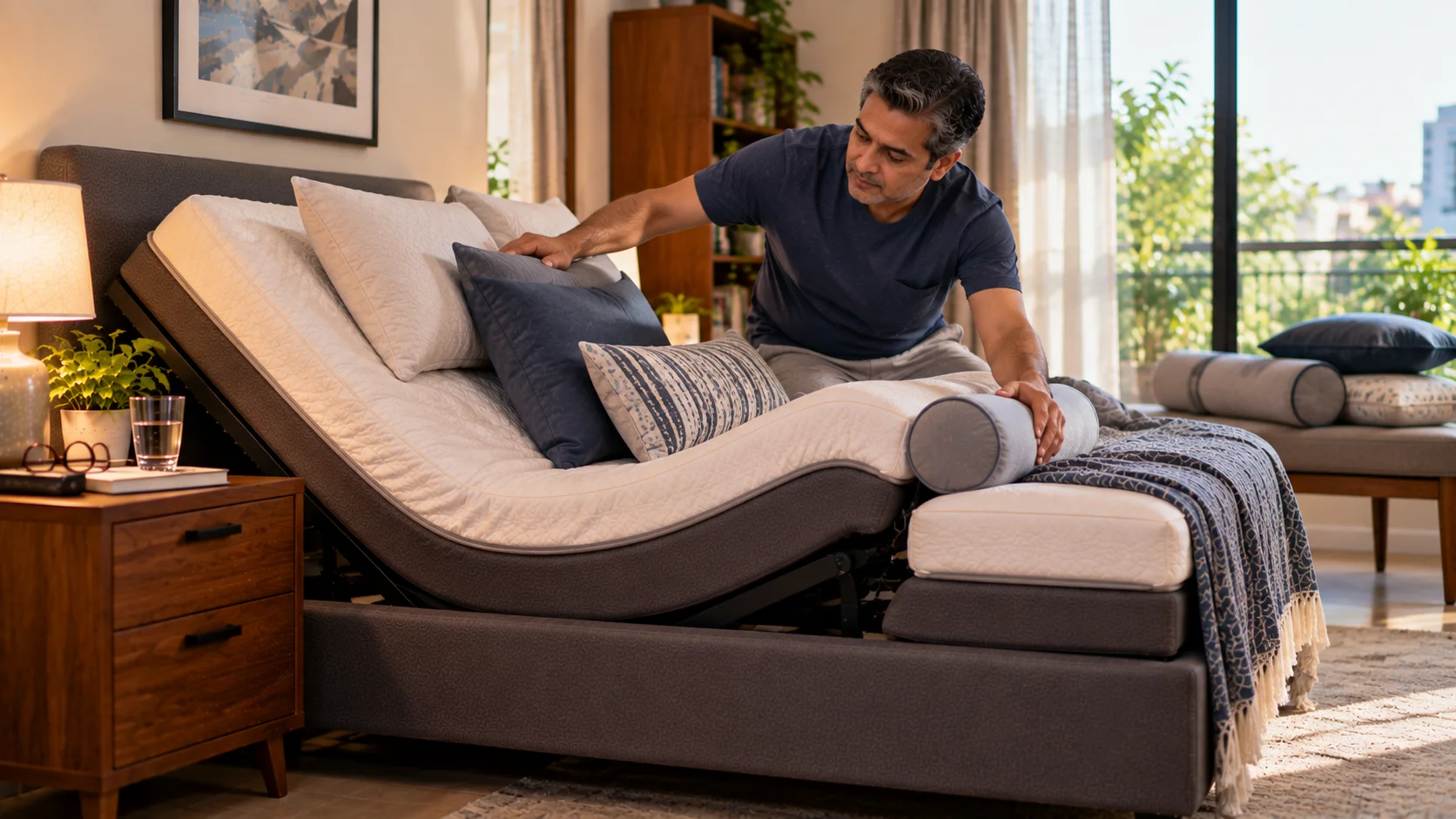
Because the head section sits a little higher in a combined setup than in a pure back-pain configuration, pillow thickness matters even more here. Follow the elevation-to-pillow-thickness guide in our DIY pillow and bolster setup guide, erring toward the slimmer end given the higher head angle involved in this combined setup.
Using Saved Presets for Each Scenario
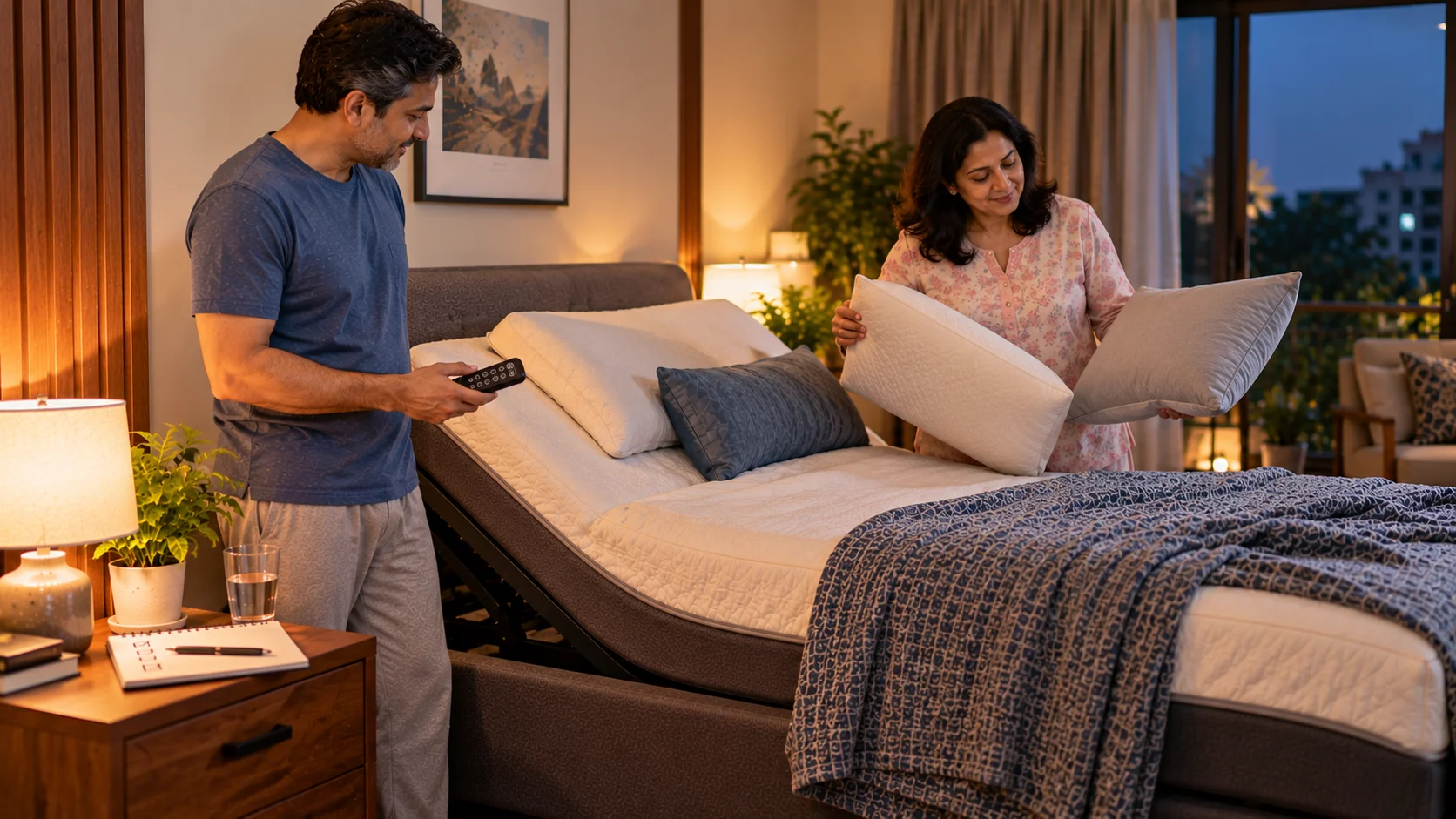
If your remote supports position memory, it’s worth saving the combined setting as your default, then saving a second preset biased slightly more toward back pain relief for nights when snoring isn’t a factor -such as when sleeping alone. Our complete guide to your adjustable bed remote walks through exactly how to set this up.
A Simple Two-Week Test
Give the combined setting two weeks before deciding whether further adjustment is needed. Keep a simple note each morning: back stiffness on a one-to-five scale, and whether your partner mentioned snoring that night. Most people find the combined setting needs only a one-or two-degree nudge in either direction once they have this kind of real feedback, rather than a dramatic change from the starting point above.
If You Sleep With a Partner Who Doesn’t Share Both Issues
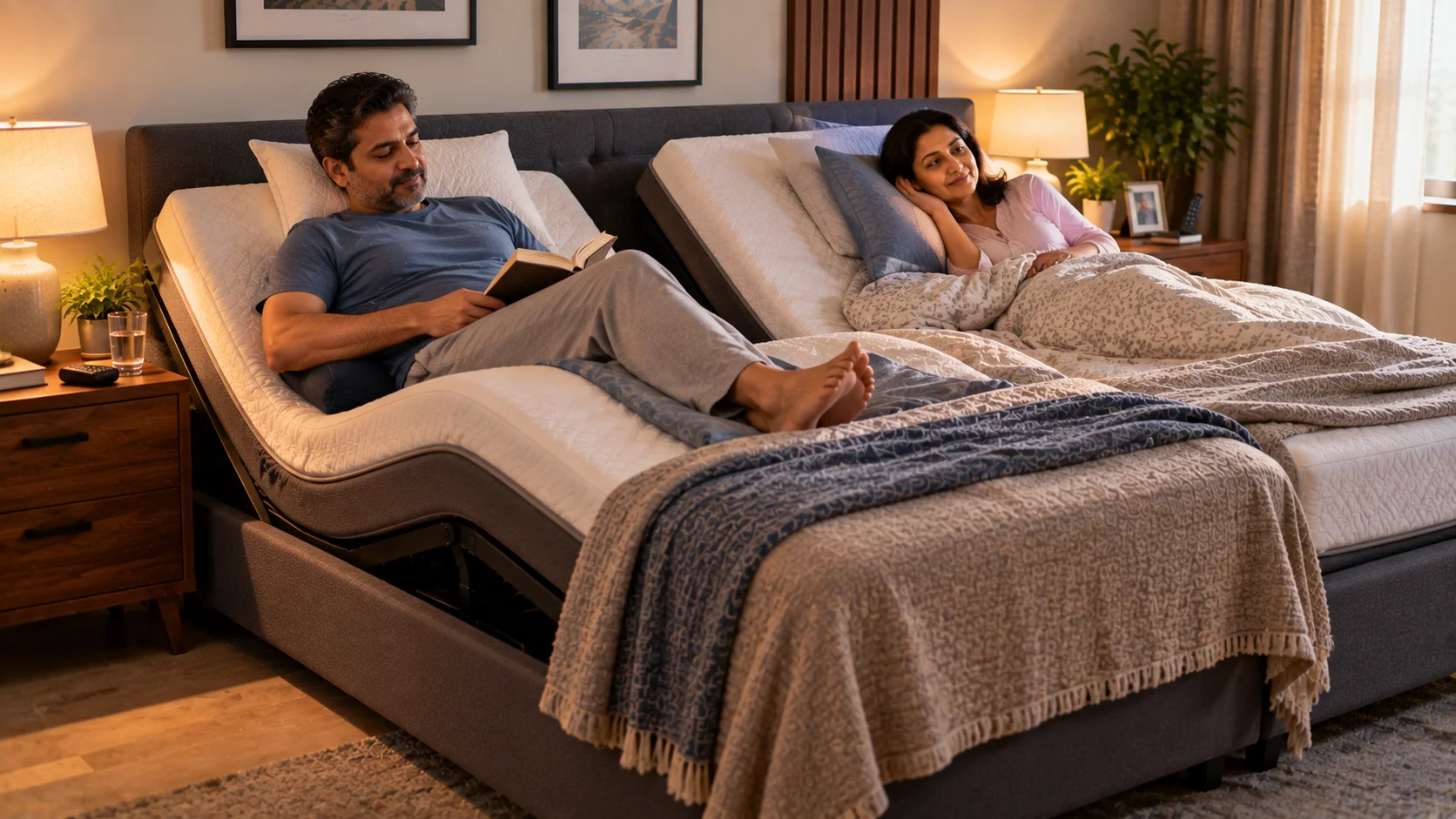
If only one of you deals with back pain and snoring while the other has neither concern, a shared single-adjustable frame forces an unnecessary compromise on the unaffected partner every night. This is one of the clearer cases where a dual-adjustable frame earns its higher cost, since the partner managing both issues can use the full combined setting described above while the other maintains whatever flatter or different position suits them, with neither side’s comfort depending on the other’s needs.
Back pain and snoring relief overlap more than they conflict on an adjustable bed, since the frame controls each contributing section independently. Start with a balanced leg-and-head setting, track both issues for two weeks, and nudge in whichever direction your own results point.
Explore our Adjustable Bed for Back Pain range or Adjustable Bed to Stop Snoring collection.
Related Reading: