
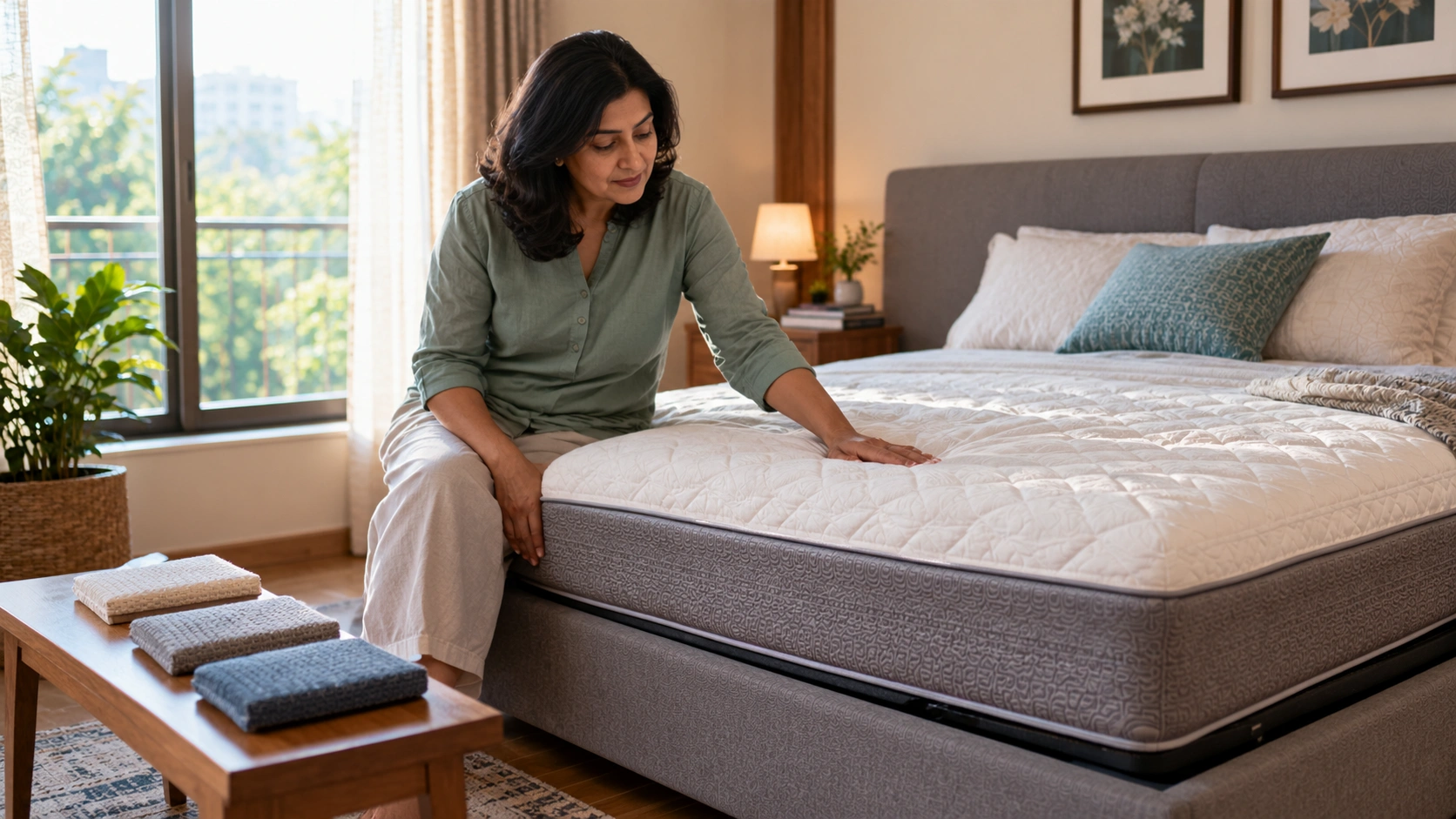
For most people with back pain, a medium to mediumfirm mattress performs best on an adjustable bed, offering enough cushioning to avoid new pressure points while still providing the support needed to hold the frame’s positioning correctly. The ideal firmness also shifts somewhat based on body weight and sleeping position, which this guide breaks down specifically.
Firmness is one of the most confusing mattress decisions, partly because “medium” or “firm” means something different at every brand, and partly because the right answer genuinely varies by individual. For an adjustable bed specifically, firmness also interacts with how well the mattress flexes at the frame’s hinge points making this decision a bit more nuanced than picking a firmness for a standard flat bed.
Why Firmness Matters Differently on an Adjustable Bed
On a standard flat bed, firmness is mainly about pressure distribution and spinal alignment while lying still. On an adjustable bed, firmness also affects how well the mattress bends at the knee and upperback flex points a mattress that’s too firm can resist the frame’s movement, while one that’s too soft may not hold its shape well when flexed, potentially creating a less supportive angle than the frame is actually set to.
Firmness Recommendations by Body Weight
| Body Weight Range | Recommended Firmness | Why |
| Under 60 kg | Medium to mediumsoft | Lighter body weight needs less firmness to avoid excessive sinking |
| 6090 kg | Mediumfirm | Balances cushioning with support for average body weight ranges |
| Above 90 kg | Firm, with adequate flexpoint durability | Heavier weight requires firmer support to prevent excessive sinking and maintain frame flex performance |
Firmness Recommendations by Sleep Position
- Back sleepers generally do well with mediumfirm support, which holds the spine’s neutral alignment without excessive sinking at the hips.
- Side sleepers typically need slightly softer cushioning at the hips and shoulders to avoid pressure points, making medium firmness often preferable to mediumfirm or firm.
- Combination sleepers who shift positions through the night usually do best with a true medium firmness that reasonably accommodates multiple positions rather than being optimized narrowly for just one.
- Stomach sleepers, generally not recommended for back pain regardless of mattress choice, typically need a firmer surface if this position is unavoidable, to prevent excessive sinking at the hips that arches the lower back.
How to Actually Test Firmness Before Buying
- Lie on your back and check for a gap under your lower back. If you can easily slide a hand into a gap with no resistance, the mattress may be too firm for your body weight and sleeping position.
- Lie on your side and check hip and shoulder sinking. Excessive sinking that makes the spine feel misaligned suggests toosoft firmness; minimal sinking that creates pressure discomfort suggests too firm.
- Test the mattress in an elevated position if possible, not just flat, since firmness can feel different once the frame is actually reclined a showroom test limited to flat lying doesn’t fully reflect adjustablebed use.
- Give any new firmness level at least two weeks before judging it, since your body needs time to adjust to a different support level than what you’re used to.
Material Matters as Much as Firmness Rating
Two mattresses with the same firmness rating can feel and perform quite differently depending on the material. Memory foam contours closely to the body but can feel warmer and slower to respond to movement, which some people prefer for pressure relief and others find less comfortable for combination sleeping. Natural latex offers a firmer, more responsive feel at a similar firmness rating, generally sleeps cooler, and tends to have excellent durability at the frame’s flex points. Our Natural Latex Mattress range is built specifically with this adjustableframe flex durability in mind.
What Happens If You Get Firmness Wrong
A mismatched firmness doesn’t just affect comfort it can actively work against the positioning benefits you bought the adjustable bed for in the first place. Too firm a mattress can prevent the frame’s Zero Gravity position from properly supporting your lower back curve, since the surface won’t yield enough to fill the gap the elevation is trying to close. Too soft, and you may sink through the support the frame’s angle is providing, effectively flattening out much of the benefit. This is exactly why mattress and frame need to be evaluated together, a point we cover in more depth in adjustable bed vs orthopedic mattress for back pain.
Adjusting Firmness Expectations for Shared Beds
For couples with different firmness preferences sharing a bed, a dualadjustable frame with independently zoned mattress options, or two separate mattresses joined into one frame, can resolve what would otherwise be an uncomfortable compromise. If a shared single mattress is the only option, choosing a medium firmness that reasonably accommodates both preferences, rather than optimizing heavily for one partner’s ideal firmness, tends to produce the best mutual outcome though this inherently means neither partner gets their absolute personal ideal, which is worth discussing openly rather than one partner silently adjusting to the other’s preference indefinitely.
Signs You Should Reconsider Your Current Firmness Choice
A few signals suggest it’s worth revisiting your mattress firmness even after the initial adjustment period has passed. Persistent morning stiffness despite correct frame positioning, visible sagging or indentation developing faster than expected for the mattress’s age, or a sense that the frame’s Zero Gravity position doesn’t feel as supportive as it once did can all indicate the firmness or material is no longer serving your needs well, whether due to natural wear over time or a genuine mismatch that wasn’t apparent during the initial purchase decision. In these cases, revisiting firmness rather than assuming the frame itself needs replacing is often the more targeted and costeffective fix.
Mattress firmness for back pain on an adjustable bed isn’t onesizefitsall it depends on your body weight, sleeping position, and how well the material flexes with the frame. Medium to mediumfirm is the right starting point for most people, but testing in an elevated position, not just flat, gives you the clearest picture before committing.
Explore our Natural Latex Mattress range, engineered for adjustableframe compatibility across a range of firmness needs.
Related Reading: