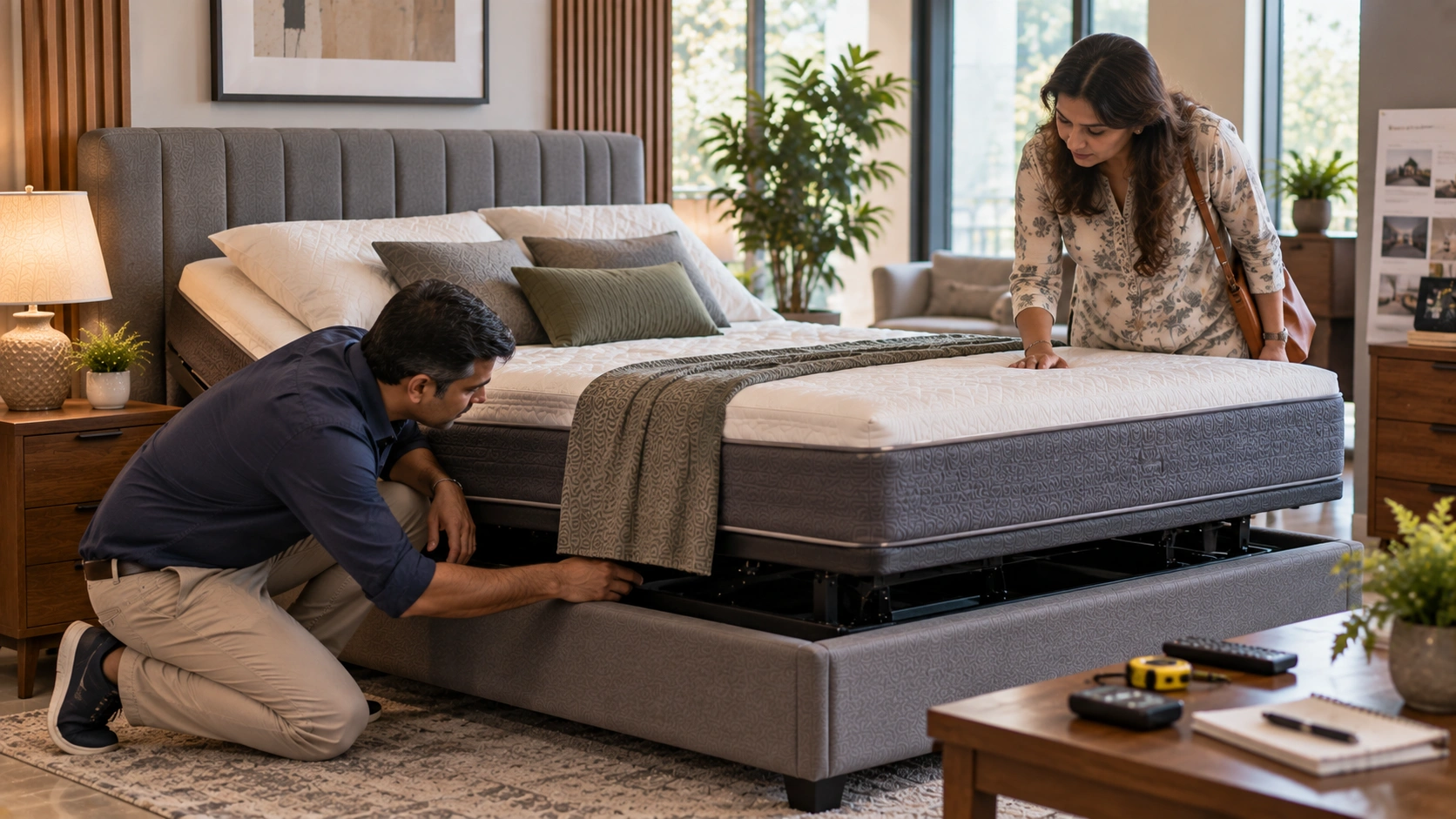

An adjustable bed can make home recovery easier by supporting comfortable positioning, reducing the effort needed to sit up or change position, and making everyday caregiving more manageable. This guide explains which features matter after surgery, how to choose the right setup, and when a patient bed for home may be more appropriate than a standard bed.
This guide provides general information about adjustable beds and home recovery after surgery.
It is not medical advice and should not replace instructions from your surgeon, physiotherapist, nurse or other healthcare professional.
Recovery looks different after every procedure. A person recovering from knee replacement may have very different positioning requirements from someone recovering from abdominal, spinal, cardiac or orthopedic surgery.
For some patients, simply getting comfortable on a conventional flat bed can become difficult. Sitting up may require abdominal or core effort, changing position may be painful, and getting in and out of bed can place unnecessary strain on the recovering body.
This is where an adjustable bed can become useful.
So, are adjustable beds good for post-surgery recovery at home?
They can be, particularly when the patient needs frequent position changes, has difficulty getting in or out of bed, or requires assistance from a caregiver.
The main benefit is not that the bed “heals” the patient, but that it can make positioning, resting and everyday activities easier during recovery.
This guide explains how adjustable positioning can help, which features are worth considering, when an electric bed makes sense, what caregivers should check and common mistakes to avoid after surgery.
Talk to a comfort advisor — free, no obligation. Call or WhatsApp: +91 9820138189. Tell us about the patient’s recovery requirements and we’ll help you understand the right adjustable-bed options. Email: info@zerogbeds.com
Why Does the Right Bed Matter After Surgery?
After surgery, normal movements that were previously effortless can temporarily become difficult.
Sitting upright, turning onto one side, lifting the legs, getting out of bed or moving from lying to sitting can require more effort than usual.
Depending on the procedure, a patient may also have restrictions on bending, twisting, weight-bearing or putting pressure on a particular area.
A conventional bed offers very limited control over these movements.
An adjustable bed allows the sleeping surface to change position, which can reduce the need for the patient to perform every movement independently.
For example, raising the back section can help a patient move toward a sitting position without pulling aggressively on the abdominal muscles or using excessive arm strength.
However, the exact movement that is appropriate depends on the surgery.
The safest approach is to follow the surgeon or physiotherapist’s instructions rather than assuming that a particular bed position is suitable for every recovery.
How Can an Adjustable Bed Help During Post-Surgery Recovery?
An adjustable bed is most useful when it makes a difficult everyday movement simpler.
Easier sitting up
A patient may find it uncomfortable to move directly from lying flat to sitting upright.
Raising the upper section gradually can provide a more controlled transition.
This can be particularly useful when the patient has temporary weakness or movement restrictions.
Easier position changes
Patients may need to change positions during the day and night.
A motorised bed allows the patient or caregiver to make small adjustments without manually lifting or repositioning the entire body.
More comfortable resting
After surgery, the position that felt comfortable before the procedure may no longer be suitable.
Being able to raise the head, adjust the legs or create a supported reclined position gives the patient more options.
Easier eating and reading
Recovery does not mean spending every hour lying flat.
Patients may want to eat, read, watch television or speak with family while sitting in bed. An adjustable back section can make these activities more comfortable.
Reduced caregiver effort
When a caregiver is helping a patient reposition, a motorised bed can reduce the amount of physical effort required.
This can be particularly important when the patient is heavier, has limited mobility or requires frequent assistance.
For families considering an adjustable bed for patients at home, these everyday benefits can be more important than advanced features such as app control or massage.
Which Surgeries May Benefit From an Adjustable Bed?
An adjustable bed may be considered during recovery from many different procedures, but the suitability depends on the patient’s specific medical instructions.
It may be useful for people recovering from:
- Orthopedic procedures
- Knee or hip replacement
- Back or spine surgery
- Abdominal surgery
- Certain cardiac procedures
- Major injuries
- Joint procedures
- Procedures involving temporary mobility restrictions
However, the bed does not determine the recovery position.
For example, a patient who has undergone hip surgery may have specific restrictions regarding hip movement, while someone recovering from abdominal surgery may need to avoid movements that strain the surgical area.
The bed should therefore be treated as a positioning tool, not a substitute for professional rehabilitation guidance.
What Is the Best Position After Surgery?
There is no universal post-surgery sleeping position.
The correct position depends on the type of surgery, incision location, mobility restrictions, pain level and instructions from the medical team.
In general, the most useful feature of an adjustable bed is the ability to make small, controlled adjustments rather than forcing the patient into one fixed position.
A patient may use:
Slight upper-body elevation
This can make sitting, eating or reading easier and may be more comfortable than lying completely flat.
Semi-reclined positioning
Some patients prefer a supported reclined position during the early recovery period.
Leg elevation
Depending on the surgery and medical advice, raising the legs may provide comfort. However, patients should not assume that leg elevation is appropriate after every procedure.
Flat position
Sometimes the simplest position is still the right one. The adjustable function does not need to be used constantly.
The goal is to match the bed position to the recovery instructions, rather than using every available adjustment.
Adjustable Bed vs. Standard Bed After Surgery
A standard bed can be perfectly adequate for someone whose mobility is good and whose surgery does not create significant positioning challenges.
An adjustable bed becomes more useful when the patient needs assistance.
| Requirement | Standard Bed | Adjustable Bed |
| Raise upper body | Limited | Yes |
| Adjust leg position | Limited | Yes |
| Assist sitting up | Patient/caregiver effort | Motorised adjustment |
| Frequent position changes | More difficult | Easier |
| Remote control | No | Available on suitable models |
| Caregiver assistance | Often higher | Can be reduced |
| Temporary recovery use | Possible | Often more convenient |
The decision should therefore be based on recovery requirements rather than the assumption that every post-surgery patient needs a hospital-style bed.
If you want a broader comparison of patient-bed options, Zero G Beds’ guide to choosing the right patient bed for home recovery covers adjustability, mattress support, caregiver convenience and different types of patient beds.
What Features Should You Look For After Surgery?
A long list of specifications can make choosing an electric bed for patients unnecessarily complicated.
Focus on the functions that will actually be used during recovery.
- Motorised head adjustment
This is one of the most useful functions because it allows the upper body to be raised without manually lifting the patient.
- Leg adjustment
A movable leg section can provide additional positioning options, depending on the patient’s recovery requirements.
- Simple remote control
The patient or caregiver should be able to understand the controls without repeatedly referring to a manual.
- Smooth movement
The bed should move gradually and predictably rather than making sudden movements.
- Appropriate height
If the patient has difficulty standing, the bed height can affect how easily they can get in and out.
If caregivers regularly assist with dressing, feeding or other activities, height adjustment can also make their work easier.
- Suitable mattress
The mattress must be compatible with the adjustable mechanism. A mattress that does not flex correctly can restrict movement and reduce comfort.
- Weight capacity
Always confirm the manufacturer’s rated capacity for the specific model.
- Backup and service support
An adjustable bed contains motors and electrical components. Warranty and after-sales support therefore matter more than they would with a conventional bed.
When Should You Choose a Patient Bed Instead of a Regular Adjustable Bed?
Not every post-surgery patient needs a medical-style bed.
A regular adjustable bed may be suitable when the main requirement is comfort and positioning.
A more specialised patient bed for home may be appropriate when the person also requires greater caregiver support, easier transfers, height adjustment or other patient-care features.
Consider a patient-focused bed when:
- The patient has significantly reduced mobility
- A caregiver provides daily assistance
- The patient spends most of the day in bed
- Frequent position changes are required
- Getting in and out of bed is difficult
- Additional safety features are needed
- The bed will be used beyond the immediate recovery period
Zero G Beds’ complete guide to buying a home care bed in India also explains how families can compare patient beds, adjustable beds and home-care requirements.
How Can Caregivers Make Recovery Easier?
The bed is only one part of the recovery setup.
Caregivers should also think about what the patient needs within easy reach.
Keep frequently used items such as:
- Water
- Medicines as prescribed
- Phone
- Remote control
- Tissues
- Reading glasses
- Personal care items
- Emergency contact information
within a safe and reachable location.
The walking path around the bed should also remain clear.
Loose carpets, electrical cables, furniture and other obstacles can make getting out of bed more difficult and increase the risk of a fall.
If the patient requires assistance to stand or walk, caregivers should follow the transfer method taught by the healthcare professional rather than trying to improvise.
How Should You Set Up the Bed Before the Patient Returns Home?
Preparing the room before discharge can prevent unnecessary stress.
Check the bed location
Place the bed where the patient can access necessary items and where the caregiver has enough room to assist.
Test the remote
Make sure every required movement works correctly.
Check the mattress
Confirm that it is properly positioned and compatible with the bed.
Check the power connection
Keep electrical cables organised and away from walking paths.
Test the height
If the bed has height adjustment, identify a practical position for getting in and out.
Keep the remote accessible
The remote should be easy for the patient or caregiver to reach without stretching.
Demonstrate the controls
Everyone who will operate the bed should understand the basic functions before the patient arrives home.
Zero G Beds’ guide to using electric adjustable beds safely provides additional information about remote controls, safe placement and basic precautions.
Need help preparing a home-care setup? Call or WhatsApp +91 9820138189 or email info@zerogbeds.com.
Common Mistakes After Surgery
Using the bed position without checking medical instructions
A comfortable position is not necessarily medically appropriate for every surgery.
Raising the bed too quickly
Patients may feel unstable if the position changes suddenly.
Choosing features instead of usability
A complicated remote or unnecessary smart features may provide little value if the patient only needs simple positioning.
Ignoring bed height
A bed can be comfortable for sleeping but difficult to use when standing up.
Choosing the wrong mattress
An unsuitable mattress may interfere with the adjustable mechanism.
Forgetting caregiver requirements
The patient isn’t the only person using the bed. Caregivers should also be able to operate it safely.
Assuming a hospital bed is always necessary
Some patients only need positioning support, while others require a more complete home-care solution.
Treating the bed as part of medical treatment
An adjustable bed can support comfort and positioning, but it does not replace medication, physiotherapy, wound care or medical follow-up.
How Long Should You Use an Adjustable Bed After Surgery?
There is no standard number of days.
Some patients may only need additional positioning support for a few weeks. Others may continue using the bed because it remains comfortable or because their mobility takes longer to recover.
The useful question is not:
“How long should everyone use an adjustable bed?”
Instead, ask:
“How long will this patient benefit from easier positioning and safer daily movement?”
If the patient’s needs change during recovery, the bed configuration may need to change as well.
A temporary recovery can therefore be one reason families choose a flexible hospital bed for patients at home, while long-term mobility requirements may justify a more comprehensive setup.
Can an Adjustable Bed Help With Sleep During Recovery?
Sleep can become difficult after surgery because of discomfort, medication schedules, changes in routine and difficulty finding a suitable position.
An adjustable bed cannot guarantee better sleep, but it can provide more positioning options.
For example, a patient may find that lying completely flat is uncomfortable but a slightly elevated position is easier to tolerate.
Zero G Beds’ guide to how adjustable beds can improve sleep quality explains how adjustable positioning can support different sleeping preferences and comfort needs.
The important point is that comfort should be individualised. A position that helps one patient sleep may be unsuitable for another.
When Should You Ask the Doctor or Physiotherapist?
Always ask the medical team when you are uncertain about positioning after surgery.
Professional guidance is especially important if the patient has:
- Specific movement restrictions
- A spinal or orthopedic procedure
- Hip precautions
- Significant pain
- Wound or incision concerns
- New swelling
- Dizziness when changing position
- Difficulty breathing
- Problems standing or walking
- Instructions about weight-bearing
Don’t use an adjustable bed to experiment with positions that contradict post-operative instructions.
Why Choose Zero G Beds for Post-Surgery Recovery?
Zero G Beds offers adjustable and patient-bed solutions designed for home comfort, positioning and caregiving requirements.
For post-surgery patients, the right configuration depends on mobility, expected recovery duration, room setup, caregiver involvement and the type of positioning required.
Zero G Beds provides:
- Adjustable positioning
- Remote-controlled operation
- Patient beds for home care
- Mattress and configuration guidance
- Professional delivery and installation
- Product demonstration by trained technicians
- After-sales assistance
- 15-year warranty
- CE-certified adjustable bed systems
- Experience serving families in India since 2003
If you’re comparing an adjustable bed for patients at home, an electric patient bed or a more specialised home-care bed, the team can help you understand which configuration matches the actual requirement.
Call or WhatsApp: +91 9820138189
Email: info@zerogbeds.com
Quick Post-Surgery Adjustable Bed Checklist
Before buying or setting up the bed, check:
- Surgery-specific positioning instructions are understood
- Head adjustment is smooth and easy to operate
- Leg adjustment is suitable for the patient’s needs
- Mattress is compatible with the bed
- Bed height is appropriate
- Weight capacity is confirmed
- Remote control is simple to use
- Caregiver has been shown how to operate the bed
- Walking area around the bed is clear
- Power cables are safely positioned
- Frequently used items are within reach
- Warranty and service support are understood
- The patient’s doctor or physiotherapist has approved any necessary positioning restrictions
Get Help Choosing the Right Bed for Home Recovery
The best recovery bed is not necessarily the most expensive or the one with the most functions.
For many patients, the most valuable features are surprisingly simple: easy positioning, smooth movement, appropriate height, a compatible mattress and controls that the patient or caregiver can use confidently.
If recovery is expected to be short, consider how long the bed will realistically be needed. If mobility is expected to remain limited, think beyond the immediate surgery and choose a setup that can adapt to changing care requirements.
For a personalised recommendation, Call/WhatsApp: +91 9820138189 | Email: info@zerogbeds.com
The Bottom Line
An adjustable bed can make post-surgery recovery at home more manageable by making it easier to change position, sit up, rest comfortably and perform everyday activities.
However, the bed should support the recovery plan rather than dictate it.
The right choice depends on the type of surgery, mobility restrictions, caregiver involvement, expected recovery time and the patient’s home environment.
For someone who only needs occasional positioning support, a standard adjustable bed may be enough. For someone requiring regular assistance and patient-care features, a dedicated patient bed for home may be more appropriate.
Before making a purchase, prioritise safe positioning, simple controls, mattress compatibility, appropriate bed height, weight capacity and reliable after-sales support over unnecessary features.
Need help choosing a post-surgery bed? Call/WhatsApp +91 9820138189 or email info@zerogbeds.com.
References
- American Academy of Orthopaedic Surgeons — patient recovery and postoperative care guidance.
- MedlinePlus — postoperative care and recovery information.
- NHS — recovery and rehabilitation guidance following surgery.
- Zero G Beds — patient bed and home recovery resources.
- Zero G Beds — electric adjustable bed safety guidance.