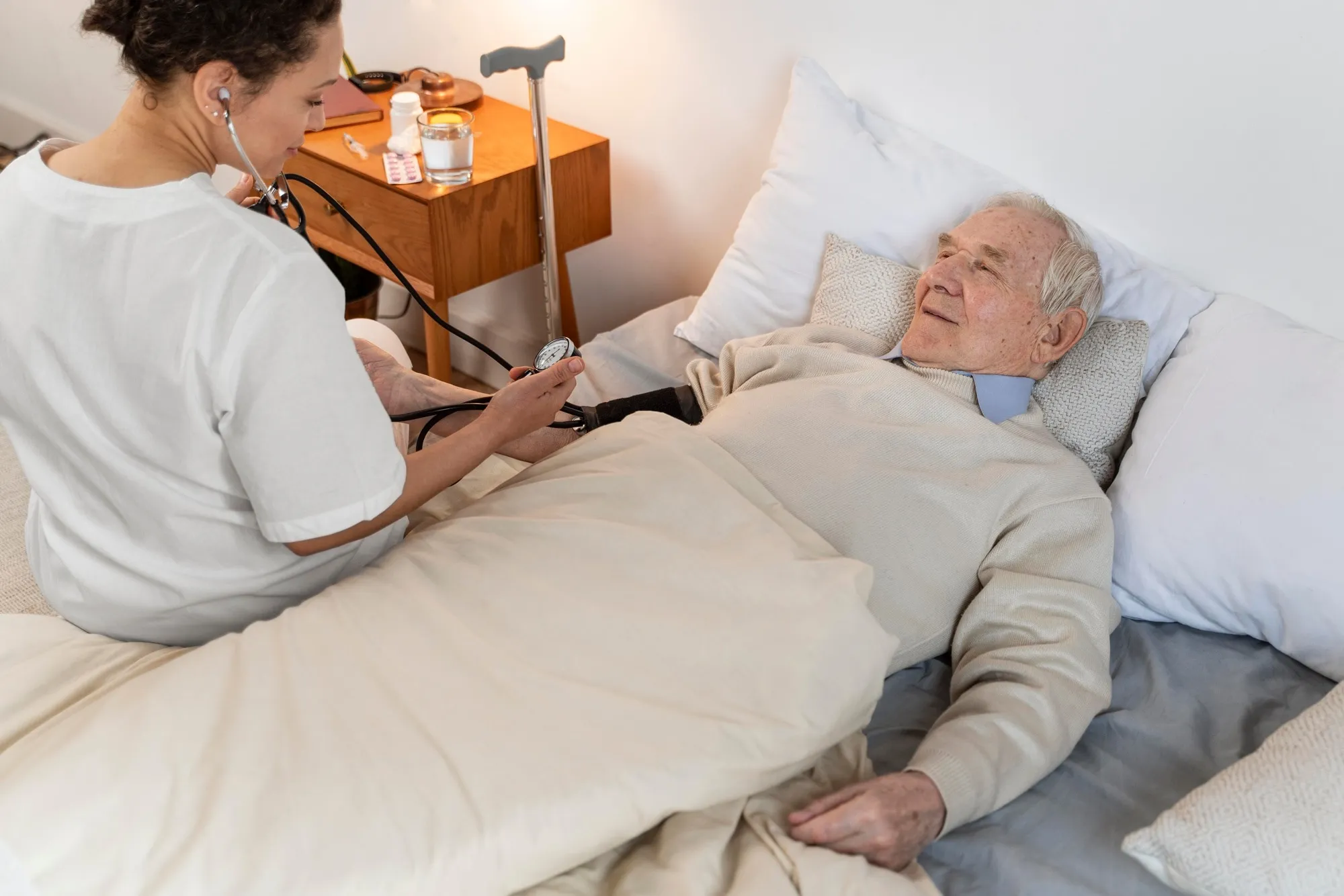
A stroke can change mobility, balance, strength and everyday independence very quickly. During recovery at home, the right bed can make positioning, resting and caregiver assistance easier, but it should be selected around the patient’s actual abilities and rehabilitation plan.
This guide explains how an adjustable bed can support day-to-day stroke recovery at home, which positions and features may be useful.
What caregivers should consider, and where an adjustable bed should not be treated as a substitute for professional rehabilitation or medical care.
If you are choosing a bed for a stroke patient at home, call or WhatsApp +91 9820138189 or email info@zerogbeds.com. Zero G Beds can help you compare suitable configurations based on the patient’s mobility, room setup and caregiver requirements.
Why Bed Position Matters During Stroke Recovery
Stroke recovery can involve weakness or paralysis on one side of the body, reduced balance, difficulty sitting or standing, changes in sensation and problems with everyday movement.
For someone spending considerable time in bed, remaining in one position for too long can also create discomfort and increase the importance of regular repositioning and skin care.
This is why the bed becomes more than somewhere to sleep.
A suitable bed for patients can make it easier to change positions, sit more upright for meals or activities, and transition between resting and other daily routines.
An adjustable bed can make some of these changes easier because the mattress platform can be repositioned using a remote rather than requiring the caregiver to manually reposition the entire patient.
However, positioning after a stroke should follow the recommendations of the patient’s doctor, physiotherapist or occupational therapist.
The appropriate position can depend on the type of stroke, physical limitations and stage of recovery.
Can an Adjustable Bed Help Stroke Recovery at Home?
An adjustable bed does not treat the stroke itself.
Its value is mainly practical: it can provide a more flexible environment for rest, positioning and everyday care.
For example, an adjustable bed may make it easier to:
- Raise the upper body for eating or drinking
- Move between lying and sitting positions
- Change the position of the legs
- Support more comfortable resting positions
- Make some caregiver tasks easier
- Reduce the need for repeated manual repositioning
- Provide easier access for activities performed in bed
- Help the patient participate more independently where appropriate
This is particularly relevant for families looking for an adjustable bed for patients at home, because the requirements can be very different from those of someone purchasing an adjustable bed purely for sleep comfort.
Existing Zero G Beds guidance on caring for a bedridden patient at home also covers practical home-care considerations such as positioning, hygiene and everyday patient support.
What Is the Best Sleeping Position After a Stroke?
There is no single sleeping position that is appropriate for every stroke patient.
The correct position depends on the individual’s affected side, muscle tone, movement ability, pain, swallowing or breathing concerns and the recommendations of their rehabilitation team.
A physiotherapist may recommend specific positioning techniques to support alignment and reduce complications.
- Supported Back-Lying Position
Some patients may spend part of their rest time lying on their back with appropriate support.
However, simply placing a patient flat on a mattress is not necessarily enough.
Depending on the individual’s needs, pillows or positioning aids may be used to support the head, arms and legs and maintain a comfortable, stable alignment.
The affected arm may require particular attention because allowing it to hang unsupported can create discomfort or place unnecessary stress on the shoulder.
- Side-Lying Position
Side-lying can be useful for repositioning and pressure management when appropriate.
The patient’s rehabilitation professional may recommend a particular side and specific support arrangement.
For example, pillows may be used to support the upper arm, legs or other areas so that the body remains stable rather than allowing the patient to roll into an uncomfortable position.
Caregivers should avoid improvising complex positioning techniques if they have not been shown how to perform them.
- Semi-Upright Position
A raised upper-body position can be useful for activities such as eating, reading, communicating or watching television.
An adjustable bed allows the caregiver or patient, where appropriate, to gradually raise the upper section rather than manually pulling the patient into a sitting position.
This can be particularly convenient during daytime care.
- Supported Sitting
For some stroke patients, sitting is an important part of rehabilitation.
However, sitting independently may not initially be safe.
The patient should only attempt unsupported sitting or transfers when the rehabilitation team considers it appropriate.
An adjustable bed can assist with moving toward a more upright position, but the bed itself does not guarantee that the patient has sufficient balance or strength to sit safely.
How an Adjustable Bed Supports Daily Stroke Care
The biggest advantage is not a particular angle.
It is the ability to change the patient’s position more easily.
Consider a typical day.
A patient may begin lying down for rest, then need to sit more upright for breakfast. Later, the upper body may need to be lowered for rest, followed by another raised position for reading or conversation.
On a traditional flat bed, each change may require additional pillows or more physical assistance.
With an adjustable bed, the position can be changed using the motorised controls.
For caregivers, this can make routine activities more manageable.
Existing Zero G Beds guidance on caring for bedridden patients at home also discusses positioning, circulation, hygiene and the practical role adjustable beds can play in home care.
For families comparing a patient bed for home, the important question is therefore not simply “Does it move?” but “Does it make the patient’s normal daily routine easier and safer?”
Need help comparing options? Call or WhatsApp +91 9820138189 or email info@zerogbeds.com.
Adjustable Bed Features That Matter for Stroke Patients
Not every feature advertised on an adjustable bed is equally useful for stroke recovery.
Easy Remote Control
A simple remote can be extremely valuable.
If the patient has weakness, reduced grip strength or difficulty coordinating movements, a complicated control system may become frustrating.
Look for clearly labelled buttons and controls that can be reached easily.
If a caregiver will normally operate the bed, they should also be able to understand the controls quickly.
Head and Leg Adjustment
Independent head and leg adjustment gives caregivers more flexibility when positioning the patient.
It also allows the patient to move between different resting and activity positions.
Smooth Motor Movement
The bed should move gradually rather than making sudden or uncomfortable movements.
This is particularly important for patients with limited mobility who may not be able to compensate quickly if their position changes unexpectedly.
Suitable Bed Height
Getting into and out of bed can be challenging after a stroke.
A suitable bed height can make transfers easier, although the correct transfer technique should be demonstrated by a trained professional.
The ideal height is not necessarily the same for every patient.
Appropriate Weight Capacity
Always check the rated capacity of the specific bed.
Do not assume that every adjustable model has the same capacity.
The rating should account for the patient and any additional load the manufacturer permits.
Mattress Compatibility
The mattress needs to work correctly with the adjustable mechanism.
A mattress that is too rigid may restrict movement, while an unsuitable mattress can affect comfort and the operation of the bed.
Safety and Service Support
For a motorised electric bed for patients, after-sales support matters.
If the bed becomes part of everyday home care, a motor or remote problem can become a significant inconvenience.
Ask about warranty coverage, servicing and what happens if the bed develops a technical problem.
Should Stroke Patients Use the Zero Gravity Position?
Zero Gravity is a popular adjustable-bed position that raises both the upper body and legs.
It can be comfortable for some users, but it should not automatically be considered a required position for stroke recovery.
Stroke patients have very different physical needs.
One patient may benefit from a particular supported position recommended by their rehabilitation team, while another may require a completely different arrangement.
Therefore, don’t select a bed simply because it advertises Zero Gravity.
Instead, prioritise:
- Independent positioning
- Smooth adjustment
- Simple controls
- Appropriate mattress support
- Suitable bed height
- Patient safety
- Caregiver usability
Zero G Beds also explains the mechanics and intended comfort benefits of the Zero Gravity sleeping position for people researching adjustable-bed positioning.
For stroke recovery, however, the position should be used only when it is appropriate for the individual.
How Caregivers Can Make Bed Positioning Safer
A caregiver should not assume that moving a patient is simply a matter of pressing a remote button.
Before changing the position, consider:
Is the patient comfortable?
Ask whether there is pain, dizziness, pressure or discomfort.
Is the affected side properly supported?
After a stroke, one side may have considerably less strength or control.
Are the patient’s feet, arms and legs positioned safely?
Check that nothing is trapped between moving sections.
Is the remote accessible?
If the patient can safely operate the bed, place the remote where it can be reached easily.
Does the patient understand the movement?
Explain what you are about to do before changing the bed position.
Has the rehabilitation team recommended a specific position?
Follow their instructions rather than creating a new positioning routine independently.
Adjustable Bed vs. Traditional Bed for Stroke Recovery
| Feature | Adjustable Bed | Traditional Flat Bed |
| Head elevation | Adjustable | Requires pillows |
| Leg elevation | Adjustable | Requires pillows |
| Position changes | Motorised | Mostly manual |
| Sitting position | Easier to create | More caregiver assistance |
| Remote control | Available on electric models | Not available |
| Caregiver convenience | Generally higher | More manual effort |
| Position repeatability | Easier | Depends on pillows |
| Patient independence | May improve where appropriate | More limited |
The important point is that an adjustable bed is an assistive tool, not a rehabilitation device.
A flat bed may be perfectly appropriate for some patients.
An adjustable bed becomes more valuable when frequent position changes, limited mobility or caregiver assistance make conventional positioning difficult.
What Stroke Patients and Caregivers Should Avoid
Don’t pull the patient by the affected arm
A weak arm should not be treated as a handle.
Caregivers should learn the correct transfer and repositioning techniques from a physiotherapist or other qualified professional.
Don’t force a position
If the patient experiences pain or discomfort, stop and seek appropriate guidance.
Don’t assume more elevation is better
A maximum-angle position is not automatically safer or more comfortable.
Don’t leave the remote somewhere inaccessible
If the patient can safely control the bed, the remote should be within easy reach.
Don’t ignore pressure and skin checks
Patients with reduced mobility may need regular repositioning and skin inspection according to their care plan.
Don’t use the bed as a replacement for rehabilitation
An adjustable bed can support daily care, but physiotherapy, occupational therapy, speech therapy and other rehabilitation interventions may remain important depending on the patient’s condition.
When Is a Hospital-Style Adjustable Bed More Appropriate?
Families often use the terms “adjustable bed” and “hospital bed” interchangeably, but they are not necessarily identical.
A conventional electric adjustable bed may be suitable when the primary requirements are comfortable head and leg positioning.
A more specialised Hospital Adjustable Bed may be considered when the patient requires additional care-oriented features.
The decision should depend on the patient’s actual needs.
Consider a more care-focused setup when the patient:
- Has very limited mobility
- Requires frequent caregiver assistance
- Spends most of the day in bed
- Has significant difficulty getting in or out
- Requires more extensive positioning support
- Needs equipment designed specifically around home-care routines
Zero G Beds’ home-care range is designed around adjustable positioning for patients, seniors and people with limited mobility.
If you’re unsure which category fits your situation, call or WhatsApp +91 9820138189 or email info@zerogbeds.com.
How to Choose a Stroke Recovery Bed for Home
Before purchasing, write down the patient’s actual daily requirements.
Step 1: Understand mobility
Can the patient sit independently?
Can they stand?
Can they transfer from the bed?
Can they operate a remote?
Step 2: Understand caregiver involvement
Will one person provide care or several family members?
How frequently will the patient need repositioning?
Will caregivers need to assist with meals, dressing or other activities in bed?
Step 3: Consider the room
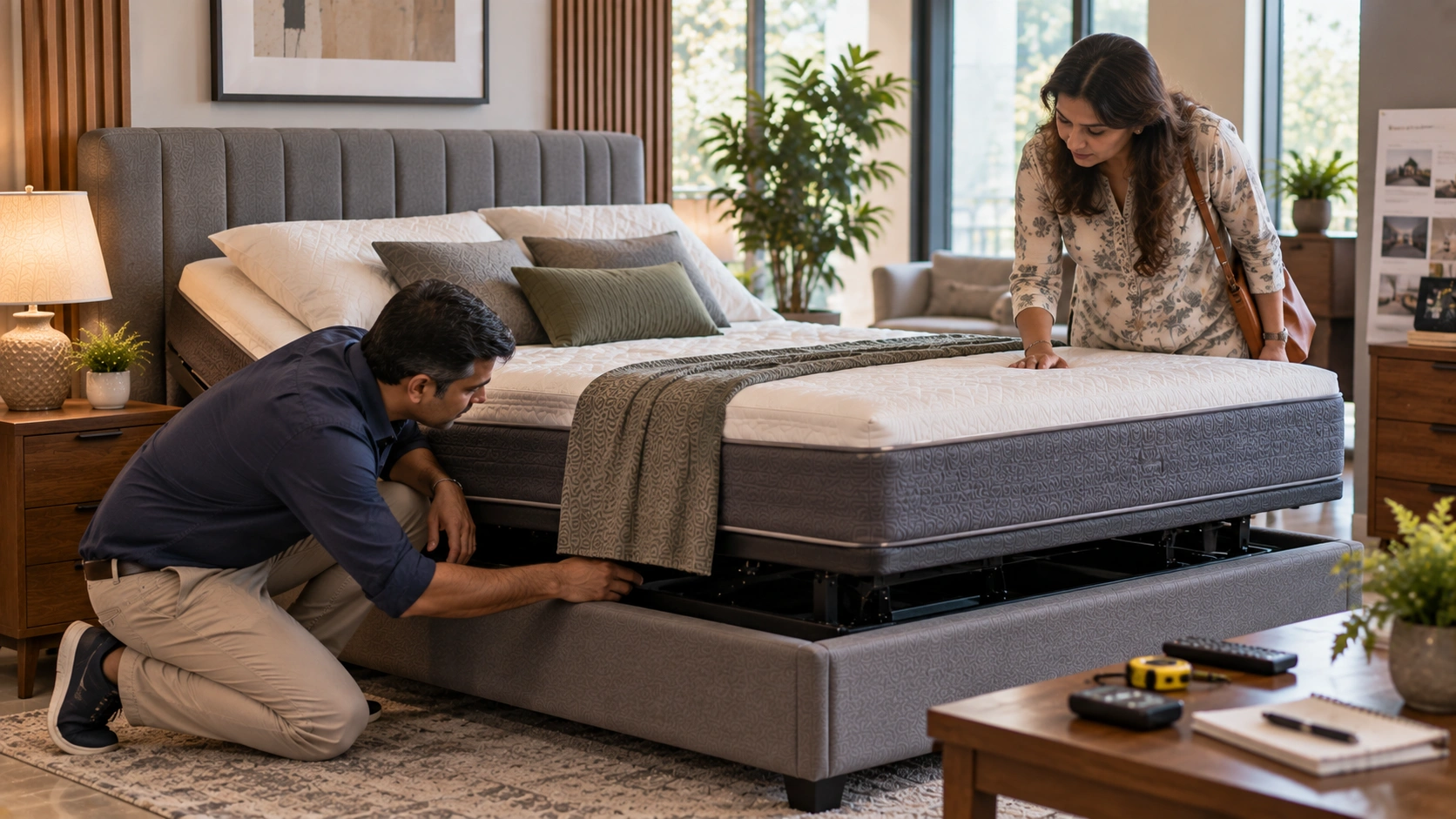
Measure the available space before ordering.
Leave sufficient room for caregivers to move around the bed and assist the patient.
Step 4: Check the mattress
Confirm that the mattress is compatible with the adjustable mechanism.
Step 5: Check service support
Ask about installation, warranty, servicing and replacement parts.
Step 6: Consider future needs
Stroke recovery can change over time.
A patient who initially requires significant assistance may regain some independence, while another patient may need longer-term support.
Choose a setup that can accommodate the expected care routine rather than only the first few weeks.
Why Choose Zero G Beds for Home-Care Positioning?
Zero G Beds provides adjustable-bed solutions designed for home comfort, patient care and mobility support.
The right configuration depends on the patient’s condition, mobility, room and caregiver requirements.
Zero G Beds provides:
- Remote-controlled adjustable positioning
- Home-care and patient-bed solutions
- Mattress and configuration guidance
- Professional delivery and installation
- Product demonstration by trained technicians
- After-sales assistance
- 15-year warranty
- CE-certified adjustable bed systems
- Experience serving families in India since 2003
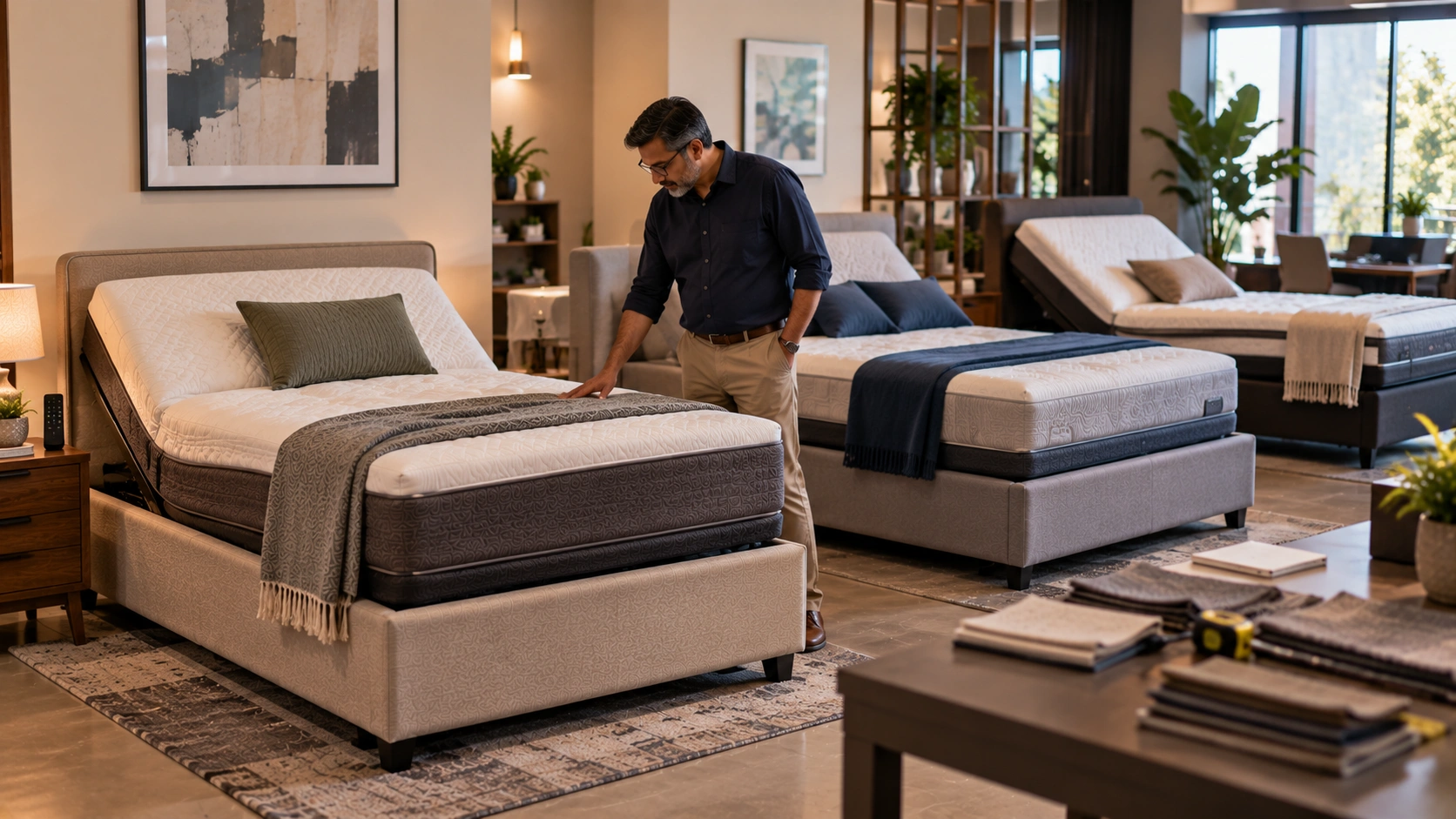
If you’re comparing a Bed For Patients, electric adjustable bed or home-care configuration, the Zero G Beds team can help you understand which features are genuinely relevant instead of simply choosing the model with the longest feature list.
Call or WhatsApp +91 9820138189 or email info@zerogbeds.com.
Stroke Recovery Bed Buying Checklist
Before making a decision, check:
- Patient’s current mobility level
- Ability to sit independently
- Ability to operate the remote
- Caregiver requirements
- Head elevation range
- Leg elevation range
- Motor smoothness
- Bed height
- Weight capacity
- Mattress compatibility
- Available room space
- Ease of cleaning
- Warranty coverage
- After-sales service
- Installation support
- Recommendations from the patient’s rehabilitation team
This checklist can help prevent a common mistake: buying a technically impressive bed that doesn’t actually suit the patient’s daily routine.
A More Practical Way to Think About Stroke Recovery Beds
Instead of asking, “What is the best adjustable bed for stroke patients?”, ask a series of smaller questions.
Can the patient get into bed safely?
Can they change position easily?
Can the caregiver assist without excessive physical effort?
Can the upper body be raised for meals and communication?
Can the patient operate the controls if appropriate?
Can the bed accommodate changing needs during recovery?
These questions are more useful than simply comparing the number of motors or additional features.
For guidance on the broader safety considerations, caregivers can also read Zero G Beds’ guide to patient safety with electric adjustable beds.
Get Help Choosing an Adjustable Bed for Stroke Recovery
Every stroke recovery journey is different.
The most suitable adjustable bed for patients at home is therefore not necessarily the most expensive or most technologically advanced option.
Look for a bed that supports the patient’s actual positioning needs, gives caregivers practical control and can adapt as recovery progresses.
If a physiotherapist or doctor has already provided positioning recommendations, use those recommendations as the starting point for your bed selection.
For help choosing a suitable configuration, call or WhatsApp +91 9820138189 or email info@zerogbeds.com.
The Bottom Line
An adjustable bed can make everyday home care more manageable for some stroke recovery patients by allowing easier changes between lying, elevated and supported positions.
Its biggest benefits are practical: easier positioning, greater convenience for caregivers and potentially more independence for patients who can safely control the bed themselves.
But the bed should support—not replace—the patient’s rehabilitation plan.
Prioritise simple controls, smooth movement, appropriate height, mattress compatibility, safety and reliable after-sales support. Most importantly, follow the positioning and transfer recommendations provided by the patient’s healthcare and rehabilitation team.
For personalised guidance on adjustable beds for stroke recovery patients, call/WhatsApp +91 9820138189 or email info@zerogbeds.com.