
This guide is general information to help families make informed decisions. It isn’t medical advice — please check anything specific to the patient with their doctor, physiotherapist or nurse, and confirm the rated specifications of any bed before you buy.
Long-term bedridden care asks something different of a bed than a short recovery does. When someone is going to spend most of their day, for months or longer, in the same bed — because of paralysis, a neuromuscular condition, or advanced illness — the bed stops being furniture and starts being the main tool for their comfort, their health, and honestly, their dignity. A hydraulic bed for patients is built for exactly that kind of long-term care, while remote-control models offer a different approach to positioning.
This guide looks at what these beds actually offer for long-term bedridden patients, how remote-control and hydraulic systems differ, and why independence — even just being able to adjust your own position — matters more than it might seem from the outside.
Talk to a care advisor — free, no obligation. Call or WhatsApp: +91 9820138189. Tell us the patient’s condition and we’ll recommend the right bed and mattress.
Why Long-Term Bedridden Care Needs a Different Kind of Bed
For a patient who will be in bed most of every day — due to paralysis, ALS, advanced Parkinson’s, multiple sclerosis, or a similar long-term condition — the ordinary demands on a bed multiply. It has to support:
- Frequent repositioning, often many times a day, to protect the skin and ease discomfort.
- A degree of self-sufficiency, wherever the patient’s condition allows it — because relying entirely on someone else for every small adjustment takes a toll over months and years, on both sides.
- Consistent comfort over long stretches, not just short bursts, since this bed is where a large part of daily life now happens.
- Caregiver sustainability, because long-term care that depends on constant manual lifting tends to wear caregivers down in ways that eventually affect the patient too.
This is where a hydraulic bed for patients and remote-control systems earn their place — they’re not just about convenience, they’re about making long-term care actually sustainable for everyone involved.
Remote-Control Beds: Independence at the Press of a Button
A remote control bed for patient care lets the patient — or the caregiver — adjust the head, legs, and sometimes the overall height, using a handheld or wireless remote. For patients with paralysis affecting the lower body but functional use of their hands and arms, this can mean genuine independence: raising the head to watch television, adjusting leg support without waking anyone, or repositioning slightly for comfort without needing to call for help.
That independence matters more than it might sound like on paper. Needing to ask for help with every small adjustment — dozens of times a day, every day, for months — has a real emotional cost. Being able to do even some of it yourself restores a piece of ordinary autonomy that illness tends to take away first.
What to look for in a remote-control bed:
- Large, simple buttons — patients with reduced hand strength or dexterity from neuromuscular conditions need controls that don’t require fine motor precision.
- A quiet motor — since adjustments may happen frequently, including at night.
- Range of motion suited to the condition — check the actual degree range for head and leg elevation rather than assuming “adjustable” covers it.
- Voice control, if hand function is limited — worth asking about specifically for progressive conditions where hand strength may decline over time.
- A remote that stays within reach — sounds obvious, but a remote that slides off the bed or tangles in the cord defeats the purpose.
Hydraulic Beds: Strength Without Electricity
A hydraulic bed for patients uses a fluid-pressure mechanism, usually operated by a hand pump or foot pedal, to adjust height and sometimes backrest position — without relying on electric motors. For long-term bedridden care, this has a specific, practical advantage: it works during a power cut, and it tends to handle heavier, sustained loads reliably over years of daily use.
Hydraulic systems are common in clinical settings for exactly this reason — they’re dependable, mechanically simple, and don’t fail electronically. For a home setting, they suit families who want that same reliability, or who live somewhere with less predictable power supply.
What to weigh with a hydraulic bed:
- Operating a hydraulic pump or pedal still takes some physical effort — usually less than a full manual crank system, but more than an electric remote. Worth considering if the caregiver is doing this daily, long-term.
- Height adjustment is typically the main hydraulic function, with backrest and leg positioning sometimes still manual or motorised separately — check exactly what’s hydraulic versus what isn’t on a specific model.
- Power-independence is the core benefit — if your household has stable power, an electric remote-control bed will usually offer easier day-to-day operation.
Remote Control vs. Hydraulic: Which Suits Long-Term Bedridden Care?
| Remote-Control (Electric) | Hydraulic | |
| Adjustment method | Motor, via remote/app/voice | Fluid pressure, via pump or pedal |
| Works during a power cut | Only with battery backup (check model) | Yes |
| Effort required to operate | Minimal — button press | Some — pumping or pedal action |
| Patient self-operation | High, if hand function allows | Limited — usually needs a caregiver |
| Best suited for | Homes with stable power, patients wanting independence | Homes with unreliable power, or where mechanical reliability is prioritised |
| Long-term durability | Depends on motor and electronics quality | Generally robust, fewer electronic parts to fail |
For most urban Indian homes with reasonably stable power, a remote control bed for patient use, a remote-control bed tends to offer more day-to-day independence for the patient. For homes in areas with frequent power cuts, or for families who specifically want a mechanically simple, dependable system, hydraulic remains a genuinely solid choice.
Still weighing it up? Book a free home demo — Call/WhatsApp: +91 9820138189. See both systems in person before you decide.
Self-Repositioning and Pressure-Sore Prevention
For a bedridden patient, the risk of pressure injuries is a central, ongoing concern — and it’s worth being precise about what actually helps here, rather than assuming any bed solves it on its own.
What genuinely helps: frequent repositioning, following an individualised schedule set by the patient’s care team, is the primary method of pressure-injury prevention for anyone assessed as high-risk. A remote-control bed that lets the patient shift their own position — even slightly, every hour or two — supports this in a real, meaningful way, because it happens more consistently than waiting for a caregiver to be available each time.
What it doesn’t replace: regular skin checks, proper mattress support, and the care team’s specific repositioning plan. A bed is a tool that makes the plan easier to follow — not a substitute for the plan itself.
Dignity, and Why It Belongs in This Conversation
It can feel slightly out of place to talk about “dignity” alongside bed specifications — but for long-term bedridden care, it’s genuinely central to the decision, not a soft add-on. Being able to adjust your own position, sit up for a visitor without help, or reach for water independently isn’t a luxury when illness has already taken away so much autonomy. Families consistently tell us this is the change they notice most — not just in the patient’s physical comfort, but in their mood and sense of self over the following weeks.
Accessories Worth Considering for Long-Term Bedridden Care
- Side rails / assist handles — for safety and a sense of security during self-repositioning.
- A pressure-relieving mattress — 7-zone latex, high-density foam, or an alternating-pressure air mattress for higher-risk patients.
- Overbed table — for meals, reading, or a laptop, within easy reach.
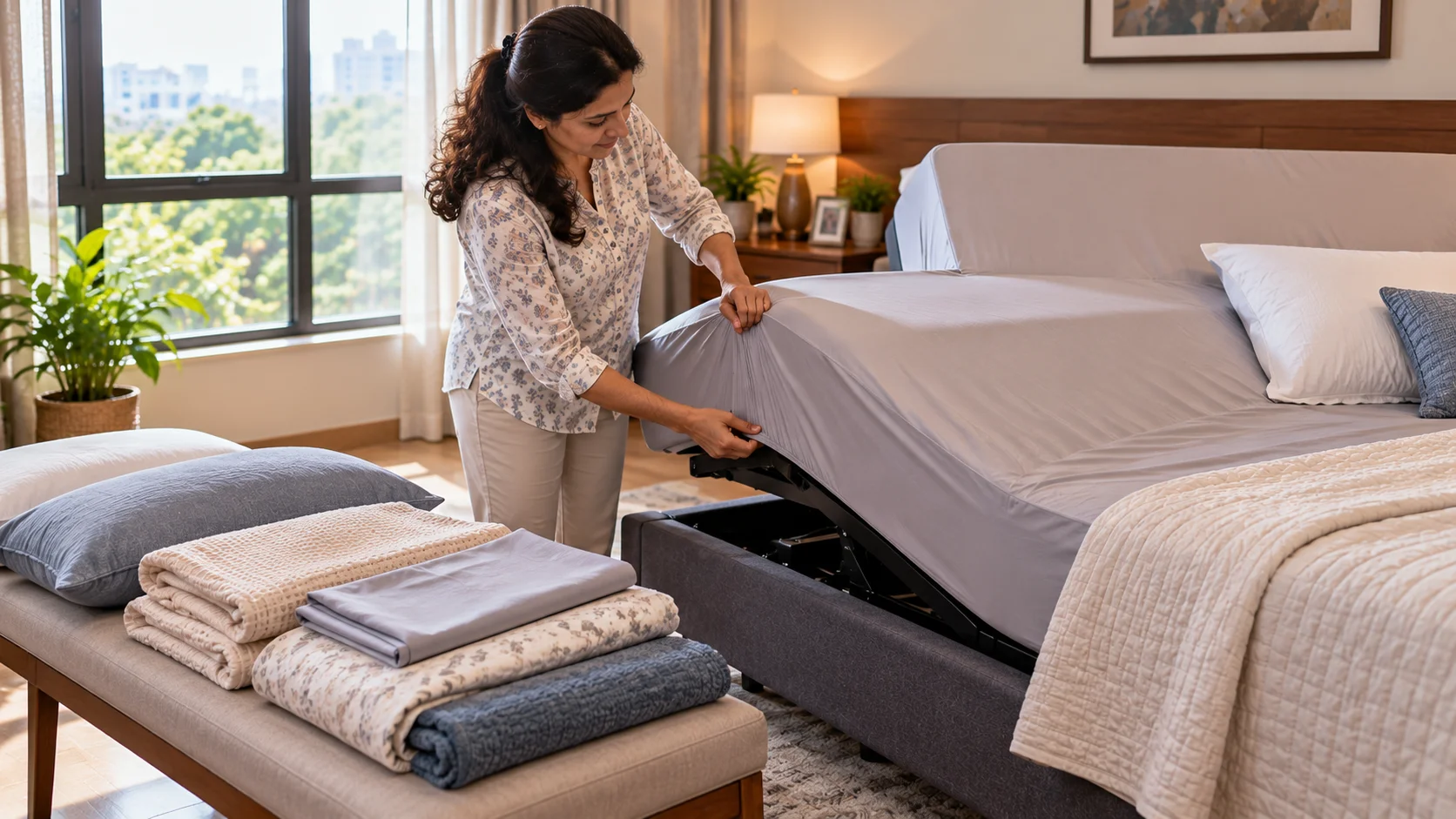
- Waterproof mattress cover — a practical necessity for long-term use.
- Under-bed night light — for a caregiver checking in without fully waking the patient.
Tell us the condition, get a matched recommendation. Call/WhatsApp: +91 9820138189. We’ll suggest the exact bed and mattress and send you the details.
What Affects the Price
- Remote-control vs. hydraulic mechanism — pricing varies by system type and complexity.
- Motor or pump quality — smoother, more durable mechanisms cost more.
- Battery backup, for remote control beds in areas with unreliable power.
- Weight capacity and frame strength, especially for long-term daily use.
- Mattress, particularly pressure-relieving options for higher-risk patients.
- Warranty and after-sales service — genuinely important for a bed used every day, for years.
Flexible EMI options are available. Share the patient’s condition and bed type with our team for exact pricing and delivery timelines.
Get a personalised quote! Call/WhatsApp: +91 9820138189. Share the patient’s condition and we’ll send exact pricing, mattress options and delivery timelines.
Mistakes Worth Avoiding
- Choosing a remote control bed for patient care without checking for battery backup, in an area with frequent power cuts.
- Assuming a hydraulic bed height adjustment also covers backrest positioning — check exactly what’s included.
- Picking controls the patient can’t actually operate independently, undermining the main benefit of a remote-control system.
- Overlooking the mattress — a pressure-relieving mattress matters as much as the frame for long-term bedridden care.
- Skipping written warranty and service terms for a bed that will be in daily use for years, not weeks.
Quick Buying Checklist
- Remote-control or hydraulic mechanism matched to power reliability and caregiver preference
- Controls the patient can genuinely operate, given their specific condition
- Battery backup confirmed, if remote-control and power is unreliable
- Weight capacity confirmed for the specific model, with margin for long-term use
- Pressure-relieving mattress selected to match the patient’s risk level
- Side rails and safety accessories included
- Warranty and after-sales service terms in writing
Why Families Choose Zero G Beds
- 10,000+ families across India have trusted Zero-G Beds since 2003, including many managing long-term bedridden care.
- Both remote-control and hydraulic systems available, matched to your needs.
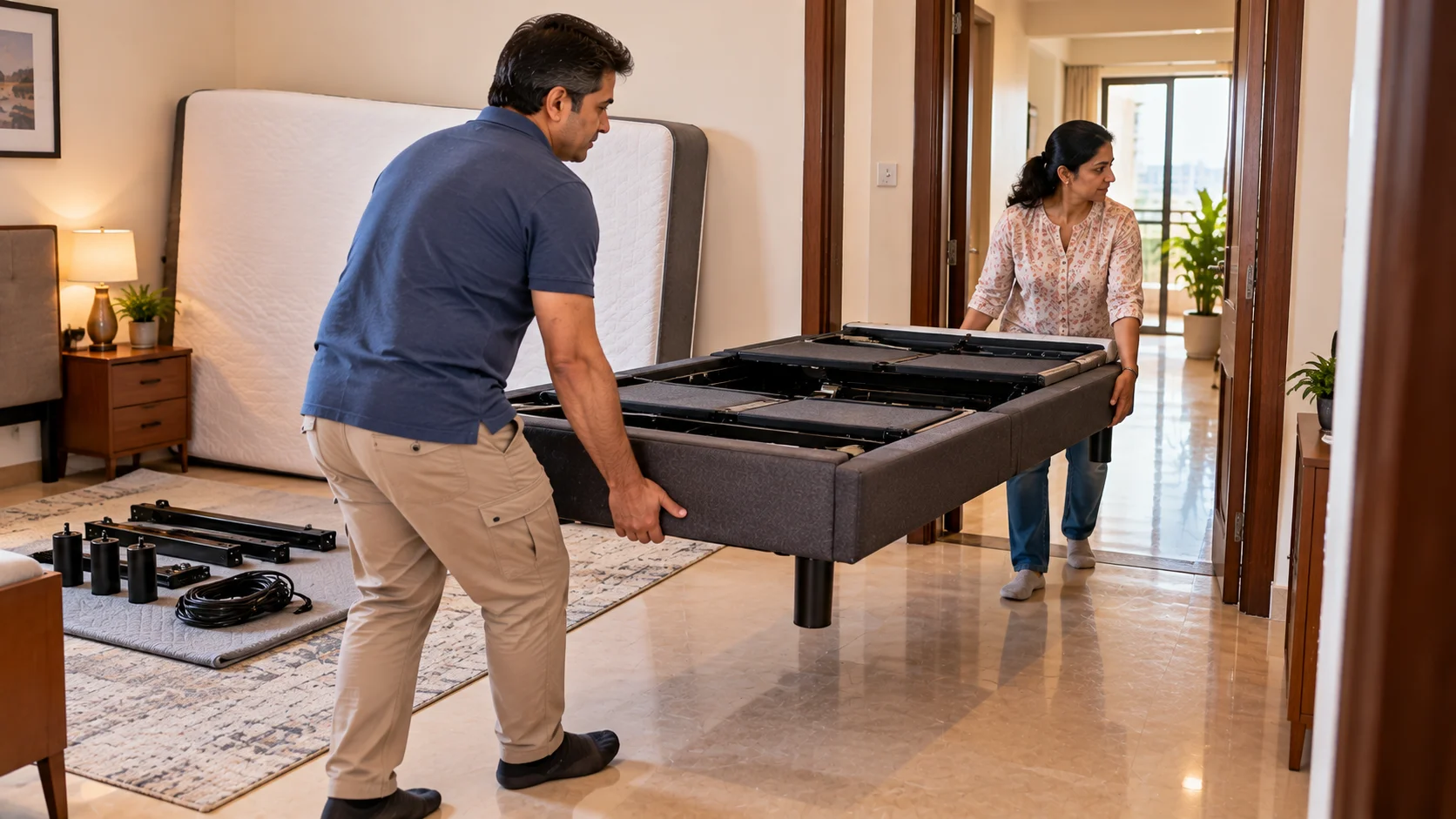
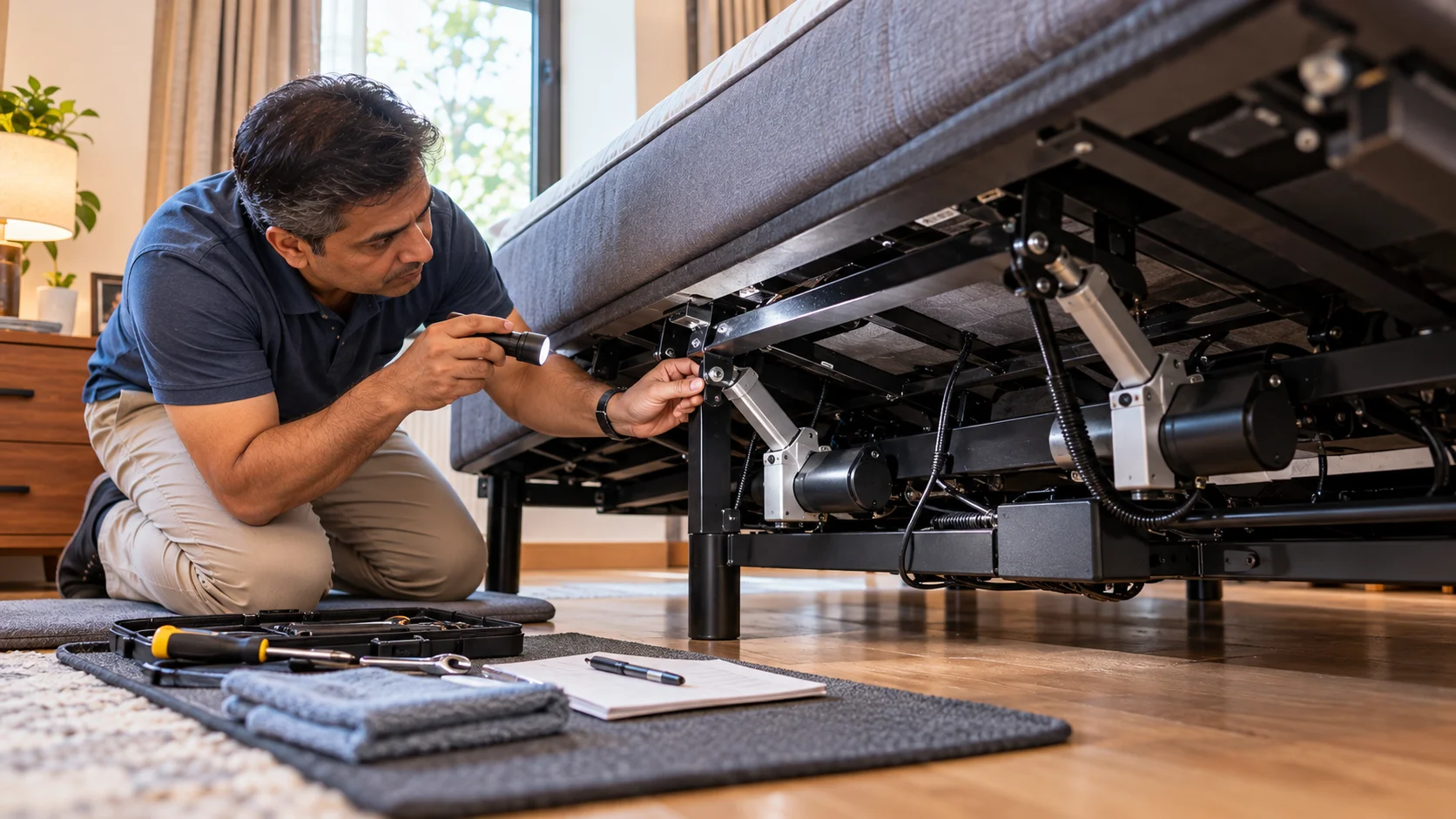
- Professional delivery within 1 week, along with installation and a complete product demonstration by trained technicians.
- Flexible EMI options are available to make purchasing easier for families.
- Zero-G Beds can also convert an existing bed into a fully adjustable one, without replacing the current frame.
- CE-certified adjustable bed systems that meet internationally recognised European safety and quality standards. European safety and quality standards.
- 15-year warranty for long-lasting performance and peace of mind.15-year warranty for long-lasting performance and peace of mind.
- Real after-sales service for a bed that’s used every day — people you can reach on Call/WhatsApp: +91 9820138189.
Ready to make long-term care easier and more dignified at home? Talk to us: +91 9820138189 or email info@zerogbeds.com
The Bottom Line
For long-term bedridden care, the right hydraulic bed for patients isn’t just about mechanics — it’s about making months or years of daily care sustainable, comfortable, and as dignified as possible for the patient. A remote-control bed offers independence and ease; a hydraulic bed offers reliability without depending on power. Match the choice to the patient’s specific condition, your household’s power reliability, and how much self-sufficiency the patient can genuinely have — then pair it with a mattress and accessories built for the long run.
This is one of the decisions that quietly shapes daily life for years. It’s worth getting right.
Tell us about your loved one’s needs and we’ll recommend the right bed today. Call/WhatsApp: +91 9820138189
References
- NICE Quality Standard QS89 — Pressure ulcers: advice on repositioning. https://www.nice.org.uk/guidance/qs89/chapter/quality-statement-5-advice-on-repositioning
- IEC 60601-2-52:2009 — Medical electrical equipment, Part 2-52: basic safety and essential performance of medical beds. https://www.iso.org/standard/36067.html
- IEC 60601 vs. ISO 13485: Medical Device Risk Management. https://eureka.patsnap.com/article/iec-60601-vs-iso-13485-medical-device-risk-management